
Students – the nation’s conscience

JVL Introduction
Chris Hedges is incensed at the reality of universities in the United Sates but what he writes applies in varying degrees to those in the UK and elsewhere as well.
The major research universities have become corporate and defence industry vocational training centres, those running them overseeing “academic plantations”.
They serve the interests of wealthy donors and corporations, protected by private security, and treat most of their staff like serfs.
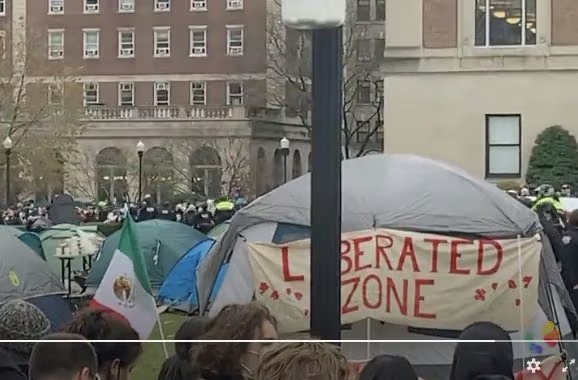
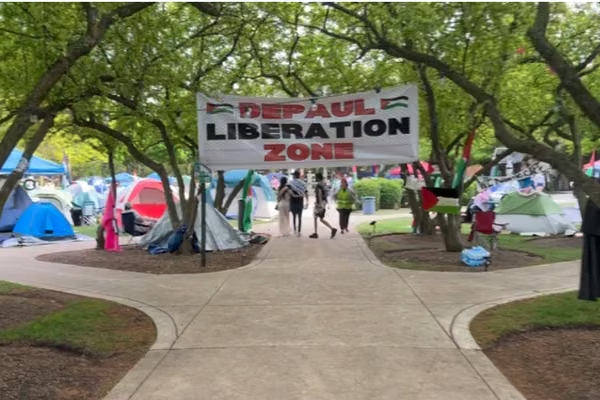
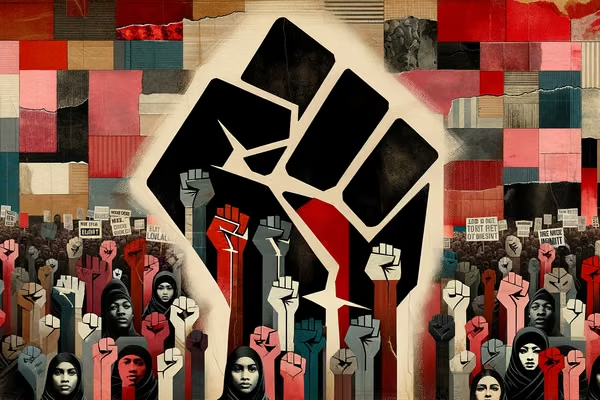
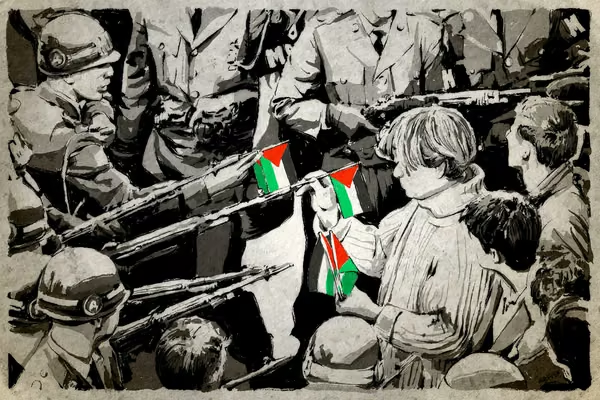
And the heavily indebted students who rebel and call out complicity in genocide, are despised. They have been insulted, smeared and often physically attacked, while the universities have so often failed to protect them.
Here Chris Hedges gives voice to the protestors, who speak bravely, with insight and moral clarity, as they risk their futures to stand against injustice, against the genocide in Gaza. Their words are often incredibly moving.
“Spend time with the students in the protests,” says Hedges, “and you hear stories of revelations, epiphanies… These experiences, these moments of grace, are the unseen engine of the protest movements.”
RK (h/t MN)
This article was originally published by The Chris Hedges Report on Wed 8 May 2024. Read the original here.
The nation’s conscience
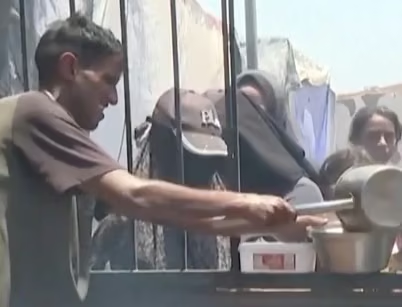
The courageous stance of students across the country in defiance of genocide is accompanied by a near total blackout of their voices. Their words are the ones we most need to hear.
Loading article text…





A deeply moving article that conveys the undemocracy of the system we live in and the fact that American democracy is a facade, a sugar coating of democratic rights covering a deeply militarised police state
I wonder what goes through the minds of the university administrators when they sanction this violence against these young protesters, by local law enforcement officers, and by their own campus police officers.
Have they abandoned their duty of care?
The protesters, in the main, are young American adults protesting a genocide. Many are still children struggling into adulthood, away from their families, and their homes, for the first time in their lives. What are they to think of this violent adult world they find themselves in?
When they return home, what will their parents and grandparents think of the violence meted out to their children, by the very people they had entrusted with their safety?
I will be interested to see if the universities attempt to put forward a legal defence for their complicity in this violence.
How many of these administrators will be in post, this time next year?