
Understanding Apartheid
JVL Introduction
While welcoming high profile civil-rights organisations like B’Tselem, Human Rights Watch and Amnesty International and for designating Israel as a “regime of Jewish supremacy” from the river to the sea, a reality of “apartheid and persecution” and a “cruel system of domination” respectively, authors Noura Erakat and John Reynolds also highlight the limitations of these analyses.
Instead, they draw on a rich history of Palestinian critique since the earliest days of the Palestine Liberation Organization.
As Fayez Sayegh put it in 1965, predating the expansion in 1967: “Racism is not an acquired trait of the Zionist settler-state. Nor is it an accidental, passing feature of the Israeli scene . . . It is inherent in the very ideology of Zionism and in the basic motivation for Zionist colonization and statehood.”
In other words the apartheid dynamic was already there before the occupation of 1967. This merely intensified and expanded its dynamic.
Equal rights are not enough to solve the problems created by Israeli domination. Decolonisation, land restitution and wealth redistribution are essential to ending social, political and economic discrimination.
This article was originally published by Jewish Currents, summer 2022 on Fri 4 Nov 2022. Read the original here.
Understanding Apartheid
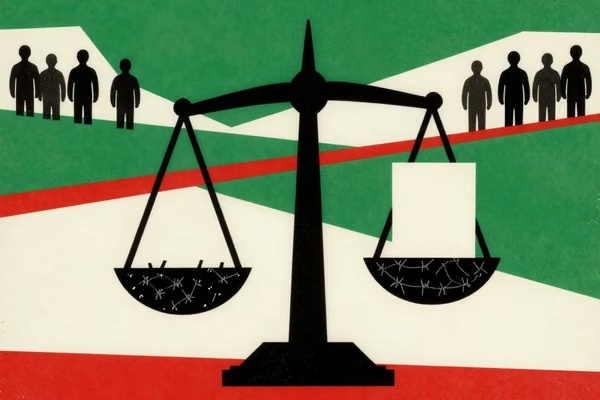
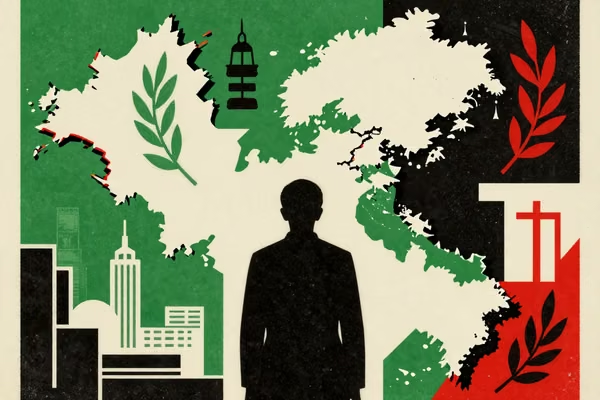
Embracing a radical critique of Israeli apartheid is a precondition for bringing it to a just end
Loading article text…








Comments are now closed.