
Starmer on immigration: I cannot vote Labour

JVL Introduction
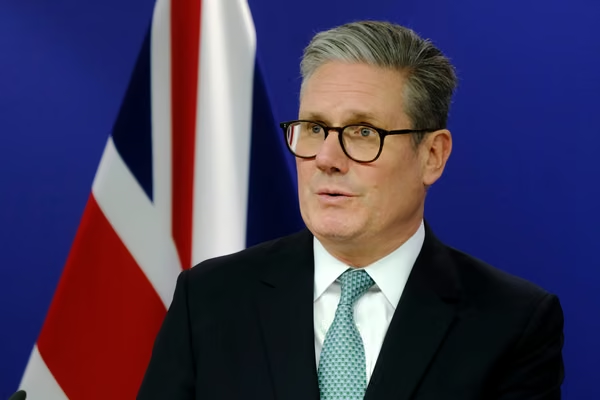
Starmer’s speech on immigration is critically addressed here along with elements of the White Paper itself. Is stopping migration a solution to our problems even if it can be done? Is this even the moral thing to do? We can also recall that Starmer was very pro immigration and freedom of movement in the recent past when hem spoke against Tory clampdown rhetoric and, of course, when he was opposing BREXIT, so what has changed?
Well Reform’s success is one of the key reasons but if voters want severe restrictions on immigration, they will stick to Reform; it is voters more on the left who Labour is losing as Politics Home notes: “Over Half Of Labour’s 2024 Vote Considers Switching To Lib Dem Or Greens”.
This so called Labour government cannot see beyond a politics of shortages and so seems happy to allow migrants – and by inference refugees and asylum seekers – to take the blame for those problems of shortages whereas austerity is a political choice as is a housing policy based on a market model rather than a commitment to providing decent homes for everyone and so on.
And morality? It seems to be OK to plunder the poorest countries for their best educated and qualified people but not to allow people from those countries who are willing to work at the jobs few British people want to do and also send money home to support their families, nor to protect asylum seekers as this response to the White from Safe Passage highlights.
LL
This article was originally published by Gaping Silence Blog on Sat 17 May 2025. Read the original here.
Why I’m Never Voting Labour Again
Loading article text…






The authors not voting Labour because of Starmers virtue signalling to Farage on immigration, but does that mean they were otherwise ok to, even in the face of genocide ?
Honestly, Starmer/Labour are a waste regardless of the immigration stance.
I too have said I was not going to vote Labour in the past .Mostly with disastrous effects, as I wasn’t the only one. In 1979 I was angry because Labour had closed our local Bethnal Green hospital, so I voted for the satirically-named ‘Socialist Unity’ party which probably lost its deposit. Thatcher got in.
In 2010 I was infuriated by Labour’s stance on immigration (refusing asylum seekers the right to work, passing three Immigration and Asylum Acts in rapid succession that effectively outlawed any safe legal routes). So – following Nick Cohen’s advice, cue for double ironies here – I refused to vote Labour and instead inclined towards those nice Lib Dem MPs who’d been helping my asylum seekers friends, and trying to block those heinous Acts becoming law, and who were in favour of free/er movement. Look how that worked out!
Last year I campaigned passionately for Andrew Feinstein. No regrets there so far, but if by any chance he had won I would have been very worried for Ukraine.
Is it a cop-out to say that Proportional Representation might help with some of these dilemmas? And of course I am NOT voting for Starmer, not next time, not ever. I voted Green the time before, and then Independent.
I am an 82 yr old remainer,who until the last election has always voted Labour. I also will now never vote Labour again , unless the party leaders change drastically. Bring back JC. PLEASE.
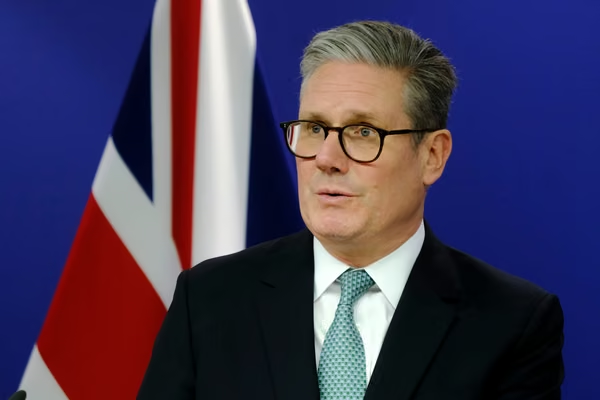
It is surely no coincidence that Starmer’s ´Island of Strangers’ speech should have preceded by a matter of days today’s EU reset announcement which restores a (regretfully) small number of the freedoms and trading advantages lost under Brexit. Starmer, of course, was the main proponent of the contentious second referendum policy which was mainly responsible for sinking Labour’s chances in the 2019 general election – a policy that was famously opposed by Corbyn, albeit without the firmness that should have been required. In adopting Faragist/Powellite language in his speech, Starmer seems to be claiming to endorse the implicitly racist element of Brexit in order to defuse criticism of his policy of rowing back on its damaging effect on trading with Europe. As so often, his refusal to be straight with the British people as to his true intentions leads the party and the country into an illiberal position at odds with Labour values of diversity and inclusiveness and the country’s real needs.