
Socialist, internationalist Jews and their Yiddish songs; resources for now
JVL Introduction
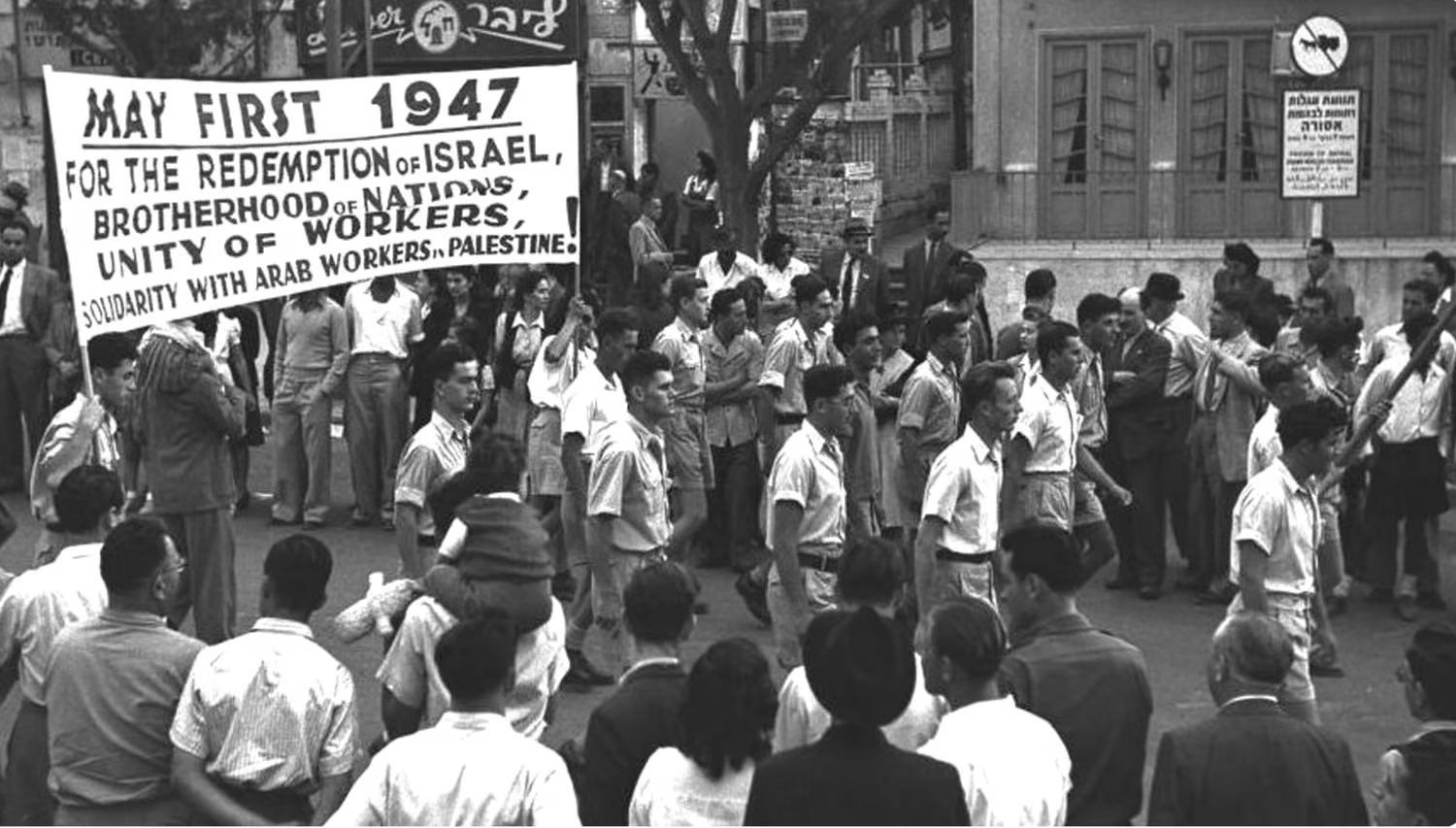
The radical, socialist, internationalist and anti-imperialist working class Jewish tradition of solidarity with the oppressed is explored here in the current context of Jews standing up for justice for Palestinians and freedom for all. In this piece, there is a particular focus on the songs of their struggles that included opposition to zionism. In that tradition today Jewish people on the London and other UK marches, Jewish students and others in the US creating their camps, experiencing police brutality and arrests, Jews around the world, for example through the more than 2,000 Freedom for All Passover Seders from Austin, Texas to Zanet in Bulgaria and much more continue in that tradition.
LL
This article was originally published by CLT Blog on Wed 24 Apr 2024. Read the original here.
Yiddish songs of struggle and resistance: resources for our times?
Loading article text…











I have Moshe Beregovski’s book, and a wonderful thing it is indeed.
In terms of Yiddish songs, I have two favourites, “Hey Zhankoye,” which comes from a Jewish collective farm in the Crimea and “Mayn Rue Plats,” which is essentially a song lamenting the fate of Jewish workers in the garment factories of NE USA.
The 1944 Co-operative centenary songbook contains a song called “Sing Me a Song of Social Significance” which came from the Broadway Musical “Pins and Needles.” The International Ladies’ Garment Workers’ Union hired a Broadway theatre to put on the show, presumably for a short run. It was so popular it ran from 1937-1940 for 1,108 performances and many of the cast gave up their jobs as tailor and garment workers to become full time performers.
Nit zukh mikh vu di mirtn grinen,
Gefinst mikh dortn nit, mayn shats.
Vu lebns velkn bay mashinen,
Dortn iz mayn rue plats.
Nit zukh mikh vu di feygl zingen,
Gefinst mikh dortn nit, mayn shats.
A shklaf bin ikh, vu keytn klingen,
Dortn iz mayn rue plats.
Un libstu mikh mit varer libe,
To kum tzu mir, mayn guter shats.
Un hayter oyf mayn harts, dos tribe,
Un makh mir zis mayn rue plats.
Fascinating information; I know that musical (there was a short run of it in London about 10 years ago I think . I used to sing in a socialist choir before I moved away from London and we sang “Sing me a Song of Social Significance” for a while. Barbara Streisand was in a revival and recorded it. Here it is for anyone interested….
https://www.youtube.com/watch?v=L0qj0u1va4g
The English translation above of the last verse of “Oy, ir narishn tsionistn” (“Oh you foolish little zionists”) is historically seriously misleading, presumably because Daniel Kahn wanted to give the song a contemporary resonance.
However a more literal translation of the words gives:
“To Jerusalem you want to take us
We won’t go there
We’d rather stay in Russia
To liberate ourselves”
There is no reference to “dying as a nation”, nor to “the diaspora”. Interestingly the Russian language version, which was presumably contemporaneous, has as the last line “Бороться с Николаем” (“To fight Nicholas”), an obvious reference to the last tsar, which indicates that the song (or at least the poem) antedates 1931 by at least 14 years.
Thank you very much George for these further thoughts re ‘Oy ir narishn tsionistn’. I don’t know what Daniel Kahn’s intentions were but, to the extent he was adapting the song as well as translating it, this is in keeping with what he himself refers to as ‘tradaptation’. Some of his recent tradaptations of English and to a lesser extent German language works into Yiddish are especially impressive – from the sleeve notes on his CDs I’ve learned that sometimes these tradaptations have involved others (as with This Land is Your Land). Really interesting too to read your deduction (from the historical reference to the last tsar) about the degree to which the original of ‘Oy, ir narshin tsionistn’ predates Beregovski’s field recording.