
Palestinian resilience does not let us off the hook
JVL Introduction
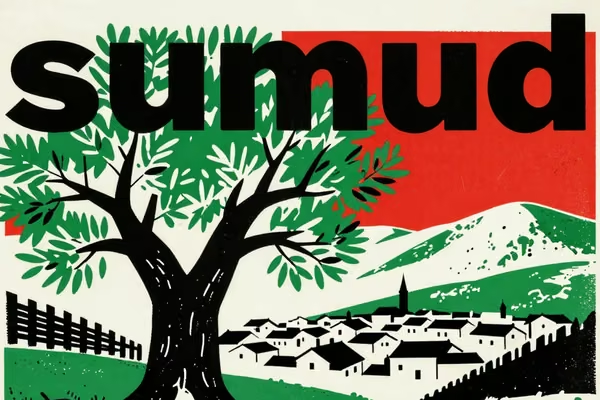
“Sumud* is not an expression of joy but a necessary survival tactic”.
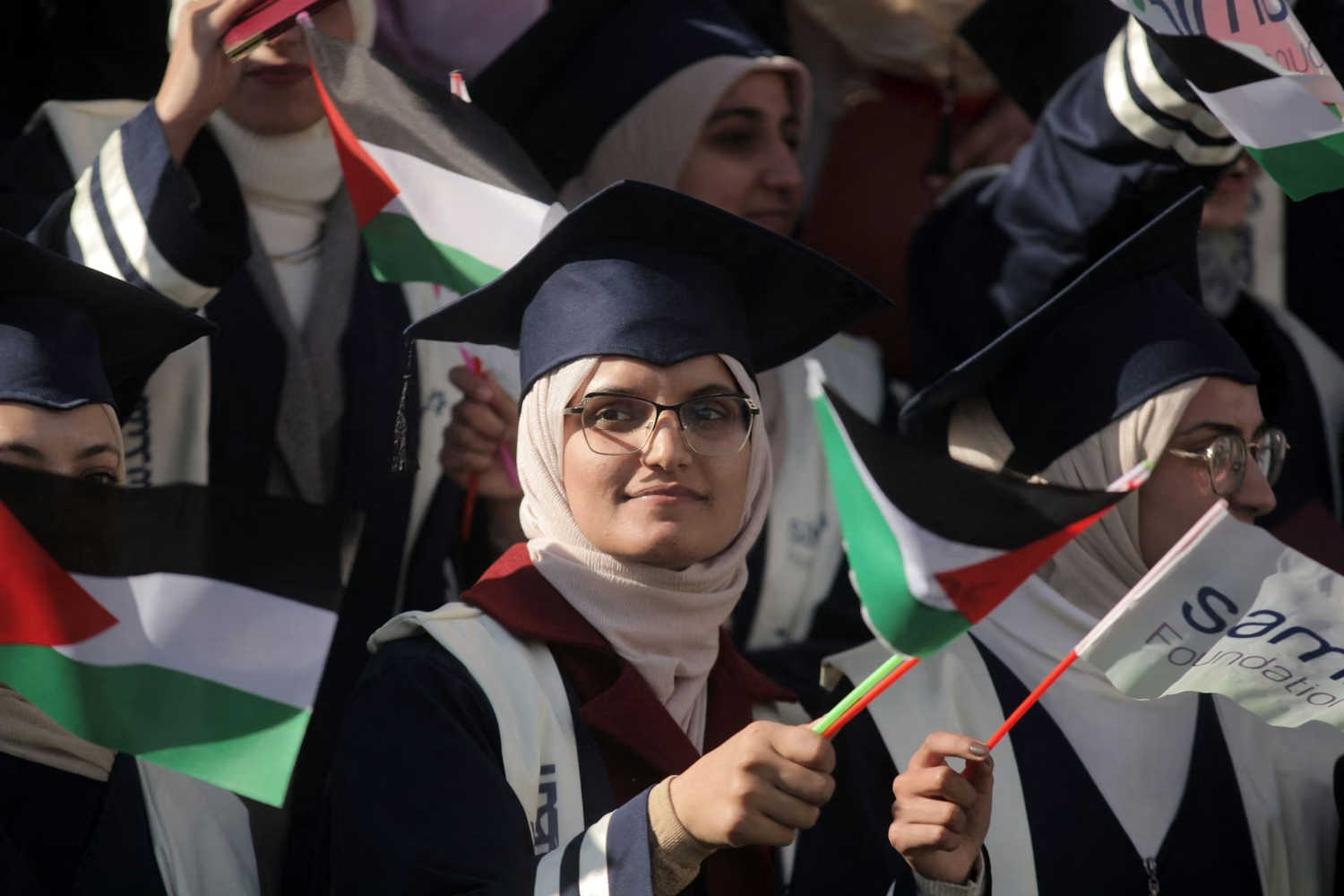
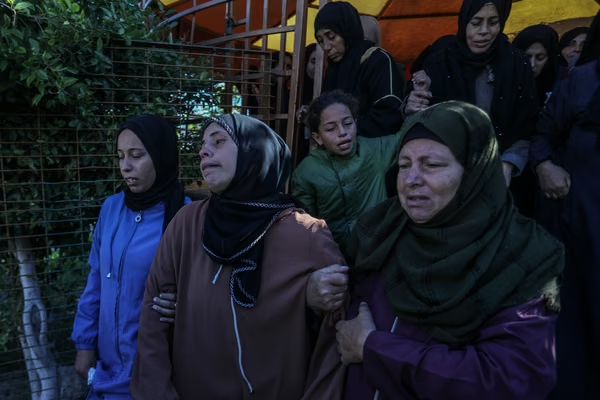
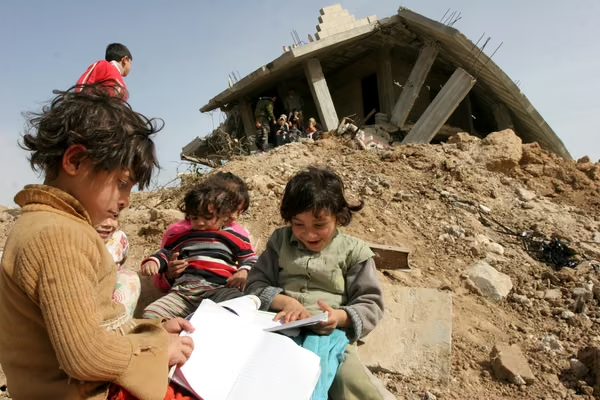
These Palestinian scholars welcome the interest in Palestine since October 7th 2003 but raise concerns that all too often academic work often highlights Palestinian resilience. However, “the authors argue…framing Palestinians as resilient obscures the toll of genocidal, settler-colonial violence..” It overshadows “the complexities of our lived realities and the full affective toll of what we experience everyday—the exhaustion, the grief, the fragmentation of self, the physical illness, the silences it produces, and the impossible labor of appearing composed while facing the unendurable.” Indeed, is it more comfortable for those of us outside Gaza and the West Bank to romanticise suffering rather than to fight for it to stop? To assume that since Palestinians are – of necessity – resilient, they will (must) find a way to endure.
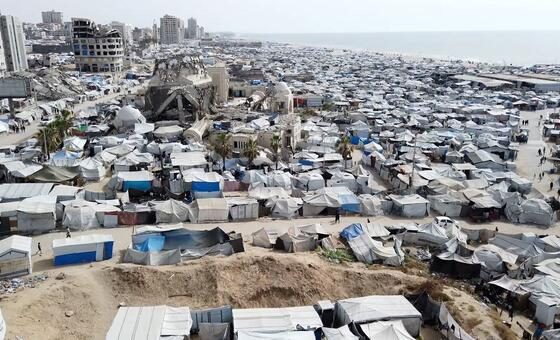
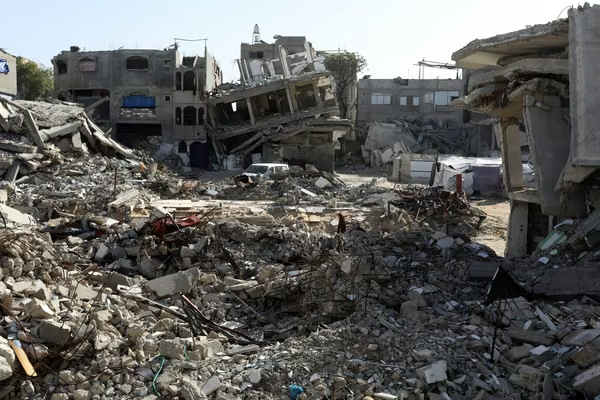
“(T)he genocide has rendered words insufficient to convey the horrors that Palestinians in and from Gaza continue to face, and since then any reference to resilience feels like a dehumanizing blow.”
The focus here is on the academic world but it has direct relevance for us as activists in how we engage with and report on the genocide and the brutal decades long occupation of Palestine.
LL
This article was originally published by Taylor & Francis online on Wed 7 Jan 2026. Read the original here.
When Resilience Becomes a Burden: Reflections from Gazan Palestinian Scholars
In this essay, Palestinian scholars from Gaza reflect on how Gaza is brought into Western academic spaces since the beginning of the genocide. Over the last two years, academic engagement with Gaza has increased, often highlighting Palestinian resilience. While this attention is essential and needed, the authors argue that framing Palestinians as resilient obscures the toll of genocidal, settler-colonial violence. This narrative not only clouds grief, exhaustion, and fragmentation, but also reassures external observers and absolves them of the responsibility to act to stop the genocide. Drawing on their lived experiences, the authors show how resilience discourse romanticizes suffering, aestheticizes sumud, and dismisses Palestinian voices as too emotional for credibility. Instead, they call for an ethical approach in academic settings that situates survival within its violent conditions, resists reductive binaries of heroism or victimhood, and centers Gaza’s lived realities in order to confirm Palestinian humanity beyond the rhetoric of resilience.
Loading article text…


What can we say. It feels intolerable to be the victims and also to be the observers. I feel guilty for being able to live a normal life and say to myself, the Palestinians would not want us to live a life of being a martyr. So we have to do all we can to educate people and build up the movement of opposition to the genocide. It is also the only genocide going on. We see Sudan and the Democratic Republic of the Congo and atrocities being there and Myanmar. We need to build a movement to put an end to the death cult of capitalism which can only perpetrate wars.