
Why we must remember Britain’s role in and the impact of slavery and colonialism
JVL Introduction
Searching for an image to accompany this piece by Gary Younge with the search term “Britain and Slavery” the first three images had captions like “How Slavery was Abolished Across the British Empire” and “A timeline of the abolition of the British Slave Trade”, which rather highlights Younge’s point, eg noting “In his landmark 1944 study, Capitalism and Slavery, Williams saw how quickly Britain’s identity as the world’s pre-eminent slave-trading power had been eclipsed by a moral and humanitarian story centred on abolition. It defined itself not by the immoral ways it had enriched itself for centuries but by its decision to stop doing the worst of those things, even as it kept the riches.”
While this generation is not personally responsible for slavery and colonialism, it has left its mark on our society and the truth needs to be known and understood because at the moment: “…Britain is not nostalgic for “empire” per se but for a period when it felt better about its past… Britain is hooked on its status as a world power and anxious about the unrelenting decline in that status. Looking to a future in which it is smaller and less influential, it finds more comfort in nostalgia. But in order to remember that it was powerful it must first forget how it became powerful.”
We must not forget.
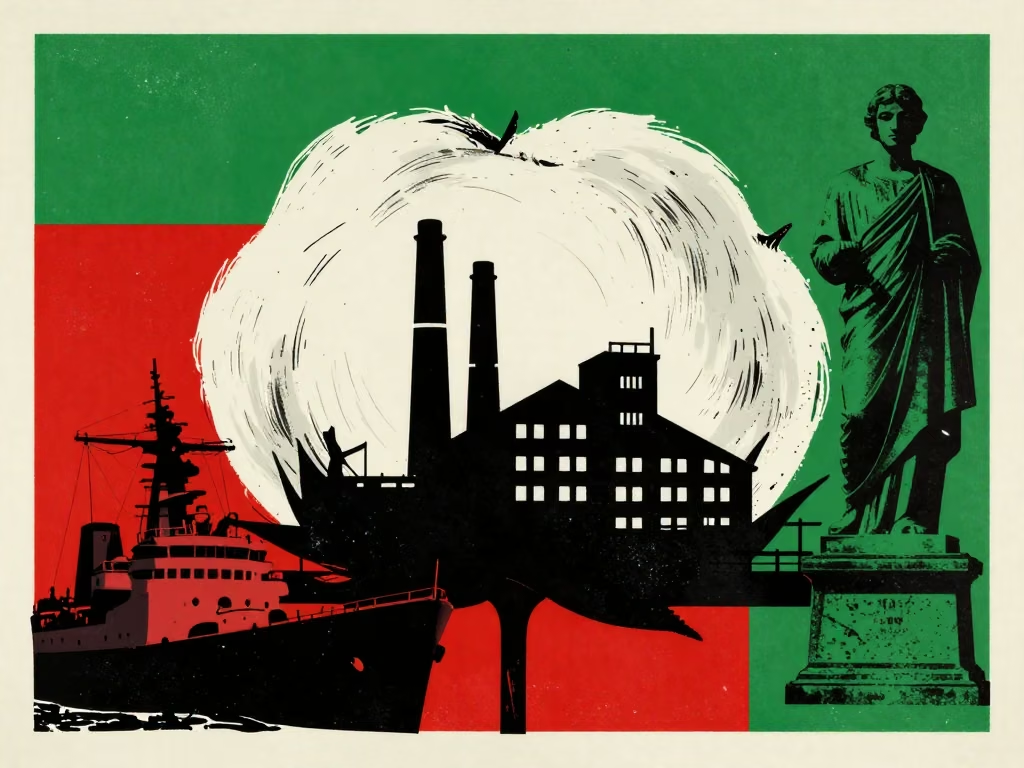
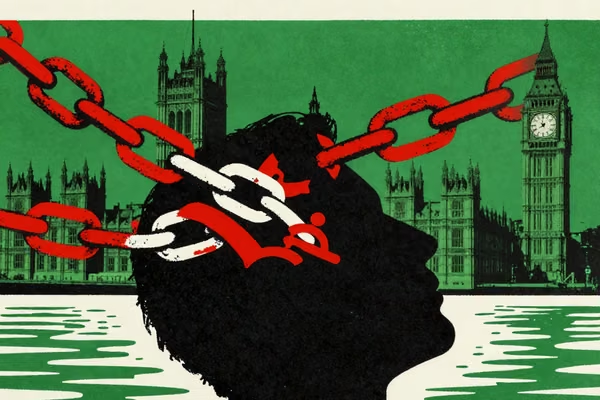
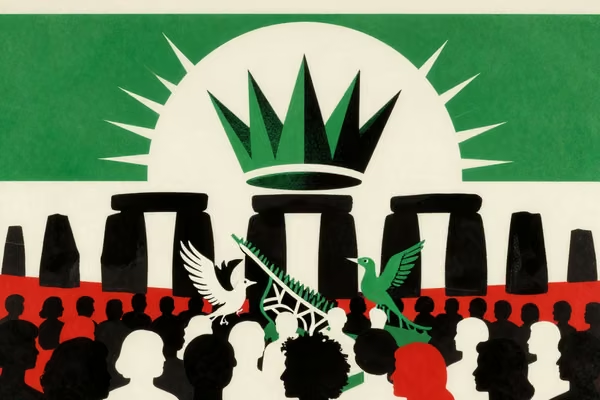
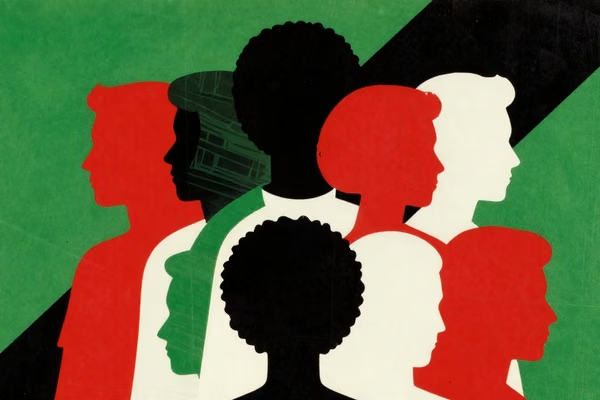
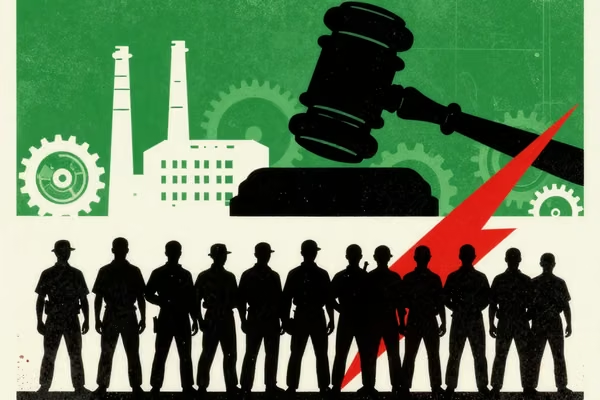
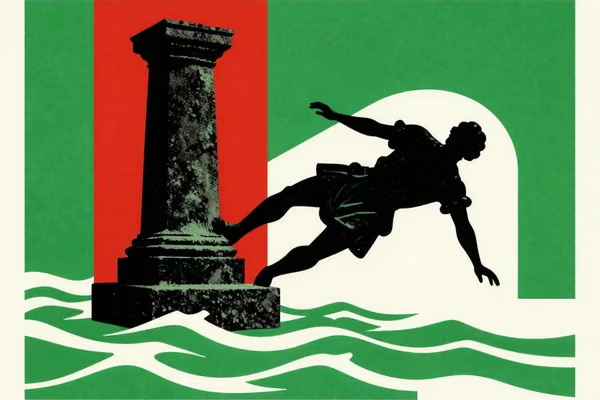
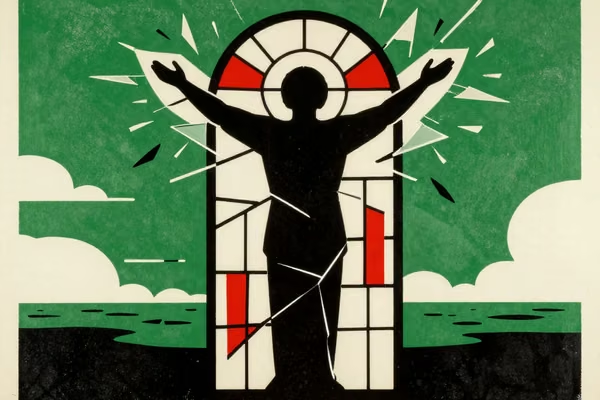
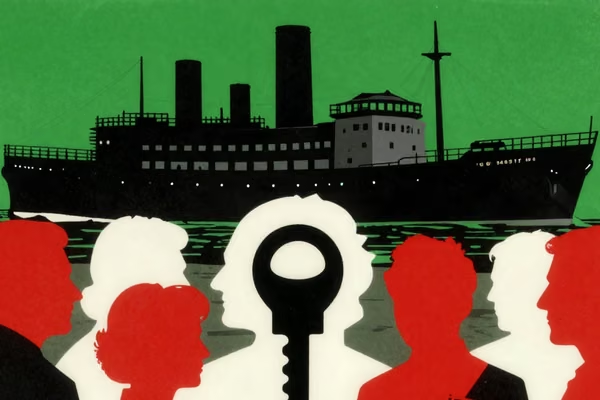
The beautiful illustrations are by Diana Ejaita
This article was originally published by The Guardian on Wed 29 Mar 2023. Read the original here.
Lest We Remember - How Britain buried its history of slavery
Slavery is a central and indisputable fact of the nation’s past. But our failure to remember what really happened is more than mere forgetfulness
Loading article text…







This is fine and worth reading. But Gary Younge doesn’t have an unblemished record on the issue of Corbyn and antisemitism, which after all isn’t a million miles from the issue of our long misrepresentation of slavery and our complicity in it. After the 2019 Election I wrote a long letter to him, objecting to his repetition of the charge that Corbyn hadn’t sufficiently apologised for the antisemitism in the Labour Party. I wasn’t surprised not to receive an acknowledgement, let alone a reply, to my letter. But it dented my appreciation of his journalism, which I had read for several years in the Guardian. It does appear that however alert one is to the horrors of one form of racial prejudice, it’s all too easy to take the lazy route when confronted with another form of prejudice. Younge could and should have noted how inflammatory charges of antisemitism levelled against Corbyn (and against his Jewish supporters in JVL and elsewhere) went unchallenged in the newspaper he wrote for, to the point, as we all know, that letters to the editor objecting to the newspaper’s defamatory charges against Corbyn did not get published. I stopped trying to write such letters and nowadays read the Guardian online, without paying, and with no desire to support it. A great pity that Younge’s eloquent writing on Britain and its failure to recognise our role in slavery doesn’t lead him to re-examine his own complicity in the false charge of antisemitism levelled by the Guardian and the rest of the MSM.
If you want to understand anything then explain how we were still paying off Slave owners up until a few years ago
I agree with much of what Gary Younge writes but also the first comment about his own myopia. The point to make is that he overlooks, as does Sven Lundqvist in ‘Exterminate All The Brutes’, the import of the analysis of Karl Marx and Frederick Engels. Note on the Manchester working class:
“Karl Marx, who had helped to build the meetings of the Emancipation Society in London, saw the campaign as decisive: ‘It was not the wisdom of the ruling classes but the heroic resistance to their criminal folly by the working classes of England that saved the west of Europe from plunging into an infamous crusade for the perpetuation and propagation of slavery on the other side of the Atlantic.’” (Spiked – https://www.spiked-online.com/2013/01/02/when-lincoln-and-marx-were-on-the-same-side/).