
Why have we journalists been unable to stop the atrocities?
JVL Introduction
This journalist spent four years reporting on Palestine; she has now written a novel but perhaps the key question she asks is: “why have those of us whose job it was to report the atrocities in Palestine been so spectacularly unable to stop them?”
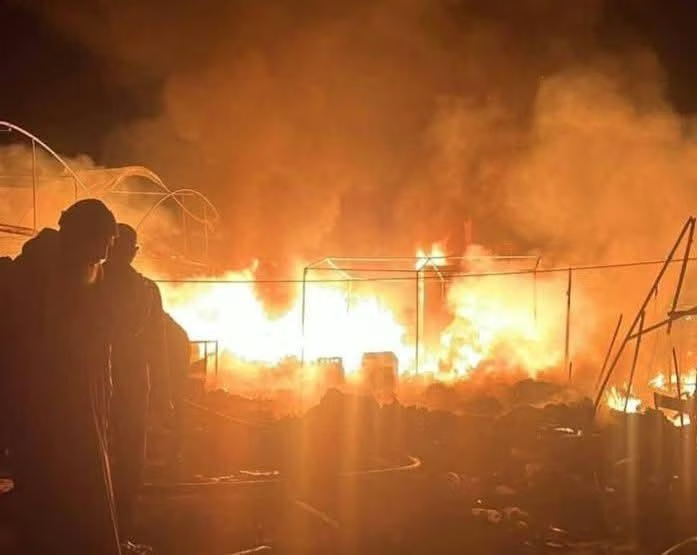
Greenwood reported extensively on several “wars” in Gaza as well as settlements and violence in the West Bank and much more. She refers to an expression “to Gaza a story” used to mean downgrade its importance.
We all hope that knowledge is power – including the power to change things – but it seems that knowing is not enough. But knowledge is the foundation and a vital tool in trying to end the genocide and the occupation.
LL
This article was originally published by The Guardian on Sun 10 Aug 2025. Read the original here.
My years reporting on Gaza broke me down. Why did it take so long for the world to become outraged?
Between 2010 and 2013, I was on the ground capturing Israel’s attacks on Palestine. Few wanted to see it
Loading article text…
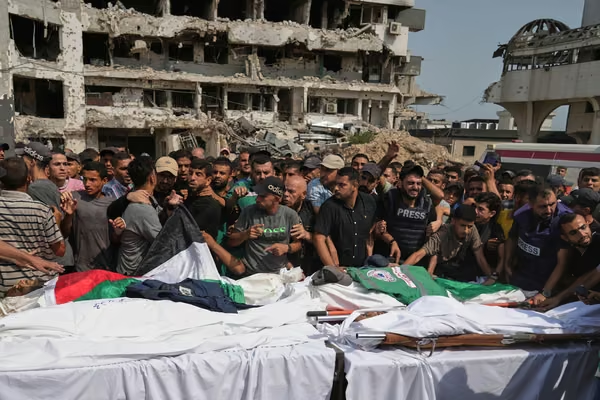
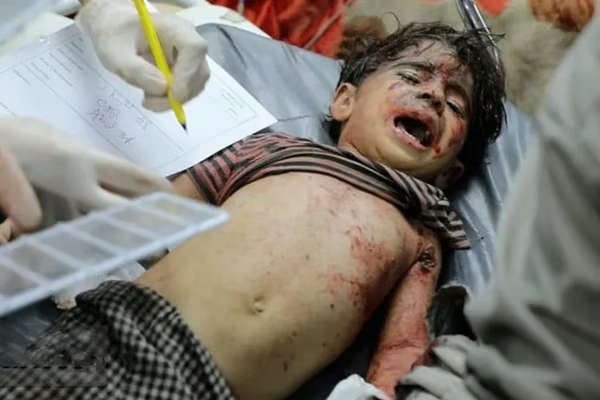
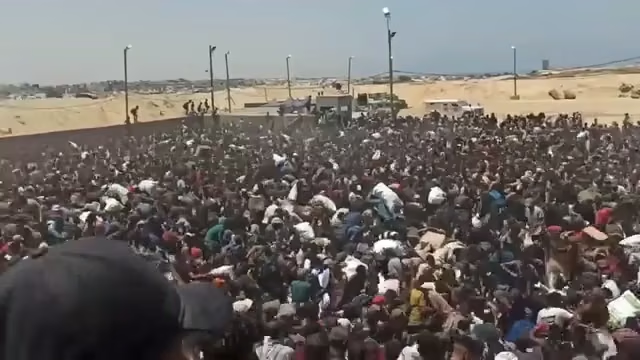
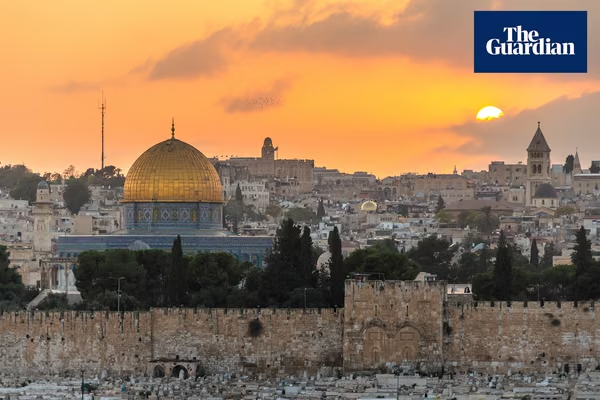
The Guardian recently reported:
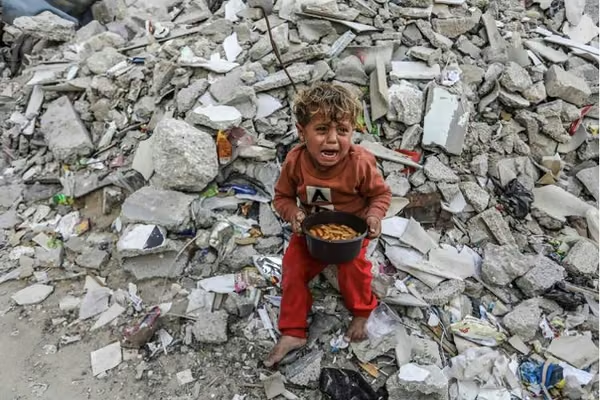
“From above, Gaza is like the aftermath of an apocalypse”
Actually, it clearly is an apocalypse.
This sort of reporting is fairly common. For example, the BBC routinely described waterboarding as ‘simulated drowning’ rather than the correct description of partial drowning.
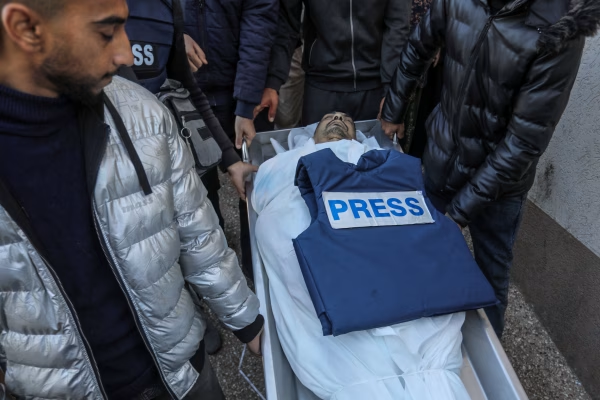
I hope this will not appear callous to my erstwhile NUJ colleagues, but I actually think that Western journalists should have defied the Israeli ban and gone into Gaza. I still think that.
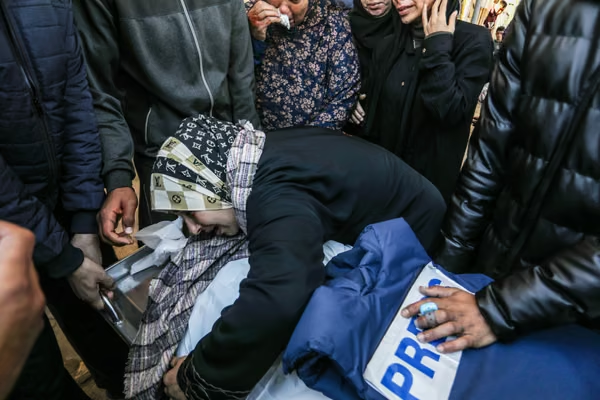
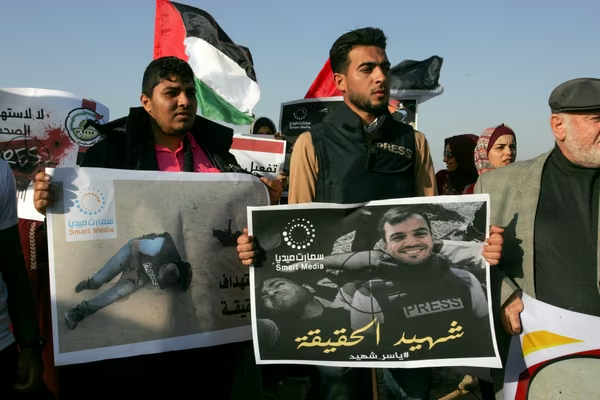
Of course it is also absolutely true that the reporting from Palestinians on the ground has been far truer and more effective – heroic – that reporting from a group of Western journos with their interpreters operating out of a hotel. (What hotel? are there any left standing in Gaza?). Perhaps one thing to come out of this horror might be a new respect for reporters on the ground with lived experience. But in that case why is hardly any reporting ever shown here from Sudan?
It’s a bit sad that this writer is only speaking out because her novel is about to be published and needs to be promoted. Is she right that no one would have listened otherwise?
Since the Israelis control all the entry points to Gaza, it is a bit difficult to see how any journalists could have got in.
On some topics (eg Israel’s horrendous conduct towards the Palestinians), there’s been such intrusive, effective censorship of what journalists (and us letter writers and posters) are allowed to publish that most of the public will only know what those armed with such power want them to know and think. In these circumstances, the parties ordering and carrying out the censorship are probably more to blame for the atrocities we see continuing than the journalists who repeatedly TRIED to get their stories out.
UK journalists wanting to write their truths about Gaza in the mainstream UK media have been silenced by a “spider” operation within the BBC (see the protests of 100 plus BBC journalists); and in the “Guardian” (see an article published months too late in which a commissioned author explained how her work was delayed and distorted until she was no longer willing for it to be published). My own experience as a poster has been that umpteen of my own polite, non-racist challenges to misinformation on Gaza, the Forde Report and the “chicken coups” against Corbyn never appeared (seemingly removed by an automated, sophisticated text detector). Posts I’d written on other topics were mostly published immediately.
Some brave journalists defy UK based censorship by setting up their own newsletters and seeking donations (eg “Skwawkbox” and “Byline Times”). Others get published abroad (eg Peter Oborne in “Middle East Eye”).
Personally, I try to defeat the power of UK media censors by investigating what the respectable foreign media are saying on any topic of interest. It’s possible to get closer to the truth of a story by comparing the facts their media and ours report and the quotes they use. Similarly, professional and academic bodies (eg Forensic Architecture) can’t afford to trash their reputations for expert knowledge and honest, impartial reporting of the facts … so their articles always seem worth checking.
I wish we could more easily avoid being lied to …