
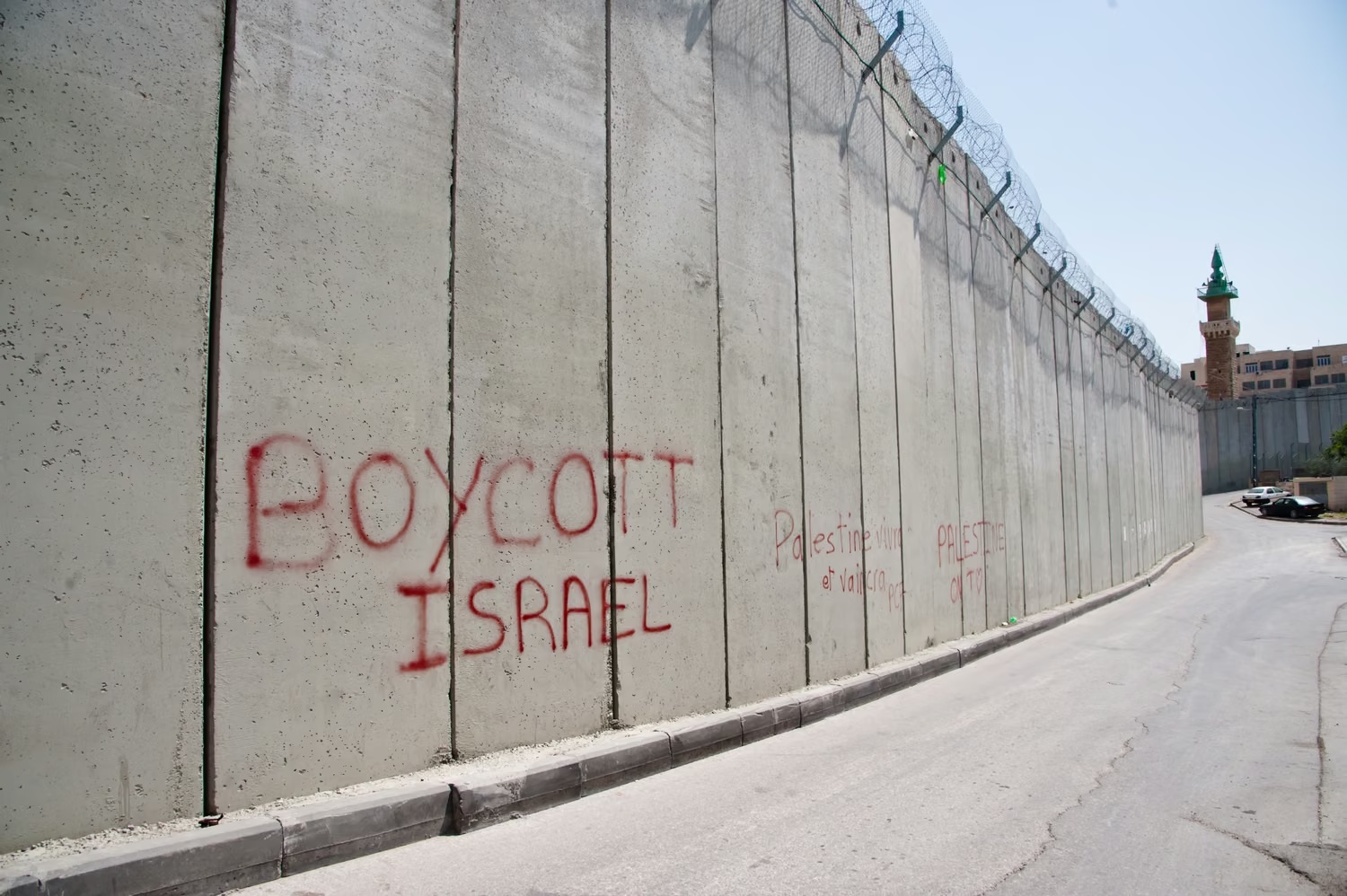
We need a Jewish boycott of Israel
JVL Introduction
It is twenty years since Palestinian civil society launched the Boycott Divestment and Sanctions (BDS) movement. Initially reactions among Jews who campaigned for Palestinian rights was mixed, with some organisations giving less than full support – for example, limiting their call for boycott to ‘settlement goods’, and drawing the boycott line at ‘Israel proper’.
As Israel has proceeded with its now 55 years and counting project of integrating the Occupied Palestinian Territories into pre-’67 Israel these distinctions have been impossible to maintain. A turning point came perhaps in 2021 when B’Tselem, Israel’s premier humanitarian organisation, joined international groups in calling the system by its name: apartheid, “a regime of Jewish supremacy from the Jordan River to the Mediterranean Sea”.
In a personal contribution below, Jonathan Rosenhead argues strongly that following Israel’s savagery and war crimes in Gaza we need an active Jewish voice in the BDS movement.
RK
We need a Jewish boycott of Israel
Jonathan Rosenhead, 29th June 2024
As the months go by since Al-Aqsa Flood on October 7th and Israel’s commitment to war crimes in response it becomes clearer and clearer: the weapon that can make Israel begin to concede what is necessary for the establishment of Palestinian rights is BDS – Boycott Divestment and Sanctions. And Jewish voices need to be heard advocating for it.
BDS was recognised as long ago as 2015 as a strategic threat to Israel by no less a person than the then President of Israel, Reuven Rivlin – for whom the cutting edge of that threat was academic boycott. Others were less specific. Five years previously Israel’s influential Reut Institute had identified as a key threat what it called the ‘Delegitimization Network’, which sought to achieve Palestinian goals not by force but by undermining its moral legitimacy, turning Israel into a pariah state.
The counter-strategy advocated by Reut was adopted by the Israeli government: ‘delegitimise the delegitimisers’. Indeed a whole new department, the Ministry of Strategic Affairs, was established to drive this policy forward. Put simply (though not in words the Israeli government would have chosen): since Israel’s position was morally indefensible, the response to criticism should be ad hominem. In other words, don’t defend Israel’s policies: instead defame Israel’s critics, and harness ‘the Jewish and Israeli Diaspora communities’ to get the message out.
The weapon that has made this strategy a winner since 2016 is the International Holocaust Remembrance Alliance ‘Working Definition of Antisemitism. The definition itself (see below) was both anodyne and vague; the damage was done by the attachment of 11 weaponised ‘examples’ of antisemitism. The IHRA never approved the attachment of these ‘examples’ to its anaemic definition (see Stern-Weiner), but this truth never had a chance of being heard.
Seven of these accompanying ‘examples’ of antisemitism referenced not Jews but Israel. A particularly notorious and tortuous one was
‘Denying the Jewish people their right to self-determination, e.g., by claiming that the existence of a State of Israel is a racist endeavour’.
Another was
‘Applying double standards by requiring of it a behaviour not expected or demanded of any other democratic nation’.
Yet another, particularly relevant as even the International Court of Justice recognises the plausibility of accusations of war crimes against Israel, is this:
‘Drawing comparisons of contemporary Israeli policy to that of the Nazis’.
From then on every voice raised in support of Palestinian rights was subject to wounding attack, and those voices became less confident and audible. The surge of boycott and divestment successes crested and subsided.
All that has changed since October 7th. Israel’s savagery and war crimes have cried out to publics around the world in clear terms that no hasbara can blunt or suppress. The demands for boycott, divestment and sanctions) have rung out loud and clear, most notably from the student encampments now providing liberated spaces in so many universities across countries and continents.
The Palestine solidarity movement needs to seize this moment. People who were previously on the fence have been tumbling off it on our side. Many of those who previously held back from full, or any, support for boycott have been convinced at last. We are facing apartheid, arguably worse than the South African original in its contempt for human life. Boycott continues to be appropriate and functional to undermine Israel’s strategy of violence.
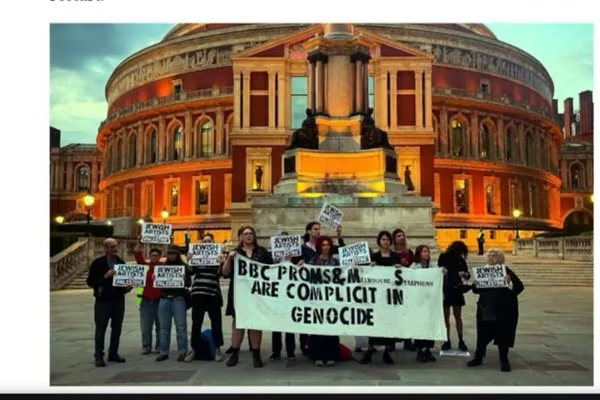
World public opinion has been reshaped, ears are open and voices are at last being heard. But we must be under no illusions. Israel still has many assets, including friends in positions of strategic influence. It will deploy these in an attempt to blunt or undermine the current clarity, and we can expect ‘antisemitism’ to be part of the counter-attack. That is why we need to have clear Jewish voices, of individuals and of organisations, saying loud and clear, that it is a mitzvah (a blessing) to argue for and to practice boycott.
Back in the first heyday of the BDS movement there was an active group in the UK called Jews for Boycotting Israeli Goods. Its motto was its kosher to boycott Israeli goods. But of course boycott now covers much more than ‘goods’. Academic and cultural boycott are centre stage too, as are the campaigns against arms exports, to get universities in particular to divest from Israel, and so many more. So we need a new title, but most of all we need a strong Jewish voice putting the case for BDS as an expression not of Jew-hatred but of Jewish values.
* “Antisemitism is a certain perception of Jews, which may be expressed as hatred toward Jews. Rhetorical and physical manifestations of antisemitism are directed toward Jewish or non-Jewish individuals and/or their property, toward Jewish community institutions and religious facilities.”
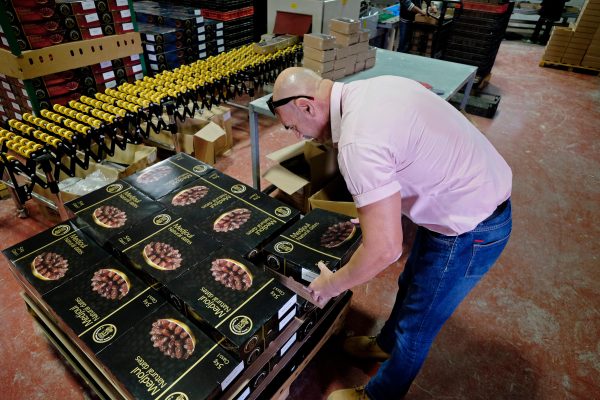






Yes please Jonathan. As a founder member of the short-lived J-BIG, I’d like to see such a campaign. Does the genocide in Gaza move our boycott onto a different plane — does it mean the end of ‘smart sanctions’? For instance, I’ve always been careful to buy no Israeli produce in M&S but I’ve not boycotted the whole shop as some others have. Likewise I didn’t protest against Israeli cultural events in the past, but this year I did write to a theatre hosting an Israeli dance group (and got a very apologetic personal phone call from the theatre director BTW, making it clear that this would not happen again). A further public campaign would imo be very valuable.
Absolutely! Jewish voices can be so powerful, indeed THE most powerful, in the condemnation of the apartheid State. After witnessing the genocidal actions of the Zionists, Jewish voices should make it 100% clear that Israel is NOT a Jewish State, it is a Zionist State, a disgrace to Judaism by attempting to justify its genocidal behaviour with a motive to protect Jews.
If true ‘Jews committing Genocide ‘ would make those responsible the 2nd worst group of People in the history of humanity
By far the worst are those who support them unequivocally
Or my preference is Jews don’t commit Genocide
Which would have the biggest impact, losing your religion or your humanity, only 2% of Israeli’s think its a Genocide, the vast majority think its not going fast enough
Thanks, Jonathan, for a clear and succinct analysis of how the Zionist counter-attack to BDS was formed – against all the odds, it must be said, by reconditioning an old and rejected EU “definition of antisemitism” (EUMC 2005) and repackaging it under the badge of IHRA.
Central also, of course, is the bare fact of an accusation of antisemitism and the difficulty in proving a negative: – “No I am not…”
As Ilan Pappé has pointed out, the accusation is a brief phrase, but the riposte requires argument, recourse to logic, history, examples etc. etc. Chapter and verse versus the soundbite. No contest.
In France, we hear, the left-wing coalition has been accused of antisemitism. By whom? On what basis? We are rarely told.