
War on Women in Gaza: survival and resistance
Published
by
Leah Levane
JVL Introduction
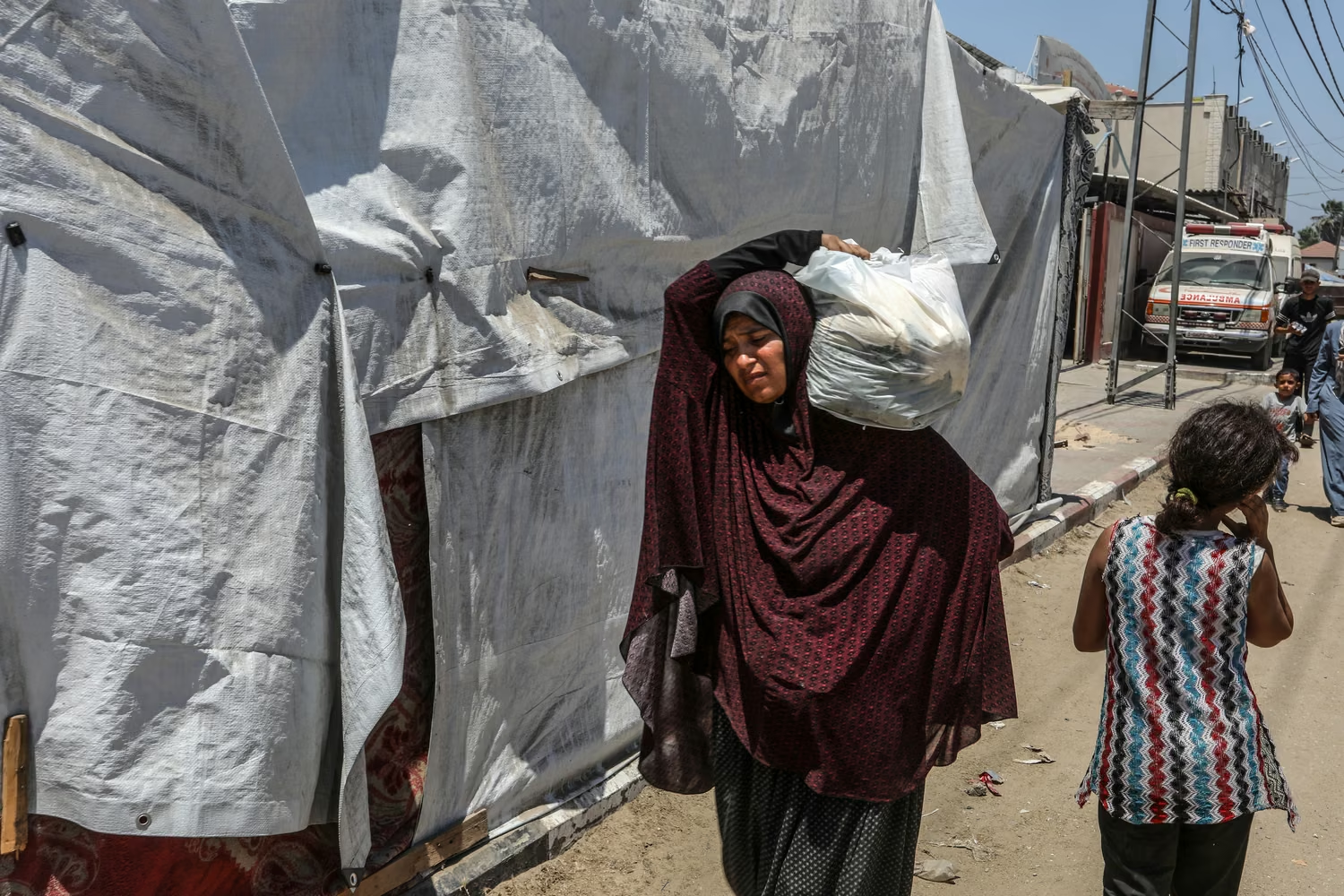
This has been shared on social media, translated from the original arabic. It provides a small glimpse into the impact of the war on the people of Gaza, this time focusing on women and the enormous difficulties of retaining dignity, privacy and comfort in the chaos, overecrowding and destruction in Gaza.
Once again, the people of Gaza are “teaching life”. Mariam Khateeb writes: “I return again and again to the image of my mother during the war. Back curved on a pot, hands trembling, eyes scratching the ceiling at every noise… Her body carried the architecture of war and motherhood at the same time. Now I realize how political her fatigue was – how her work, like that of so many Palestinian women, defied the logic of annihilation.”
We are grateful to Mariam Khateeb for the clarity of her writing and for sharing this with the world.
Gaza, women, and menstruation. The holocaust of the bodies
I bled for ten days in October
without having access to a real bathroom.
The house we took shelter in – like most shelters in Gaza – offered no privacy.
Forty people slept in two rooms. The bathroom had no door, only a torn curtain.
I remember waiting for everyone to fall asleep so I could wash myself with a water bottle and cloth bits. I remember praying not to stain the mattress I shared with three cousins.
I remember the shame – not of my body, but of not being able to take care of it.
In war the body loses its rights.
above all the female body.
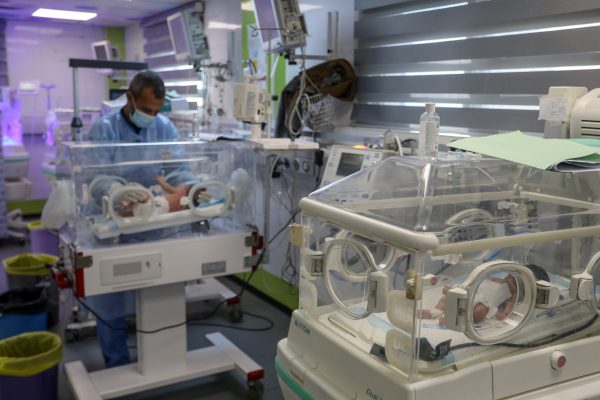
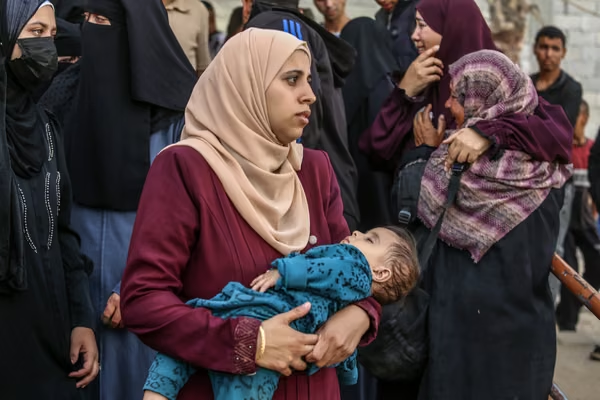
The headlines rarely talk about this, what it means for a girl to have her periods under bombings, mothers forced to bleed in silence and to abort on cold floors or to give birth under drones. The war in Gaza is not just a story of rubble and air strikes. It’s a story of bodies interrupted, invaded and denied rest. And yet, somehow, these bodies still exist.
As a Palestinian woman and displaced student now living in Egypt, I carry with me this corporal memory. Not as a metaphor, but as a fact. My body still shakes at the loud noises. My digestion is wack. My sleep is shattered. I know many women – friends, relatives, neighbors – who developed chronic diseases during the war, who lost their menstruation for months, whose breasts dried up while trying to breastfeed in shelters. War enters the body like a disease and stays.
The body of Gaza is a map of disruption.
Learn quickly to contend, to take up less space, to stay alert, to suppress desire, hunger, bleeding. The public nature of displacement destroys privacy, while constant fear aggravates the nervous system. Women who once cherished their chastity now change clothes in front of strangers. Girls stop talking about their periods. Dignity becomes a burden that no one can afford.
This is the paradox of survival: the same body that is denied safety becomes the instrument of resistance. Women boil lentils by candlelight, calm down children in the cellar, cradle the dead. These acts are not passive; they are radical. To have periods, to carry, to nourish, to soothe – in the midst of destruction – means to insist on life.
I return again and again to the image of my mother during the war. Back curved on a pot, hands trembling, eyes scratching the ceiling at every noise. She wouldn’t eat until everyone else did. She wouldn’t sleep until the kids did. Her body carried the architecture of war and motherhood at the same time. Now I realize how political her fatigue was – how her work, like that of so many Palestinian women, defied the logic of annihilation.
There is no body tent in Gaza.
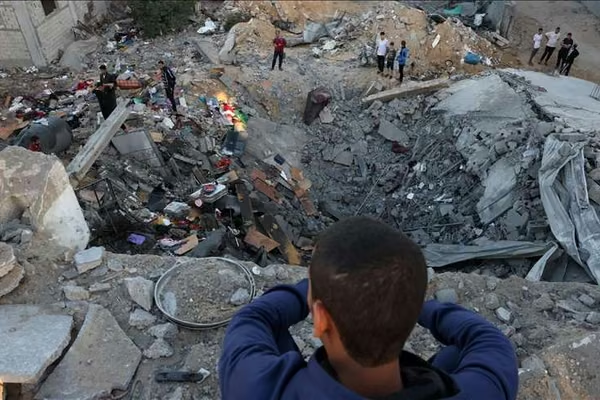
No safe space where the female body can unfold without fear. War strips us – not only of our homes and possessions, but also of the rituals that make us human: washing, having menstruation, processing grief in private.
But even without a shelter, our bodies endure. They remember. They hang in there.
And perhaps, in their trembling perseverance,
they write the truest story of all.
Mariam Khateeb – May 19, 2025
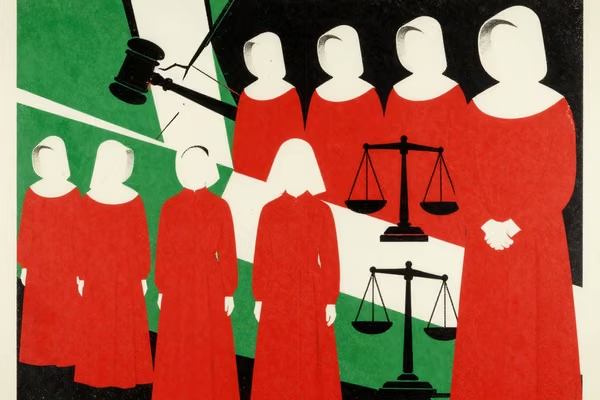
Where are all the white “western” feminists and alleged women’s rights supporters? Palestinian women are being deprived of their basic human needs and rights, but not a whisper from the hypocrites.
Fraternally to Neil and whoever gave his ignorant comment the thumbs-up, may I inform you: the largest UK feminist march (Million Women Rise) marched under the huge banner STOP GENOCIDE IN GAZA as early as international women’s day 2024 ongoing; and FILIA the largest feminist conference, has had Palestinian speakers for many years. Do you not even know that I and Miram David and many other members of JVL – as well as the membership of my local feminist group and many many others active in PSC as well as women’s liberation – have been marching, and writing, and shouting on street corners, and campaigning for divestment and an arms embargo and -not incidentally – raising funds for Palestinian women’s hygiene products?
I am SO fed up with cheap attacks on feminism. What do you want, Neil and brothers – should we have segregated marches, with certified ‘women’s auxiliaries’ so you can be sure we won’t raise any autonomous needs of our own?
Thank you Mariam Khateeb, my heart goes out to my sisters in Gaza denied of the most basic of rights and still staying human. You are heroes, but you shouldn’t have to be.
amanda.
I’m sure you are genuine in your comments, but where is the media shouting truth out loud? Where are the free speech feminists whom we see chattering about women’s rights in Palestine, on the likes of “Good Morning Britain”?
Perhaps the reasons we don’t know about your own fight, is that we aren’t all on your “street corner”. Let’s keep the conversation civil and in context. Being “fed up” and accusing me of a “cheap attack on feminism” is personal, inaccurate and offensive. We all have one focus here, and that is the liberation of all Palestine.