
Settler violence, the USA, UN and international law
JVL Introduction
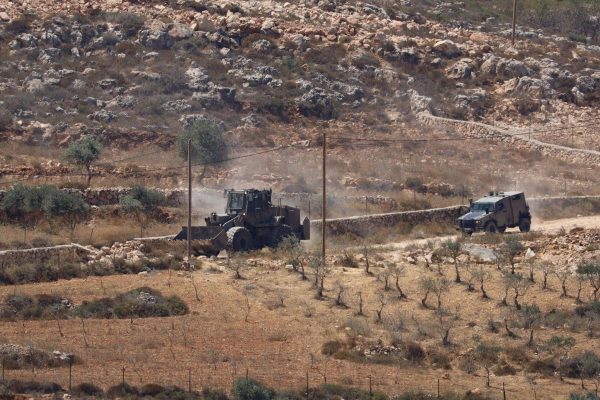
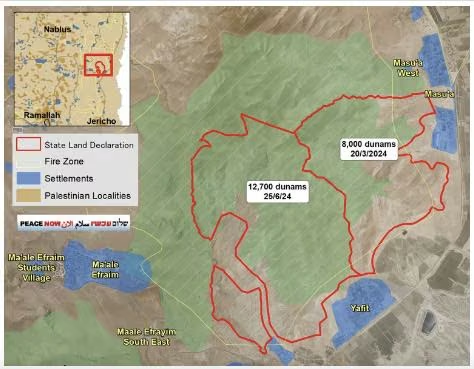
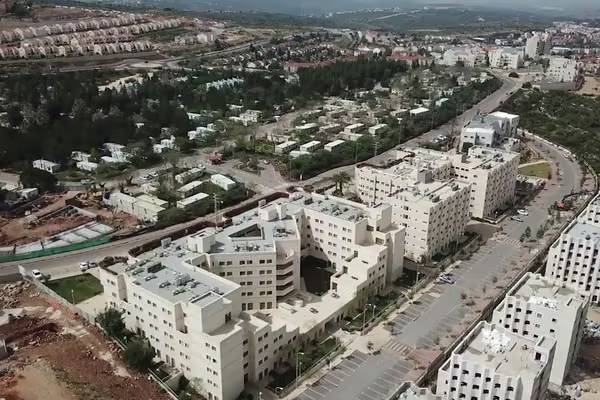
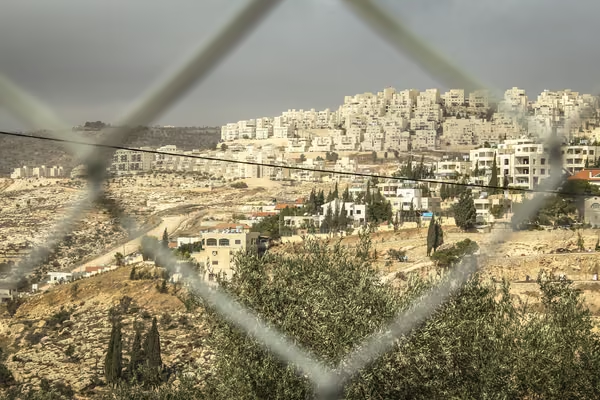
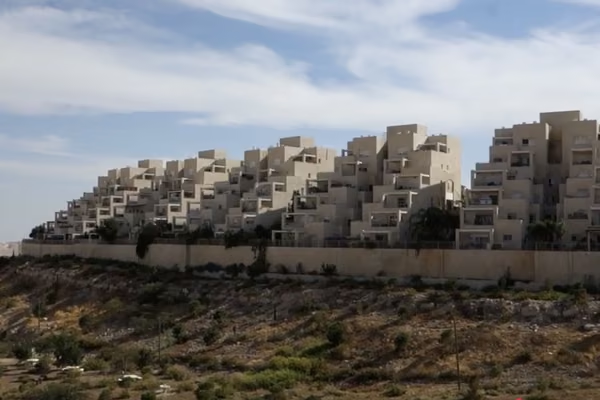
Since this article, focusing on settler violence, was written, the Israeli parliament (Knesset) has voted to approve the building of 19 new settlements, two of them previously considered illegal even under Israeli law – while, of course, all are illegal under international law, something Israel refuses to consider as evidenced by that decision and the August approval for Construction in the E1 Area (between Jerusalem and Ramallah) that means, finally, the West Bank will be cut in two making a contiguous West Bank impossible.
In July 2024 the International Court of Justice opined that the occupation was illegal, that the settlements should be emptied and compensation paid to the Palestinians. As we noted at the time “(m)ore than fifty states made submissions to the ICJ. Significantly not one state tried to justify the Israeli occupation regime as fully legal in relation to human right international law.”
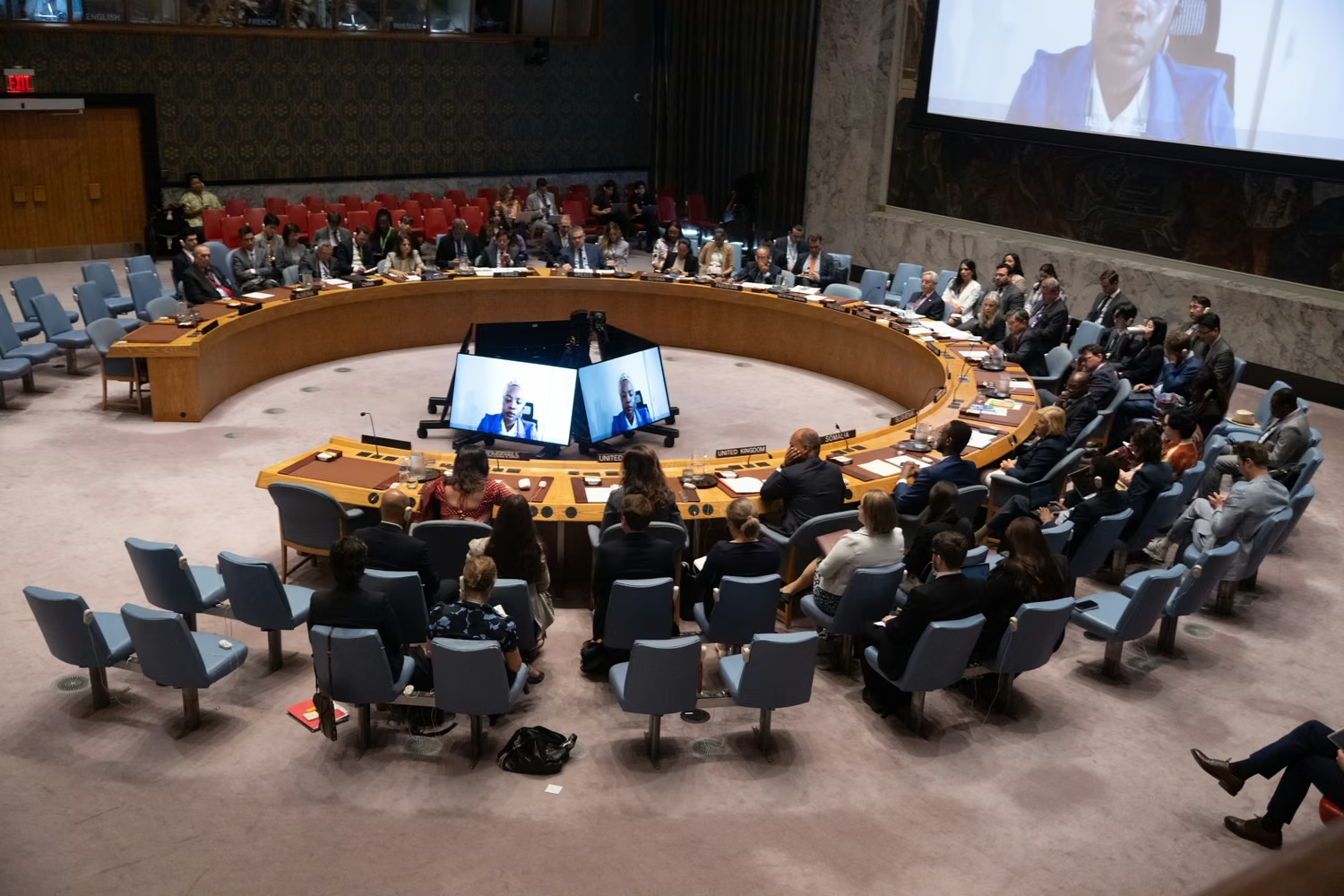
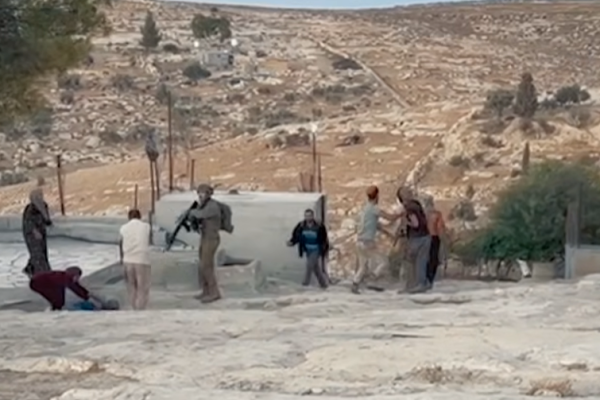
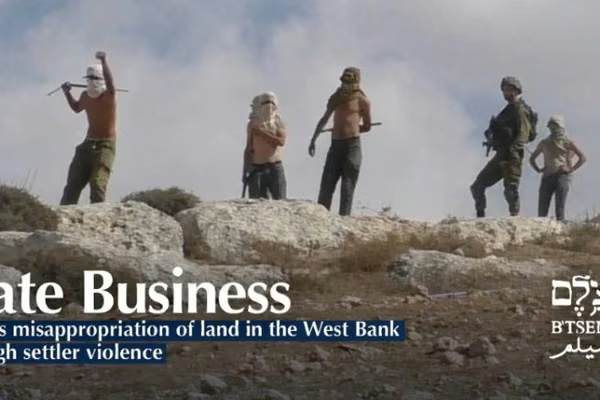
But since then settlements have continued to expand and settler violence has increased exponentially and yet, thanks to the USA’s veto, the Security Council was unable even to pass a motion condemning such violence.
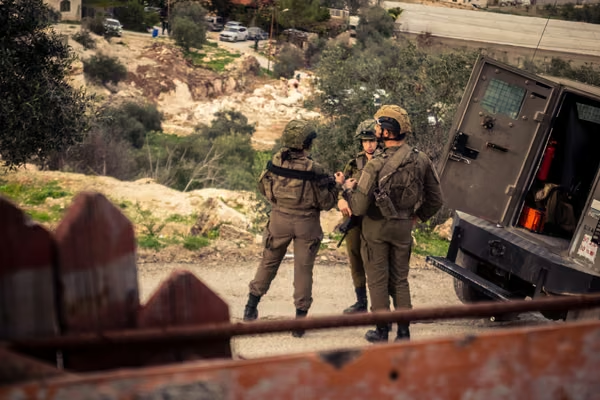
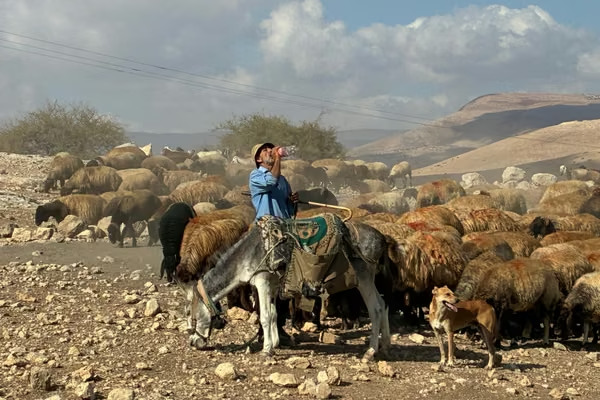
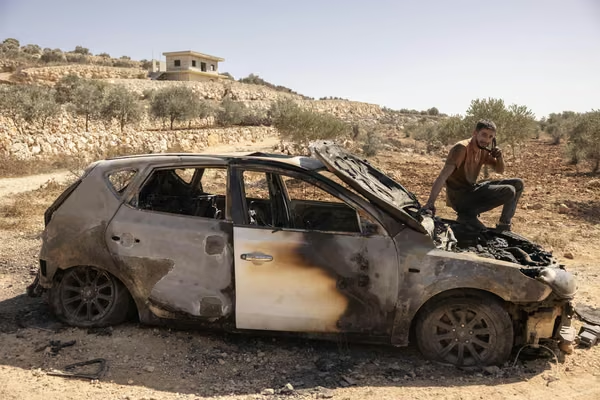
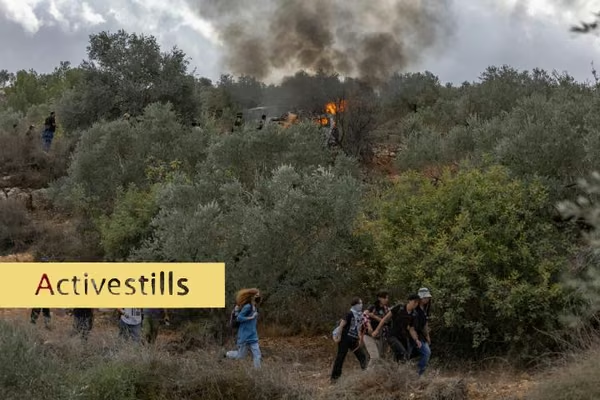
“Israeli Settlements are not the product of religious zealotry alone, nor are they spontaneous acts of extremism. They are a systematic material process — a political economy of accumulation organised through dispossession. Land is confiscated, movement is controlled, water is monopolised, … Entire communities are fractured into isolated enclaves, engineered to be economically dependent, politically fragmented, and permanently insecure. Violence by settlers operates within this system as a functional tool: it terrorises, clears land, and accelerates territorial consolidation while allowing the formal state to maintain a posture of deniability.” This is what the USA is failing to condemn. The system of international law strengthened after the Nazi Holocaust and Occupations has been jettisoned to support Israeli over Gaza and over its effective annexation of the West Bank.
Why is it still in the interest of the USA to support Israel virtually unequivocally? This article looks at the reasons and they are much wider than support for Israel.
LL
This article was originally published by Middle East Monitor on Fri 19 Dec 2025. Read the original here.
US power, Israeli settler colonialism, and the UN: The political economy of impunity
Loading article text…
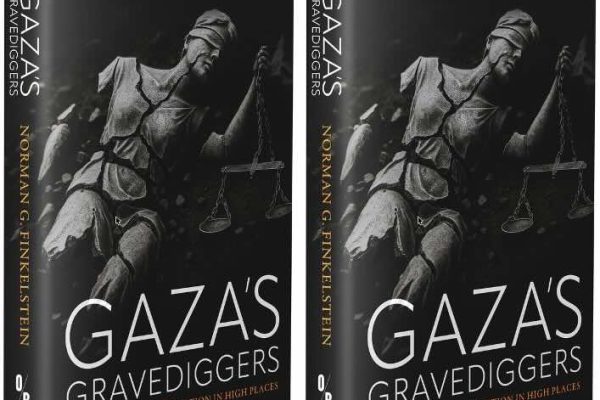

Norman Finkelstein in his new book: “The UN Security Council Declares War on Gaza”, by coincidence, everything in the excellent article above, is echoed by his assertion that:
“It’s only a matter of time before the corruption in the Security Council spreads throughout the UN system. An epoch has passed. The silently raised hands ratifying the resolution sounded its death knell. Going forward, the cause of Justice will have to be reconstituted on a new foundation. It must be said without recoiling—for it is the Truth—but also being cognizant of the gravity of the verdict that: After 17 November 2025, the UN is a rotting corpse.”
Full text can be found on his website: https://www.normanfinkelstein.com/the-un-security-council-declares-war-on-gaza-by-norman-g-finkelstein/
The violent settlers are a part of the genocide of the indigenous inhabitants.
Superb analysis. Not one that will reach the mainstream press.
Clear and honest – and sadly, brutally true.
The Israeli state has been adept for decades at distancing itself from obvious and racist activity: see how the Jewish National Fund has existed as a para-statal group to pretend that the land confiscations and ethnic cleansing were somehow not state policy being enacted in plain sight. (Understand how the Charity Commission in the UK lets it use our our tax pounds to further the settler colonial project.)
But we are in a new phase; nobody’s bothered enough to pretend anymore. The US isn’t even attempting to come up with the normal obfuscations or newspeak formulations. Greenland, Venezuala, Gaza, the West Bank; do you want to make something of it?
In the Bleak Midwinter? You can say that again.