
A message for Passover in a time of genocide
JVL Introduction
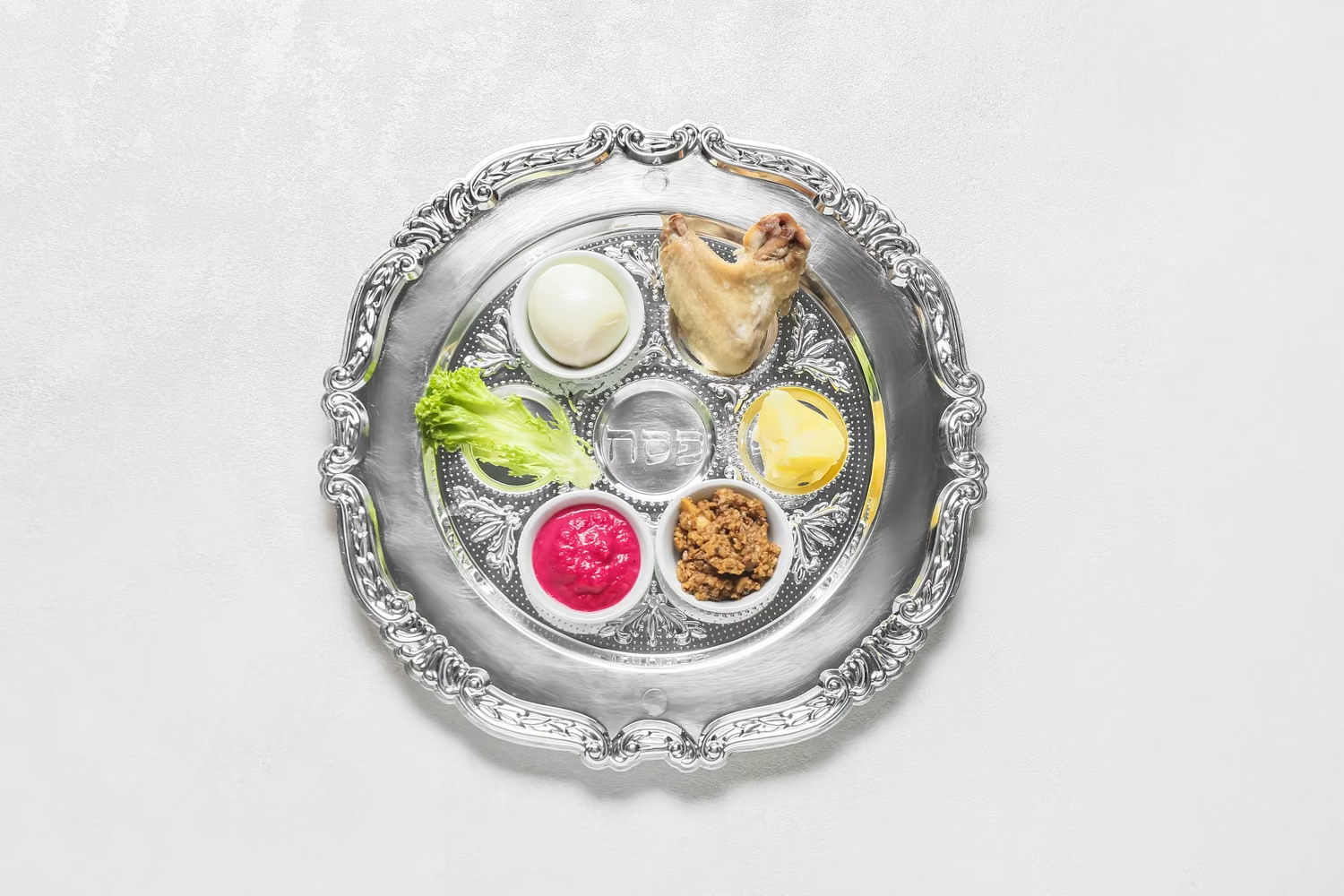
The Jewish Festival of Passover begins (began) at sunset on 12th April. It is the festival where we talk about the experience of Jews being enslaved in Egypt and of their getting their freedom. We are asked to tell the story in every generation so that we understand what freedom means. When the Jews were leaving and the Egyptians pursued them, the story goes that God parted the Red Sea so that the Jews could escape and then many Egyptian soldiers were drowned as the sea returned. When the newly freed Jews were celebrating, God remonstrated saying these are my children too. While some may choose only to remember the suffering and the liberation of the Jews, most of us see the humanity in all people.
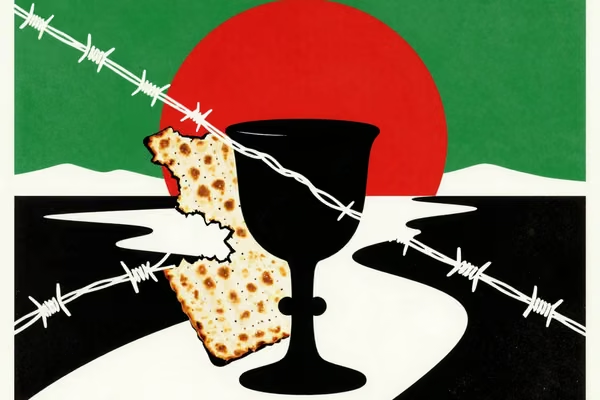
The Passover ceremony also, as echoed in the statement from Global Jews for Palestine (GJP), of which we are active members, “let all who are hungry come and eat”. This does not mean simply that we should give food but that we should sit at the same table. While we are at that table, we ask Four Questions, below the statement are four questions for this year from fellow GJP members, Independent Jewish Voices, Canada.
This year, as last year – and, indeed, for decades past – we cannot think of marking this important event in the Jewish calendar without focusing on Palestine, where the struggle for freedom – and for life – is continuing under the most cruel of circumstances. We cannot look away from destruction of Gaza or from the dramatic escalation of attacks, arrests and displacement in the West Bank and East Jerusalem. We will continue to work for Palestinians’ liberation and for peace with justice for all.
Statement from Global Jews for Palestine
40 days of starvation
For 40 days, Israel has blocked all the essentials of life from reaching 2.3 million civilians of Gaza. In the Torah, 40 days and 40 nights are a metaphor for an extended time. These 40 days have indeed been endless, barbaric – and Israel’s crime of starvation continues.
This weekend we enter the Jewish festival of Pesach. Around the world, we will open our services by saying,
Let all who are hungry come and eat.
Each year we envision liberation, but this year is not like the other years. This year, these words feel unbearable.
Pesach teaches us that the most odious crime is one people’s subjugation of another: a crime built on a lie. This year we are shattered by witnessing Gaza struggle each day to survive the crime of genocide, built on the lie of Jewish supremacy.
We plead and we work for the end of this needless hunger, for ceasefire, for the justice which underlies real peace.
This year we gather to hold back the despair. Next year, may the criminals be behind walls while Gaza breathes in safety.
Each year, during the Seder ceremony, there are four questions; Independent Jewish Voices Canada has provided these more appropriate questions for today.
If freedom is so valuable for us, how can we believe that other people do not deserve the same?
The Passover story is one of collective liberation – where a people who suffered oppression journeyed together toward freedom.
If we believe in freedom, how can we deny it to Palestinians who are living under apartheid and extreme violence by a so-called Jewish state?
How do we keep our hearts open to the suffering of others?
In the Passover story, Pharaoh’s heart is hardened against the Israelites at the last moment. Because of this, he orders his soldiers to chase the Israelites. But Pharaoh’s army is drowned in the Red Sea. This story shows us that refusing to care about suffering of others leads to massive loss and devastation. How can we stop ourselves from becoming hardened against the suffering of Palestinians being inflicted by Israel? How can opening our hearts to the pain of others help lead us in working towards justice?
What do you think our ancestors would say about the importance of collective liberation?
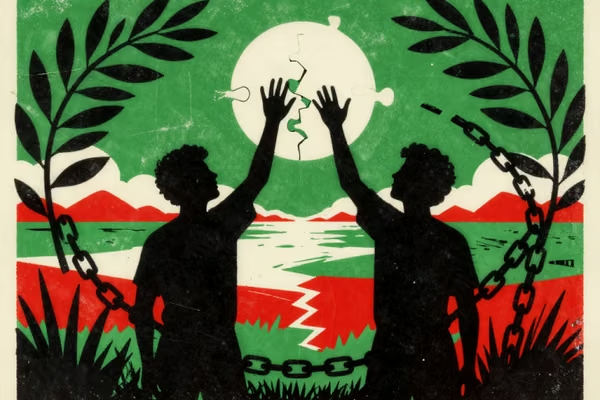
Jewish forebear Emma Lazarus wrote, “Until we are all free, we are none of us free.” Jews have been organizing for labor rights, social justice, and progressive causes for generations. Jewish traditions have always valued justice and liberation for all people. What would our ancestors say about our responsibility today, both as Jews and as people living in a country that funds Israel’s genocide?
What does a just future look like, and how can we work toward it?
Every year, we tell the Passover story to reflect upon the importance of freedom, and envision together a future free from oppression. This year we can ask ourselves, what does that just future look like? For the next eight nights we will be reflecting upon our journey from oppression to freedom. How can we make sure our actions reflect our values of liberation and solidarity?
As we gather to celebrate liberation, let’s remember that we are responsible for more than just ourselves. We are part of a larger community that must hold itself accountable for the impacts of both our actions and inactions.
So, this year, at your seder table, ask these questions. Let the conversation flow. Make space for a dialogue that invites compassion, justice, and collective responsibility.
Next year in freedom. Next year in a world at peace.
Thank you so much for this article. It sets the agenda for us all and (to my surprise) gives me some much-needed inner peace.