
What are you defending if you cannot say Genocide?
JVL Introduction
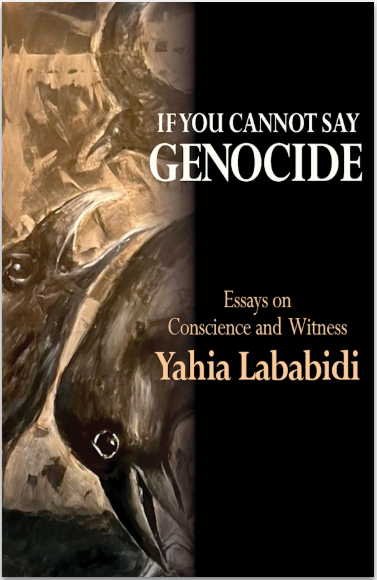
This review of a new book shows a wide ranging collection of essays, written from afar but highlighting the importance of art, of culture and of language – western language in particular.
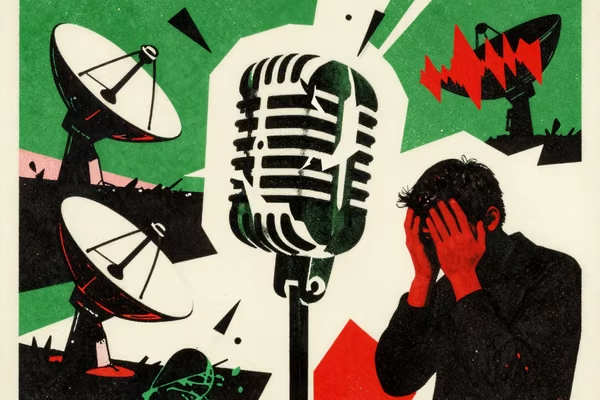
Silence, euphemisms, and passive voice do more than misrepresent violence; they create an environment where violence can occur undisturbed.
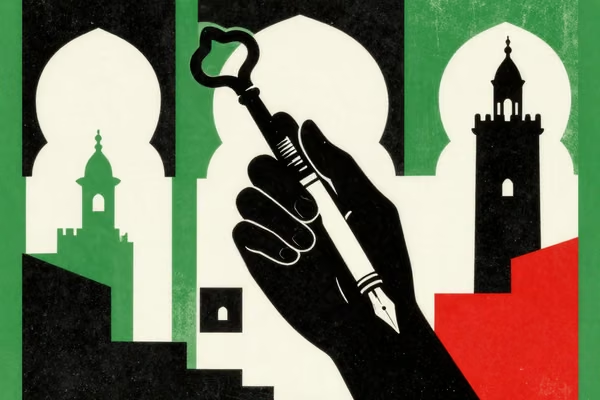
The reviewer notes that “the book emphasises that Palestinian freedom and Jewish safety are interconnected and essential. While it expresses genuine anger, it also firmly rejects hatred.” and also that “Lababidi concludes [this book] with a lesson from Muslim and Jewish traditions: if the final hour approaches while you hold a sapling, plant it. Repeatedly insisting that the appropriate term for what is happening is genocide this is “a form of planting, a deliberate act undertaken without the certainty of shade, because the alternative is leaving the ground bare.”
The obvious question to ask is what is being defended when politicians and media and Israel’s uncritical supporters including most of the Jewish Establishment refuse to use the term genocide?
This article was originally published by The New Arab on Wed 26 Aug 2026. Read the original here.
If You Cannot Say GENOCIDE: Yahia Lababidi on Gaza, language and the politics of silence
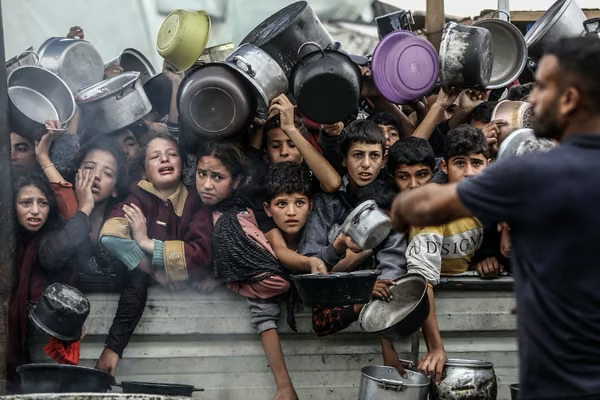
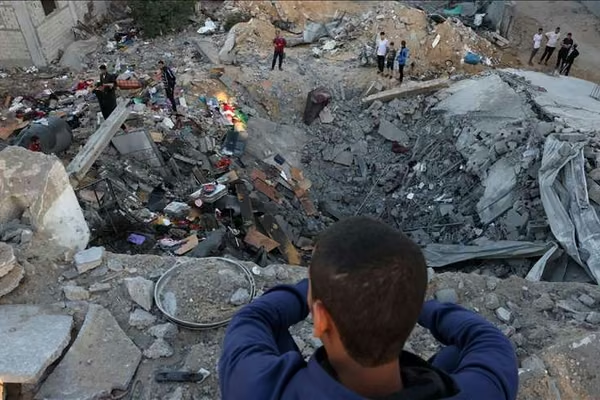
Book Club: Yahia Lababidi’s ‘If You Cannot Say GENOCIDE’ examines how euphemism and silence shape the way we understand Gaza and Israel’s mass violence
Loading article text…


Comments are now closed.