
The radical Jewish tradition for today
JVL Introduction
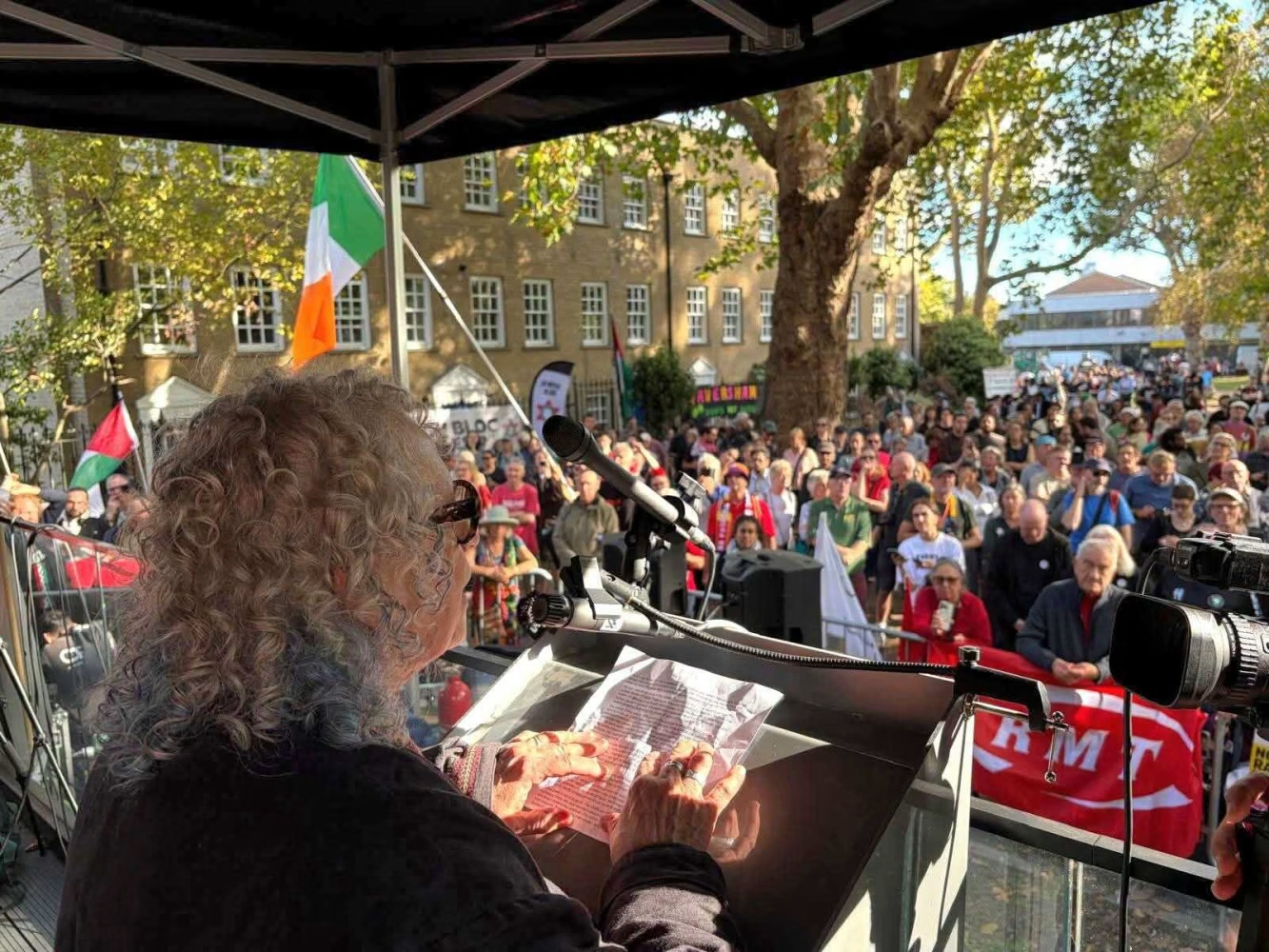
Julia Bard was one of three speakers at a session on “The Radical Jewish Tradition” at the annual Historical Materialism Conference.The full title of her paper is: The radical Jewish tradition brought up to date: undercurrents, conflicts and possibilities. Julia writes about some of the underlying developments in Jewish radical activism over the last few years, including the alliance of groups that make up the Jewish Bloc for Palestine. She examines some of the political differences and undercurrents in how they relate to Jewish establishment institutions, to the British state, to Israel/Palestine, and to fellow activists.
There is much to consider in what Julia writes, for example working with others , opposing the Zionist “takeover” of Judaism but also the limitations of defining ourselves solely in relation to that opposition. nd much more. We are pleased to publish this on our website.
(We will publish the other two papers presented by Donny Gluckstein and Rob Ferguson at the session in due course)
JB/LL
I have been active on the Jewish left since the 1980s and found a political home in the Jewish Socialists’ Group after being involved in socialist, feminist and antiracist politics since the 1960s. My focus here is on Britain, but my understanding of radical Jewish activism is informed by connections with Jewish activists in many other countries, including the USA, Chile, Australia, South Africa, Germany, Poland, Austria, Belgium, France and Israel/Palestine.
It is also informed by relationships with our counterparts in other minority communities in this country. And by counterparts, I mean both people who are dissident within their own communities, and generally communities being targeted by racism and fascism.
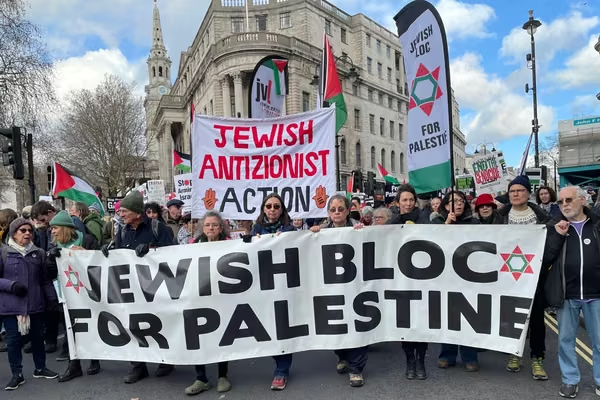
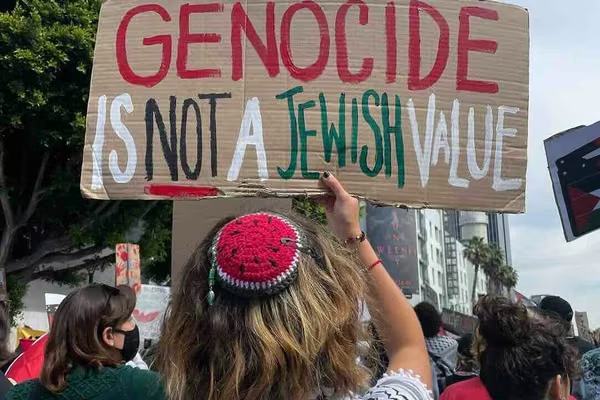
Over the last decade there has been a proliferation of groups taking political action as Jews. Unsurprisingly, a focus for the most recent growth in Jewish activism has been the devastation of Gaza and the murderous, proudly expressed fascism of the Israeli government. Ad hoc Jewish blocs have gathered on antiracist and pro-Palestinian demonstrations since the early 2000s, but a more formalised Jewish Bloc has coalesced since October 2023, and has formed an important presence on every national Palestine demonstration since then.
But the urgency and enormity of that situation has, in some ways, distorted radical Jewish politics by focusing everything through the lens of Israel and Palestine and neglecting issues we need to address in the diaspora. The two affect each other in complicated ways, and it’s not always easy to act strategically or to address differences constructively.
Washing our dirty linen
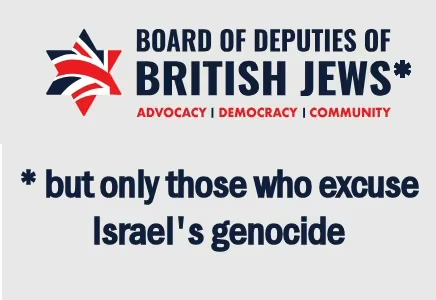
Many Jews have had a rapid education in the internal politics of our community, which they were previously unaware of or unconcerned about. The mists have cleared for them on the role of the Board of Deputies of British Jews (founded in 1760) and its more recent outgrowth, the Jewish Leadership Council (set up in 2006 with no democratic or other remit to lead or represent anyone). They no longer treat as an irrelevancy Britain’s Chief Rabbinate, with the most far-right incumbent in living memory, who is treated as the spiritual voice of all British Jews, despite being the formal leader of only one group of synagogues, the United Synagogue. That group is the largest single religious bloc but doesn’t come close to representing the majority of Jews. The Chief Rabbi does not represent other orthodox, ultra-orthodox or liberal and progressive synagogues, or the large secular Jewish population. This new understanding has enabled radical Jews to mount powerful demonstrations when one of the synagogues under the Chief Rabbi’s auspices hosted the inaugural meeting of the Reform UK Jewish Alliance, and when another hosted the Great Israeli Real Estate Event, marketing property in the Occupied Palestine Territories.
Newer Jewish radical activists have learnt that we need to campaign in several directions simultaneously. We must challenge both the power structures in our own community, which claim to represent us to the press, the public and the state, and the growing authoritarianism of the British state which is spreading and normalising racist and fascist ideas, narrowing allowable debate, trashing social justice and colluding in genocide.
This affects everyone, especially the minorities in the crosshairs at the moment. It’s horrifying for us to see the parallels between the casual, ubiquitous racism against Muslims, at every level of society, and the antisemitism that was normal and acted on with similar violence in the 1930s, and which is being openly expressed again today.
Racism against minorities from outside, makes it difficult to challenge injustice inside their communities. We don’t want to wash our dirty linen in public for fear of giving ammunition to racists – which it does. But – and this applies to all minority communities – if we don’t challenge our own communal leaders, we hand them the power to define and represent us, to draw boundaries, and to exclude us.
We’ve seen this writ large in the Jewish community. It’s not new. Jews have dissented from their designated community leaders throughout our history. It has become more open and explicit since 7th October 2023, but the recent rise in Jewish radical activism didn’t start then, nor even with Jeremy Corbyn’s election as Labour Party leader – though that did alarm our communal establishment.
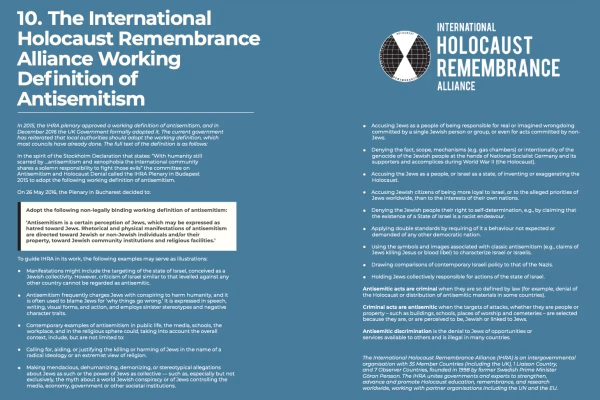
The weaponisation of antisemitism was seriously ramped up from 2015 onwards but began long before Corbyn became leader. (I highly recommend Mark Mazower’s book, On Antisemitism for an excellent analysis of modern antisemitism.) Although the bad-faith actors who used antisemitism as a political weapon attempted to elide Israel, the Israeli government and Zionism with Jews, this was not only – and not primarily – about Israel and Palestine. It was actually about dissociating Jews from the left so they can claim that they are aligned with the British state. Our response as Jewish socialists to the weaponisation of antisemitism is not to deny that Jews are the target of racism but to identify and challenge actual antisemitism, wherever it emanates from. And there’s a lot of it about, coming from many directions. This includes people purporting to be on the left sharing far-right posts that promote conspiracy theories attributing world events to “Jewish money”, the “Jewish lobby” or “Jewish control”, reaching for false-flag “explanations” for attacks on Jews or casually invoking stereotypes like “Jewish princesses” and worse.
The Board of Deputies of British Jews’ behaviour today is on a continuum with how it behaved before Israel existed. In the 1930s, for example, when the Board and most Jewish communal organisations were non-Zionist or anti-Zionist, they did their best to keep Jews away from political activism, especially militant activism against the fascism and antisemitism that overshadowed the lives of working class Jews every day. They were against Zionism then because they feared accusations of dual loyalty, but they also feared, correctly, that it would undermine their rights and status as a minority in Britain.
It happened again in the 1970s, when the Board and the Jewish Chronicle told young Jews to stay away from the Anti-Nazi League – fortunately, without much success. They claimed that the ANL was non-kosher because its leaders were anti-Zionist, but in fact they wanted to keep Jews out of anti-racist/anti-fascist protests, because the Board’s role was to police our community, to make sure we behaved ourselves, didn’t get tangled up with the left or with militant antiracists or with members of other minorities. Instead, we were supposed to show appropriate respect to the British state for allowing us to live here.
When I was growing up, I was told that each of us was an ambassador for our people: if one of us behaved badly, this made the whole community vulnerable. This contains two powerful messages: that antisemitism is brought on Jews by Jews; and that we are here on sufferance.
The fiction of the nation state
It’s very difficult to extract ourselves from the hegemonic idea that the nation state – a culturally and linguistically homogeneous population living together within political borders – is an eternal truth. However much we know why and how violently those borders were drawn, and what mixtures of peoples, cultures, languages and histories are contained within them, most people still feel that minorities are an aberration. And Jews are a longstanding aberration. So much so that we are constantly asked, including by people on the left: are Jews a race or a religion? Progressive, antiracist people often assert that Jews have only persisted because of antisemitism – that without being forced to develop a self-defensive way of life, we would have disappeared into something called the majority. So, we not only internalise the shame of being a Jew but think we need it to survive. We are led to believe that if minorities are left alone, they just dissolve, assimilate, change from the particular to the general, from the peculiar to the normal.
In 1967 in the wake of the Six Day War, Richard Marienstras, a French Jewish literary theorist, set up a group called Le Cercle Gaston Crémieux (Crémieux was head of the Marseille Commune in 1871), whose aim was “to promote a diasporic Jewish existence without subjugation to the synagogue or Zionism”. The circumstances of the French Jews were quite particular. Most famously, the French Revolution offered “to the Jews as individuals, everything; to the Jews as a people nothing”. The bargain of emancipation was that complex, dynamic, interactive Jewish identities – a mesh of ethnic, religious, social elements that constituted their customs, culture and communal identity – would be redefined on singular, private, religious grounds. This also happened in Germany. Following the Enlightenment, many Jews defined themselves as “Germans of the Mosaic faith” – cutting themselves loose from their millennia of peoplehood in the diaspora, diverse, scattered, but with a collective recognition of each other.
In other words, the Jews, like other minorities, whether immigrant or indigenous, like the Bretons or the Basques, were not recognised as having collective lives or identities. In a paper called “The Jews of the Diaspora or the Vocation of a Minority”, Marienstras challenged the prevailing nationalist idea that minorities are only perpetuated by obscurantism, poverty and worship of the past, and that their disappearance is natural, a sign of progress. He argued the opposite: that if minorities were not pressurised to assimilate, did not have their languages banned or downgraded – like the Bretons, the Welsh, the Irish, the Scots, or, as in the early decades of the State of Israel, Yiddish-speaking Jews – they will continue to exist, to express themselves and thrive.
Marienstras accuses much of the left as well as the right, of an inability to recognise any collective other than that of the nation state. He described this as “the benevolent violence of redemptive universalism” and coined the term “ethnocide” to describe the fatal undermining of minority peoplehood.
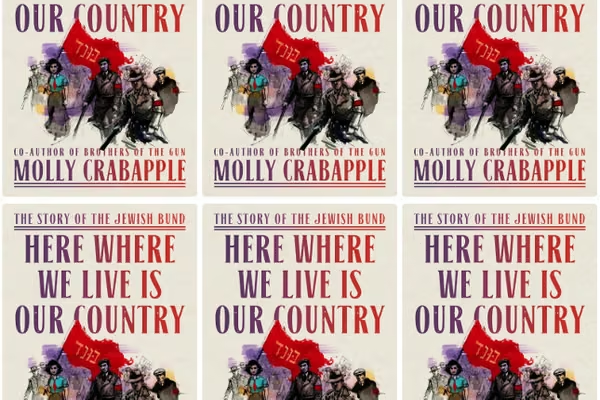
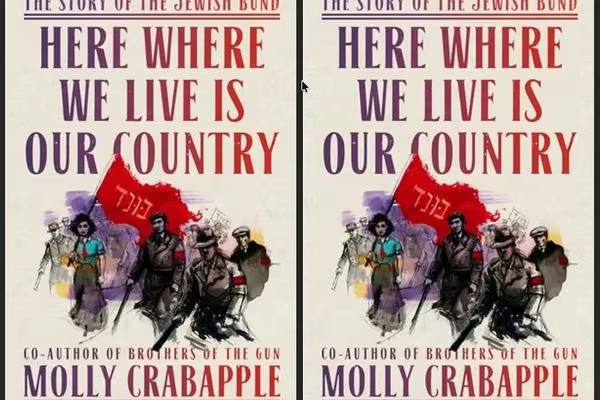
For me these ideas underpin the idea of doikayt, developed by the Jewish Labour Bund, which inspires the politics of the Jewish Socialists’ Group. Doikayt means, literally, “here-ness” – the right to be wherever you are. It describes the fabric of life as a minority amongst other minorities and the majority. The title of Molly Crabapple’s recent book, Here Where we Live is Our Country, or the similar Bundist phrase, “Wherever we live, that’s where we belong”, encapsulate a truly radical challenge to nationalism.
A pillar of political Zionism is the claim that by having a state of our own, Jews would become a “normal” people – assimilated into the majoritarian world of nation states. This was challenged by the Bund right from its inception in the 1890s. The Bund opposed Zionism because it opposed all nationalism. It said: we are not the chosen people – we’re just a people who live as a minority in countries all over the world. We are internationalist and anti-nationalist.
Henryk Erlich, a leading member of the Bund wrote presciently from Poland in 1933 about Zionism, “Our Jewish bourgeois opponents are especially enraged by our claim that there is a certain kind of Jewish nationalism that is just as ugly, just as disgusting as the nationalism of the other nations; and if Jewish nationalism, as a general rule, is not bloodthirsty, this is only out of necessity, not virtue; if an appropriate opportunity arose, Jewish nationalism would show its sharp teeth and nails no less than the nationalisms of other nations … No, we are not a chosen people. Our nationalism is just as ugly, just as harmful, and has the same inclination to fascist debauchery as the nationalisms of all the other nations.”
An underlying discord
Which brings me to a troubling faultline in the Jewish left today. Israel, which claims to represent all Jews the world over, and the diaspora Jewish establishments which demand that Jews support Israel right or wrong, claim that Zionism is a fundamental plank of Jewish identity. In order to oppose it, a number of Jewish activists who support the Palestinians are making anti-Zionism the definition of their Jewish identity. But this is just a mirror image of the Zionist imperative. They are still defining themselves, albeit like a photographic negative, in relation to a nation state. They are allowing that state, or its proxies like the Board of Deputies, to define the character and borders of diaspora Jewish communities – to decide who is a valid Jew and who they would write off, and to dictate the boundaries of allowable discourse and behaviour.
A radical and effective response to this is the simple formulation used by the American organisation JFREJ, Jews For Racial and Economic Justice: “We affirm that all the Jews … are Jewish!”
Antizionism has been a release valve for a lot of people who feel ambivalent about their identity as Jews. They have grasped this chance to forge a Jewish identity they can claim with pride – positioned against Zionism. But it still locates Israel/Palestine at the heart of who they are. In contrast, doikayt – “here-ness” – does not only simply oppose Zionism as a form of settler colonialism; it opposes Zionism as a form of majoritarianism, of assimilationism, of nationalism. It challenges majoritarianism by asserting minorityness – a dynamic heterogeneity: interactive, multilingual, migratory, mixed – which transgresses borders and particularism; it transgresses the very idea of creating literal or ideological borders around peoples deemed (always wrongly) to have singular cultures or ethnicities or religions.
Doikayt isn’t just for Jews. It applies to all minorities and is a basis for forging relationships between all communities facing oppression and discrimination, targeted by racism and fascism – dynamic cultural relationships, interactions and creativity of the kind explored by Paul Gilroy in The Black Atlantic.
So, of course we reject the Zionist imperative that the Jewish establishment tries to impose on us, but we don’t want to just reflect their mindset back at them. As well as our horror at what Israel is doing in Palestine and beyond, and condemning our community leaders’ collusion with the genocide, we understand that Zionism erodes the fabric of Jewish life and undermines our necessary relationships with the people we live amongst across the world. It does this dramatically, in cases like Argentina under the Junta in the 1970s, where a very disproportionate number of Jews were disappeared by a regime that was armed and supported by Israel, or South Africa, where their Board of Deputies handed details of Jewish activists to the apartheid authorities. But it also depletes Jewish life in less overt ways: by draining economic, social and cultural resources out of diaspora communities in favour of Israel; in funnelling Jewish children into Jewish schools where a monolithic Israeli worldview undermines and obliterates the rich mosaic of diaspora life, traditions and, not least, the languages that give us access to our own long history.
Shifting political allegiances
What’s interesting is that our community is polarising in response to the changing political environment and the increasingly desperate attempts by the Board of Deputies, the Chief Rabbi and the Jewish media to corral us within their ideological boundaries. According to the Institute of Jewish Policy Research (JPR) in a 2025 report, while the number of Jews supporting the Labour and Conservative parties had fallen, support for the Greens was growing dramatically, especially among younger Jewish people. At the same time, support for Reform UK also grew, but from a much lower base. The JPR was a bit flummoxed by this Jewish support for the Green Party, which defines Israel as an apartheid state, but a year later, and after the US elections, they might be gaining a bit of clarity on this. Even at the time, though, they recognised that “for a significant minority of Jews, domestic priorities and progressive values outweigh foreign policy concerns.”
And if we needed more evidence, the American Midterms have provided them. Jews for Racial and Economic Justice, JFREJ, the organisation I mentioned earlier, now has its first representative in the Congress: Brad Lander, standing for the Democrats, won 83% of the vote in New York’s 10th Congressional District. A JFREJ activist, he has spent decades working for redistributive economic policies and for social justice in the city; he stood alongside Zohran Mamdani in the mayoral elections; he was arrested a few weeks ago in the West Bank, where he went to witness the violence against the Palestinians and to help with the olive harvest; and he contributed to the defeat of Trump this week backed by a panoply of Jewish campaigners, including: If Not Now, Bend the Arc, Jews Against ICE, Tru’ah (linked with Rabbis for Human Rights), as well as JFREJ.
The Bund was almost wiped out by the Nazis, and its legacy – the diasporist conception of doikayt, the history of all its progressive social, educational, cultural, economic, linguistic and political life, particularly in interwar Poland – has been actively suppressed by the Zionist establishment. But its ideas, the nurturing of heterogeneity, of mixture, of minorities acting fruitfully in solidarity, are at least as relevant now as they were then. Not just for Jews but for all of us.

‘They want us all committed to their project so we should all be in the same boat, chas v’sholom. Chas v’shalom! We’ll all sink together. Nothing doing! Nothing doing! We’re a separate entity! We’re Jews, not Israelis.’ Rabbi Avigdor Miller
Thank you Julia for a clear analysis of the key questions. My comments relate to three comparatively small issues, but I’m going to make them in the interest of accuracy.
1) You say “We don’t want to wash our dirty linen in public for fear of giving ammunition to racists – which it does.” Does it? I guess it partly depends on how dirty the linen is, but real antisemites don’t need any linen when they can more conveniently use conspiracy theories and other fictions. On the other hand, it’s arguable that the image of a unified Jewish community, 100% united in support of Israel, strengthens the stereotype of Jews as a clannish, homogeneous and aggressive cabal wielding disproportionate power in favour of their vicious co-religionists. Let’s keep washing that linen!
2) You refer to “the diaspora Jewish establishments which demand that Jews support Israel right or wrong”. One of the things that shocked me in 2023-24 was that the Israeli state and its supporters declared a very different view: Israel could NEVER be wrong — it was always right, by definition, no matter what crimes it committed. This was claimed openly as a reason for not recognising the authority of international courts: they had to be antisemitic because Israel’s representatives had redefined right and wrong, so anyone who challenged that redefinition was necessarily evil, a terrorist etc etc.
3) You make valid criticisms of the appalling Mirvis and his arrogant misuse of the legacy position of “Chief” rabbi. But most other rabbis have either gone along with his bloodthirsty pro-Israel line or have failed to clearly differentiate themselves from it. The “Reform” or “Progressive” rabbinate, for example, have developed their anguished both-sides-ism to a fine art and very few of them have renounced zionism. Some orthodox rabbis have uttered horrific statements in my hearing, showing that they regard “Arabs” as subhuman at best. It’s not only Mirvis — although you’re quite right that he sets a dreadful example and has unique access to the mainstream media.
Despite these criticisms, I salute your persistence in tending the flame of doikayt.