
The complicity of Israeli academia

JVL Introduction
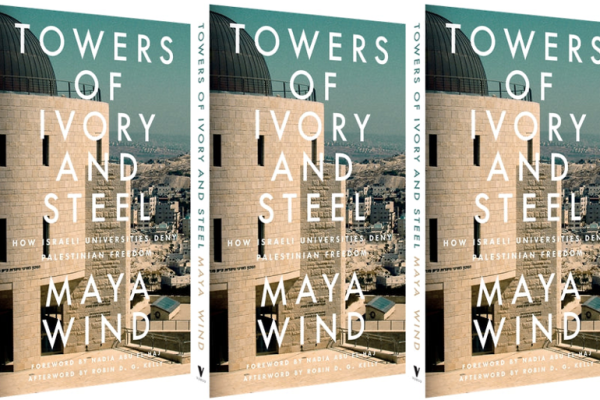
We recently posted a review of Maya Wind’s book Towers of Ivory and Steel: How Israeli Universities Deny Palestinian Freedom here.
It is highly relevant today when one demand from the student encampments is that their universities should cut ties to Israeli institutions.
This has been fiercely resisted in the name of “academic freedom”.
Maya Wind’s elaboration of central argument of the book – that Israeli universities were planned and built as settlements in a project of “Judaization” – should go a long way to showing how misjudged this argument is.
RK
This article was originally published by Jewish Currents on Thu 23 May 2024. Read the original here.
The complicity of Israeli academia
Scholar Maya Wind discusses Israeli universities’ longstanding role in Palestinian subjugation.
Loading article text…








There is a long and interesting history of collaboration between British universities and the Israeli state. As a Cambridge graduate I receive ‘Cam’, the alumni magazine, and I was struck by an article in the Michaelmas 2002 issue about the ‘Programme for Security in International Society’, an institution which presented itself as both academic and directly political. I believe that its work continues, under different names.
The article featured an Israeli postgraduate who combined his PhD research with work, presumably for Israeli security services, analysing ‘some half million documents seized in Ramallah this spring by Israeli military intelligence’. He spoke, without apparent irony, about the benefits of ‘having full access to the original documents’ and had himself photographed in ‘Yasser Arafat’s ruined headquarters’. At the time I was not particularly interested in the Israel/Palestine question but I remember being taken aback by the university’s weak boundary between research and espionage, its casual assumption that research should be directed towards promoting particular political interests and its apparently total lack of ethical concerns about working with stolen materials.
The student in question was a man called Ronen Bergman, who is now a prominent journalist/historian, probably best known for his book ‘Rise and Kill First’, a history of assassinations carried out by the Israeli state outside the country’s borders. There is no suggestion that Bergman has ever been involved in any assassinations himself but it is interesting to ask whether, if he had been, Cambridge would have felt any problem in admitting him as a student.