
Jewish Journeys from Zionism (9) Mike Cushman
JVL Introduction
This, the ninth in JVL’s “Jewish Journeys from Zionism” series, features Mike Cushman, JVL’s Membership Secretary. Mike shares some of his own and his family’s history. He talks about family Seders; learning about Auschwitz and the Holocaust; and volunteering to assist Israel in the six day war. He describes his own experiences of support for liberation movements from Vietnam to Palestine, which has included visits to the West Bank and sailing to Gaza – on probably the last boat Israel allowed in.
As with all the Journeys, our thanks to Kitty Warnock who interviewed Mike and created this essay from what he shared.
Index of all the personal stories
LL
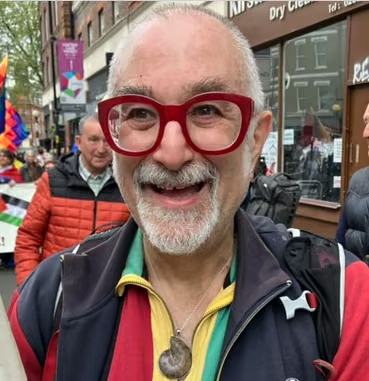
I’m Mike Cushman; I’m 76.
My grandparents came to Britain at the end of the 19th century, from Warsaw, part of the wave of immigration that encouraged Balfour to produce the Aliens Act[i]. Unusually, I have no connection to London’s East End. My father’s family was in Berwick Street in the West End, and my mother’s family in Tottenham.
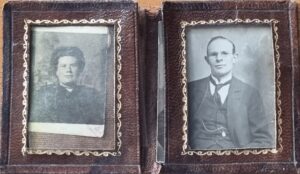
My grandfather died when my father was about two, and a Jewish charity gave my grandmother some money to set up a ribbons and baubles stall in Berwick Street market. My step-grandfather was a cigar-maker.
I never knew any of my grandparents, because my parents were both the youngest in their families, and married late, so by the time I was born all my grandparents were dead.
I was brought up in West London, in a not particularly Jewish area. I think there was one other Jewish child in the flats where we lived for my first ten years, and when we moved to another house I don’t remember any Jewish families in the street.
My parents were religious but not avidly so – High Holy Day Jews. They were always in Shul for Rosh Hashanah and Yom Kippur, and my mother always hosted a Seder for the extended family, but they were not Sabbath-observant: they both worked in retail, and Saturday was the busiest day, even though the firms they worked for were Jewish. When I was young my father was in Ealing Liberal Synagogue, but he switched to Reform, because I don’t think he found the Liberal forms of worship very satisfying. Reform has many more of the elements of orthodox worship, which he had been brought up with. Some members of the family were much more involved than were my parents: one uncle was President of Edgeware Reform Synagogue, and another was heavily involved in Brighton Liberal Synagogue.
I was brought up knowing three things about myself – I was very good at sums, I was Jewish, and I was Labour. That was my identity. The Jewishness didn’t express itself in any specific ways, it was just something I always knew about myself.
Index of all the personal stories
One of things I learned when I was a kid about being Jewish was that Jews are mean! That was the biggest element of the antisemitism around me, though I don’t remember anyone ever saying it to me. It has made my life difficult, as I’ve never known how to be authentic with generosity: I always fear I may be overcompensating; trapped between guilt and meanness. I also absorbed the idea of Jews being weak, and I remember being really excited, years later, when I discovered that many of the toughest American gangsters from the 1930s were Jewish. I felt, this is great! One internalises these things very deeply. And I remember being excited when I started supporting Queen’s Park Rangers as my local football team and discovered Mark Lazarus[ii] – a Jewish footballer! What sort of Jew is that? I didn’t know about the history of Jewish boxers and the like from the East End. The archetypal Jew to me was weedy and brainy, an Einstein.
My parents probably thought Israel was a good thing, but was it a topic of conversation? No, it was just an assumption that Israel was there and it was a good thing, and that was as far as it went. I don’t think there were relatives they knew of lost in the Holocaust, but I never actually explored that with them. The way I put it is, I lost unknown and uncounted relatives in Warsaw and Treblinka.
I first engaged with the Holocaust by reading pamphlets on my uncle’s bookshelf while my relatives had tea in the garden. I discovered pamphlets about the Nazi extermination of the Jews. And at that age, I was fascinated, horrified but also guilty. I was reading stuff I didn’t think I was meant to look at. One booklet, and the one that has stuck with me most clearly, was the first encounter I had with Auschwitz. I have lived with that knowledge for 60 years. Knowing what people are capable of has horrified and haunted me ever since.
I went to Cheder, where I enjoyed history, but they failed to teach me Hebrew – just as my school failed to teach me French. After my Bar Mitzvah, I started going to Shul for a few months; and I went occasionally to the youth club, but I never really got engaged, because it felt like a very different crowd. The others came from more Jewish areas, were at school together and generally knew each other, and had a solidarity with each other that I didn’t share. I always felt like an outsider, so I didn’t go for long. But in 1967, when I was twenty, I volunteered to go and help Israel. The Israelis are many things but they’re not stupid, and they realised my offer of help would do them more harm than good! I just wrote to the embassy and said, Can I come and help? As I think many Jews did. By the time I got a reply the war was over.
My view about Israel being a ‘good thing’ started changing around 1970. By 1967 I had joined and already left the Labour Party. I was secretary of my local Young Socialists, and when the CLP General Committee rejected our motion on Vietnam for the nth time, I stormed out, tearing up my card and throwing it over my shoulder. I joined IS (International Socialists)[iii]. In 1969, after university, I got a job as research assistant for Jack Jones, General Secretary of the Transport and General Workers’ Union. I discovered that the descriptions of trade unions I was getting from IS and what I was seeing with my own eyes contradicted each other, and not being a good Trotskyist I believed my own eyes rather than what I was being told and rejoined the Labour Party. On the Committee of my new CLP there was a member of Militant who I found tedious, but I’m very grateful to him because he was the first person who talked to me about the Occupation. By 1970 or 71 I’d decided that Israel was not a good thing – though I’m not sure whether I was completely anti-Zionist at that point.
For the next thirty years I was very heavily engaged in international politics. If you’d asked me I’d have said, “Yes, of course I support Palestinian rights”, but it was not an active part of my life. My consuming passion was the support group for the rebels in the Portuguese colonies. I’m still in touch with some of those people fifty years later, some in Mozambique, some in this country. That all changed with the Portuguese revolution of 1974[iv], and after that I got involved with Chile, and of course South Africa. Vietnam was, of course where it had had started. I was also an active trade unionist, and secretary of my Constituency Labour Party.
Life as an activist for Palestine
Around 2002, someone forwarded me an email asking me to renounce my Right of Return. I can’t remember who it was but I wish I could thank them. Since I’d never been to Israel, I didn’t know how I could return! But I signed anyway. This was an important moment for me: I’d had a part of me that knew I was Jewish, but I didn’t know quite what to do with it. This solved an existential crisis, if you like, putting together bits of my identity. After that I got in touch with Jews for Justice for Palestinians (JJP)[v], and became active in that – I was their web manager, and part of the executive.
Shortly after the Palestinian call for BDS (2005)[vi], a group of us were frustrated about JJP’s opposition to Boycott. We semi-detached ourselves and formed JBIG – Jews for Boycotting Israeli Goods. We described ourselves as the Provisional Wing of JJP.
In my working life, I’d been head of adult education in Lambeth for four years after almost 20 years working for the Inner London Education Authority before Thatcher murdered it. I was made redundant – a very good thing, as Lambeth was a pathological working environment – and after that I did an MSc in Information Systems at LSE. Then I worked at LSE in various jobs – teaching, research and web management. So as well as being active in JJP and JBIG, I became heavily involved in the Academic Boycott movement, BRICUP[vii], running the website.
In 2016, in response to the pushback against Corbyn, a meeting of several Jewish groups was convened, which resulted in the establishment of Free Speech on Israel[viii]. The specific trigger was a farrago at the Oxford University Labour Club, which was, like almost everything that followed, a total fraud. We didn’t know quite how much it was a fraud until later, but we knew that running Israel Apartheid Week was not an antisemitic activity, and we could see that the allegations of abuse and that Jews felt unsafe and were being insulted were at best exaggerated. An investigation by the university turned up nothing, and then the Labour Party set up its own enquiry, led by Baroness Royall[ix]. Despite her greatest endeavours, she couldn’t, to what seemed her great regret, find evidence of antisemitism in the Labour Club either. Then we had Shami Chakrabarti’s report on antisemitism and racism in the Labour Party, and Ruth Smeeth’s outrage. I was at the launch meeting where that happened because FSOI had given evidence to Shami[x]. Ruth Smeeth walked out, not rushing out in tears as was repeatedly stated in the media, in reaction to what Marc Wadsworth said, which was in no way antisemitic. It was all manufactured. It made Ruth Smeeth’s reputation: who had heard of her before?
Free Speech on Israel had three working parties – one to work with other faith groups, one to work with young people, and one to work in the Labour Party. The work in the Labour Party was an incubus, eating up everything else: it became the vector for setting up Jewish Voice for Labour. I was a founder member of JVL, as the membership secretary, and I’ve been part of the team that’s been working hard to develop JVL for the last seven years. When we started, we had no idea of the significance of what we were setting up. Fights over the IHRA were very important, of course, but the weaponisation of antisemitism is an unrolling trajectory, and each day produces a new example.
By this time, I had lost touch with most of my family. Ironically, I’ve become connected with them again through my work in JVL. One cousin who I hadn’t seen since he was a child saw my name and got in touch to ask if I was related to Henry Cushman. I said yes, that was my uncle – and recruited her into JVL. I was also renewing a relationship with some other American cousins, progressive liberal Jews. But after October 7th they became strongly Zionist and our relationship has turned hostile. Lynda puts snarky comments on some of my posts. I really ought to respond, but I don’t, because I would want to write it very carefully and I’m not prepared to put in the effort. It’s not like bashing out a tweet into the unknown world.
Visits to Palestine
I’ve made three trips to Palestine. The first was an ICAHD tour in 2008[xi]. It was amazing.
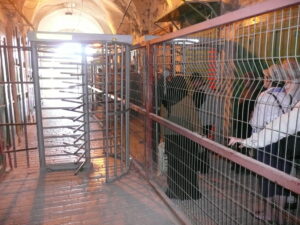
Until then I’d been talking and writing about Palestine and Israel but going there was like having a black and white postcard turning into a full colour motion video. We met people whose houses had been bulldozed in Silwan and in the Judaean desert, and West Bank civil society figures. One day we were visiting a family whose house had just been demolished, and suddenly a fleet of black SUVs drove up, and guys jumped out, looking just like they do in gangster movies, saying Salam Fayyad, the Palestinian Prime Minister, had come to visit.
On that trip I learned the limits of much of the liberal Zionist opposition in Israel. For instance, a group called Rabbis for Human Rights. We met these guys who were physically much braver than I could probably be, putting their bodies on the line, and I have a lot of respect for them, but when they talked about why they were doing it, it was always in terms of an agenda of Jewish human rights, not universal human rights. The government was doing things that offended their moral code, and they cared deeply about that. They were very critical of the regime but remain Zionist, believing that Zionism can be redeemed.
On that trip I noticed that when we had encounters with the IDF, for instance in Hebron, the person who got worst treated was the trip member of Pakistani origin, but next after that was me, a Jew. They didn’t like the fact that I was Jewish. I was also shocked by the casual racism I saw. I visited the Old City of Jerusalem and got lost and an Israeli tour guide helped me find my way; when he heard I was from London, he quite unselfconsciously made remarks about London being overrun by Muslims – the sort of comment we used to hear in London in the 1970s, which is starting sadly to re-appear. That was quite significant for me.
After that trip, I’d been back in London about ten days, and was trying to get my head sorted out, when just as I’d finished the weekend shop, I got a phone call asking if I could be in Cyprus on Monday ready to get on a boat to Gaza. I thought about it for a nano-second and then said Yes, rang my boss to say I wouldn’t be in work for a week – he was good about that – and flew to Cyprus. We were academics going to help bring out students who had study visas for the UK and Europe but weren’t able to get out of Gaza, as part of the boat’s solidarity mission. We set off from Cyprus in a 25 foot boat, The Dignity, in a Force 10 gale. I’m used to the idea of boats rolling and pitching, but this one was yawing – going round and round the centre – and that’s when I discovered that I’m a good sailor. I was nursing everyone else, who was throwing up. As we approached Gaza a gunboat came out from Ashdod. My story is that it turned round because I stood on the deck and made scary faces, but the real reason was that the IDF had recently shot five Palestinians who were trying to get under the fence through a tunnel, and the IDF didn’t want to draw attention to what was going on. It was less damaging for them to let us in and have it broadcast on channels that few watch, than to have a major incident where the BBC and everyone would be involved. This was just before the launch of Operation Cast Lead[xii]. We were the last boat that got in before everything closed down.
We went to see an agricultural college in the north that had been shelled and destroyed; the Islamic University of Gaza; a hospital; to Rafah, to the site where Rachel Corrie had been murdered[xiii].
We met Ismail Haniyeh, (Hamas’s leader in Gaza)[xiv]. It was the only time in my life I have been driven around with an armed escort: Hamas was frightened that Islamic Jihad or someone would try to kidnap us.
The trip proved that you can be a Jewish person in Gaza and not get kidnapped or killed. There were two Jews in the group, myself and Jonathan Rosenhead, and everyone we met was very interested in talking to us and showed no hostility at all.
Two years later I did a very interesting BRICUP trip to Palestinian universities in East Jerusalem and the Occupied West Bank. We went to Al Quds, Nablus, Birzeit and Hebron, to talk about how we could support Palestinian academics. I also had some time to walk around (Palestinian) Jerusalem on my own and get a bit of a feel for it – in the old city, down to Silwan, up to Sheikh Jarrah. As in Gaza, people were very welcoming, that is Palestinian culture. It’s hard to deal with being entertained: you get a vast spread of food and then you discover it’s only the starter! I had no idea how important chickpeas are to the world until I was in Palestine – it’s a sea of hummus. I’d thought Hummus was a Greek thing.
The future
The future I see is bad for the Jews and worse for the Palestinians. I’d dearly love to see one state where everyone can live alongside one another, but the longer the Israelis behave as they are the more difficult it becomes to see how they can continue to have a space they can call home. I’m sure that in 1948 I would have been a Zionist, that would have been my visceral reaction. I still think Jews who have been there for three generations have the right to live there, but they don’t have the right to bring more people in. A memory: when the Israelis pulled out of Gaza, I heard settlers screaming at the soldiers who were pulling them out of their homes, in Brooklyn accents. There’s no reason for that sort of immigration now, there aren’t any pogroms in New York.
The founding of Israel was in fact a disaster not just for the Palestinians but also for Jews. The mistakes, in my view, were not in 1948, but back at the beginning of the 20th century, when the Zionist project was set up as an exclusionary project from the start. The aim was not for Jews to live among and alongside Palestinians, but to displace, and Zionism picked up from Fascism the idea of purification – getting rid of Yiddish, getting rid of the idea of the weak speccy type of Jew and replacing it with the idea of Sabra, the strong farmer on the land. The Sabra has no connection with Europe, he was born in Israel. It’s really worth reading Avi Shlaim’s book[xv], his experience as an Iraqi Jew. He tells how life became more difficult not just after 48 but through the 20s and 30s, how Iraqi politics and part of the Iraqi establishment were friendly with the prosperous Jews to which Avi’s family belonged, until the 1950s when unforgivable things were done. The Mizrahi Jews – half the Israeli population – were very badly treated by the Ashkenazi: in some ways their experience was like poor whites in the American south, working in service for the white elite.
I don’t know what will happen to Israel now. We just have to live from day to day and try to undo the worst of the damage. In Britain, support for Zionism is becoming steadily less popular, but narrower and more intense. I’m used to a level of abuse online, but it’s getting worse. I really object when people say, “You are not Jewish, you cannot be Jewish with those views you hold.” The work of separating Jews from Zionists from Israel: Free Speech on Israel is doing more to combat antisemitism than the CST and the Board of Deputies – they should be paying us! They keep reinforcing the narrative that Jews and Israel are identical, and if they do that of course the public are going to say, “You Jews are responsible for Israel”. We have to undermine that. Part of my mission is to make it safer for Jews to walk around Golders Green.
Index of all the personal stories
[i] Around 150,000 Jews from the persecuted community in the Russian Empire came to the UK, mostly to England, between 1880 and 1905. In response, Parliament under Prime Minister Lord Balfour passed the Aliens Act 1905, which introduced immigration controls and registration for the first time in the UK
[ii] Mark Lazarus, born 1938 in Stepney, distinguished professional footballer who played for many years for Queen’s Park Rangers. Two of his brothers were boxers.
[iii] Founded in 1950 as the Socialist Review Group, became International Socialists in 1962 and the Socialist Workers’ Party in 1977.
[iv] From 1961-74, the authoritarian Portuguese state was engaged in colonial wars against rebels fighting for independence in Angola, Mozambique and the other Portuguese colonies. By the early 1970s the wars were very unpopular in Portugal, and in April 1974 the 48-year-old dictatorship was overthrown by left-leaning military officers in the “Carnation Revolution”. The new government quickly ended the colonial wars, granting independence to Guinea-Bissau in 1974, Angola, Mozambique and the other colonies in 1975.
[v] Jews for Justice for Palestinians (JJP) is an organisation of British Jews campaigning for justice and rights for Palestinians. It was founded in 2002.
[vi] Over 170 Palestinian civil society organisations issued an international call for Boycott, Divestment and Sanctions against Israel in July 2005. A November 2007 conference in Ramallah in the West Bank led to the establishment of the BDS National Committee (BNC) to coordinate the BDS campaign worldwide.
[vii] The British Committee for the Universities of Palestine (BRICUP) is an organisation of UK-based academics established in 2004 in response to the Palestinian call for academic boycott of Israel.
[viii] Free Speech on Israel (FSOI) was founded as a predominantly Jewish campaign group in Spring 2016 to counter the manufactured moral panic over a supposed epidemic of antisemitism in the UK, and particularly to raise awareness that criticism of Israel or Zionism is not the same as antisemitism.
[ix] Baroness (Joy) Royall was appointed Deputy Chair of the Chakrabarti Inquiry, 2016. The other Deputy Chair was David Feldman, Director of the Pears Institute for the Study of Antisemitism.
[x] The Chakrabarti Inquiry into antisemitism in the Labour Party, set up in April 2016, led by lawyer Shami (later Baroness) Chakrabarti. The findings, published on 30 June 2016, were that although antisemitism and other types of racism were not endemic within Labour, there was an “occasionally toxic atmosphere”. At the launch of the report, MP Ruth Smeeth walked out in protest at remarks by audience member Marc Wadsworth that she claimed were antisemitic.
[xi] The Israeli Committee Against House Demolitions, established 1997, is a Jerusalem-based international organisation working against the occupation and for a just peace.
[xii] Operation Cast Lead, an Israeli attack on Gaza 27 Dec 2008 – 18 Jan 2009, in which 1500 Palestinians and 13 Israelis were killed and around 46,000 Palestinian homes were destroyed.
[xiii] Rachel Corrie, 1979 – 2003, was an American non-violent activist, a member of the International Solidarity Movement. She was crushed to death by an Israeli bulldozer while protesting against the demolition of Palestinian homes in Rafah during the second Intifada.
[xiv] Ismail Haniyeh was Dean of the Islamic University of Gaza from 1992, head of the Hamas office and PA representative for Gaza, and was elected Prime Minister in the Palestinian legislative elections of 2006.
[xv] Three Worlds, June 2023, Oneworld publications
So Mike’s family moved to the West End not East End? I always knew he was a bourgeois Jew!!
Nonetheless fascinating
Tony
You know nothing of the slums in Soho and the long working class tradition of the Berwick Street area.
A fascinating story and a pleasure to read.
Interesting – we knew Mike from at least the early 1970s. He was a very active trades unionist in the TGWU but we also knew his campaign against the Cabora Basa dam in Mozambique. He was also involved with the Institute for Workers Control. Great that Mike is still super active – warmest greetings comrade!
Great to read your account Mike. What a mensch!
Thankyou Mike C. For your great account. I agree with your early history, which should be more known. This is why the terrible situation in Israel is in part a British problem.
Having Christian Palestinian friends, since late 1960s who live in Israel who I have visited since 1975, I have seen their difficulties ,that make life very hard.
My heart bleeds for the people who wish peace for all faiths and none.
The new definition of antisemitism equating zionism with Israel and Jews is so bad, and not called out enough. I think the day has come that Jews from anywhere have the right to live in Israel should be revisited.
I am over 80, and wish I could see a peaceful Israel/Palestine before my demise. It seems unlikely.
Very interesting Mike. I heartily endorse your view that Zionism has been bad for Jews and of course disastrous for Palestinians. Likewise the internal racism in Israel. When I went to Israel in 1967 I was really confused when I heard talk of ‘the blacks’ ; only to discover that they referred to the Misrahi Jews. What really struck me about your narrative was the reference to purification. I knew for example about Jabotinski and his admiration for and emulation of Mussolini but hadn’t seen the concept of purity as being inspired by fascism. Of course! Thank you.
Thanks for this Mike. Accurate and objective as always. The pro-Israel narrative is breaking down BECAUSE of the mass slaughter in Gaza. It is horrendous to think of things in this way but it is true. Things will never be the same gain.
Thank you Mike. Illuminating stuff.
PS: Footnotes have reminded me of a previous Israeli attack on Gaza where a thousand or so Palestians were killed and tens of thousands of homes were destroyed. I think that there have been many previous deadly & destructive Israeli attacks on the indigenous people over the past 75 years. Our vile establishment mass media keeps repeating that it all began in October 2023.
As someone who, along with my wife, was with Mike on that 2008 ICAHD trip, I can attest to the fact that Mike has omitted to mention that he is a very good travelling companion, immediately curious and generally warm-hearted – except when he asked a young woman in the mayor’s office in Lod what it was like to live in a racist state. (Of course, given where we are currently in the UK, she might now ask him.)
An interesting read indeed. A fine man. I take the opportunity of reiterating my thanks to Mike for being part of organising and running our superb JVL.
Great story Mike! I really enjoyed reading it 💚💜
Than you Mike, a fascinating history of your life in “Politics”, covering the time when you were in a Union and battling for the Workers, to the trips to Israel and Palestine, you are a store of information on the subject of Israel and the Zionists that now run it.
Pity I left London some 37 years ago, I would have loved to spent time in your company, though after my long, very long list of questions, I might have worn you down.
Thank you for this wonderful history of your exploits & experiences it brought back memories of Aldgate & stories of my refugee status as a non Jew but of my Polish & Lebanese heritage!