
Israel’s “Zombie” economy

JVL Introduction
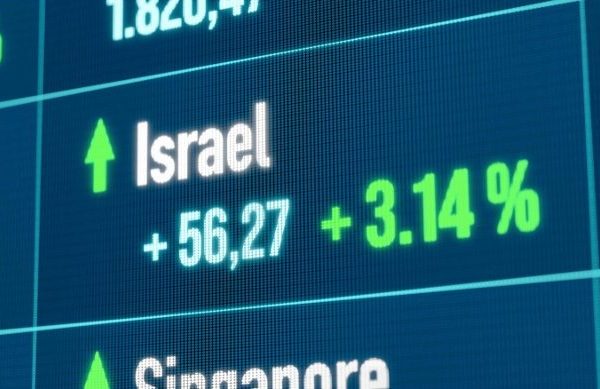
Two years (and more) of pulverising Gaza has, inevitably, had an impact on Israel’s economy as well as devastation for Gaza. For Israel there has been a dramatic increase in poverty and nearly 50,000 businesses have gone bust; there has also been some reluctance to invest and yet there has also been a rise in value of the shekel as well as a surge in the stock market. “To make sense of these seemingly conflicting signals – surging markets alongside deepening social and economic turmoil – it is necessary to look beyond traditional indicators. Israeli economic researcher and BDS activist Shir Hever argues that Israel is now operating in what he calls a “zombie economy,” one kept moving through massive military expenditure, foreign credit, and political denial.”
This interview provides many important and fascinating insights, highlighting many aspects of life in Israel that are rarely covered, such as that Army Reservists called up receive four times the minimum and twice the average wage. Hever makes many important points here including considering why western banks and media are not sharing the information.
LL
This article was originally published by +972 on Tue 16 Dec 2025. Read the original here.
Is Israel’s genocide economy on the brink?
Economist Shir Hever explains how the Gaza war mobilization propped up a ‘zombie economy’ that appears to function but lacks any future horizon.
Loading article text…
Thanks for this splendid, very comprehensive article. I’ve learnt a lot from it.
Random thoughts:-
1. I understand Israel is as unequal a society (even within the Jewish section of the population) as the USA and UK are. That means the people in the very sizeable lower income groups (a third of the population?) will be hard put to afford the basics AT ANY TIME. They can be tipped into destitution easily because they can’t put by any money in savings.
2. Israel appears to be prioritising military and Occupation spending over spending on public services for the citizenry. It “can’t afford” to provide adequate services for the increasing numbers of displaced, unemployed, traumatised individuals or to replace the university research funding lost because of academic boycotts.
3. Jewish Israeli society has long been bitterly divided against itself and angry with its governments. Desperate poverty experienced unequally by different groups must surely make those social divisions even more vicious.