
Once again, Germany defines who is a Jew
JVL Introduction
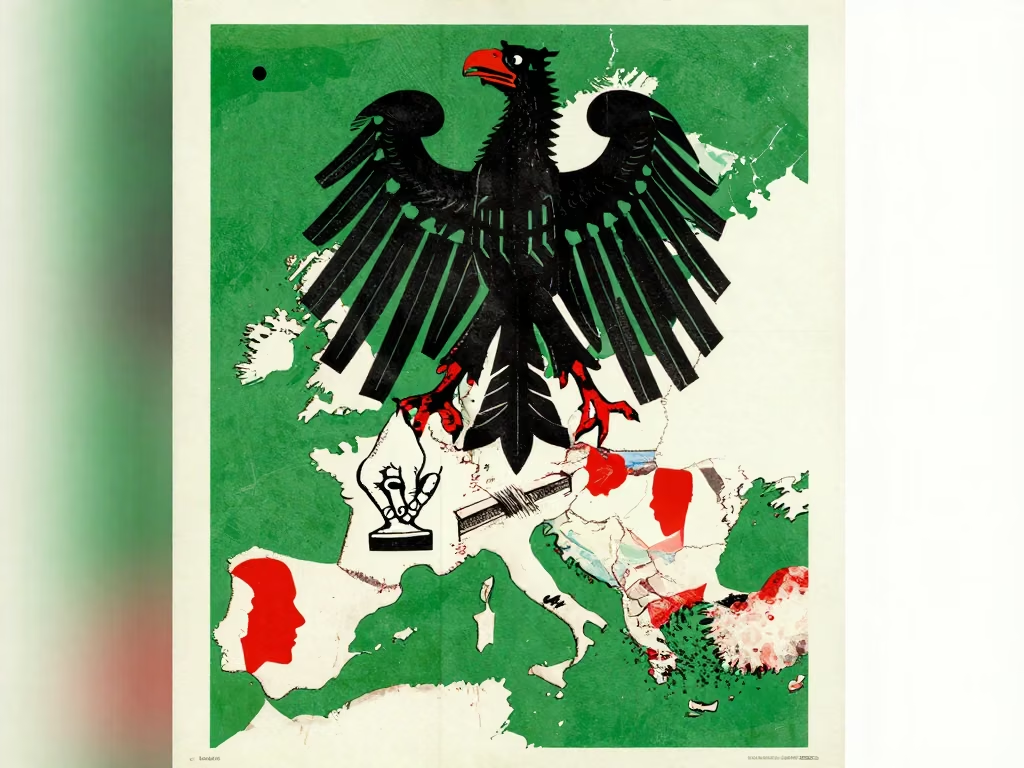
Germany’s troubled relationship with its Nazi past has been through many phases.
But since reunification it has metamorphosed in a way best exemplified by Angela Merkel’s 2008 statement to the Knesset declaring Israel’s security to be Germany’s Staatsräson (‘reason of state’).
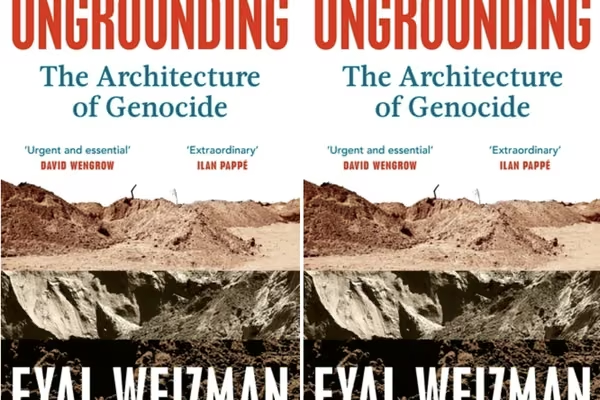
In a challenging interview with two leading German Jewish intellectuals, Eyal Weizman and Emily Dische-Becker, George Prochnic explores what this has come to mean in practice.
Here are a few thought-provoking extracts:
- Germany’s alignment with Israel means that German nationalism has begun to be rehabilitated and revivified under the auspices of German support for Israeli nationalism.
- [cultural memory politics today] grants to the heirs of perpetrators of the Holocaust and of colonial massacres, as well as contemporary perpetrators of racist exclusion, the sole moral authority to enforce the lessons they choose to draw from their own history of violence.
- It’s now apparent that the issue of anti-antisemitism represents a laboratory for larger anti-democratic policies, functioning as a precedent for prohibiting other forms of protest as well.
- The Jewish identity question in Germany breaks down into two main factions: those who believe Jewish well-being and safety derives from appeals to the moral authority of the perpetrator-heirs, and Jews who see Jewish well-being and safety in solidarity with other minorities.
- The irony that the German state would actually classify who is a Jew, and what’s a legitimate Jewish position, and how Jews should react, is just beneath contempt.
Part 2 of the interview will be posted here in January 2024. [It was – here is the link.]
RK
This article was originally published by Granta on Thu 23 Nov 2023. Read the original here.
Once again, Germany defines who is a Jew | Part I
Loading article text…










Just one point! “Germany” is assumed to be the Western part, which swallowed the GDR. In the GDR real efforts were made to eliminate remaining aspects of Nazism, while West Germany and its partners made use of former Nazis and denigrated every aspect of East German society.
“A Socialist Defector” by Victor Grossman (Stephen Wechsler, an American who defected to the east in 1952 and spent the next 38 years in East
Germany) gives a nuanced account of life there. He still lives in East Berlin, and puts out a monthly bulletin of life in Germany today.
What an informative but so worrying piece. I thoight i knew a fair bit about Germany’s support for Israel but i learned a lot. I had not considered some of the repercussions outlined here, eg re people fleeing wars are Of course, in the UK too we have non Jews telling us about antisemitism, happily telling us,we’re self hating or even not really Jews. But this ongoing weaponisation of antisemitism is one of the reasons Israel has been able to behave so atrociously with impunity for so long.
From a 2018 JVL article about Theodor Herzl, founder of Zionism:
‘..As a student at Vienna University, he joined the German nationalist fraternity, Albia, whose motto was Honour, Freedom, Fatherland, though he did later resign in protest at the antisemitism that he encountered. Like many educated, German-speaking Jews, he had nothing but contempt for the mass of religious, Torah-abiding, Yiddish-speaking, shtetl-dwelling Eastern European Jews. There is nothing in his writings to suggest that he had any great attachment to Judaism or much interest in or knowledge of Judaic teaching..’
https://jewishvoiceforliberation.org.uk/article/theodor-herzl-founder-of-zionism-not-quite-what-you-might-imagine/
There is a German expression, ‘den Finger in die offene Wunde legen’ (lit. to place one’s finger into an open wound), that means pointing out painful truths without pulling any punches. That is just what Weizman and Dische-Becker have so uncompromisingly done here.
Germany’s culture of remembrance is more about dealing with German discomfort about their past, rather than genuinely making amends or applying universal principles: ‘never again’ is given a very narrow focus. At the same time, there is almost an inverted pride in the Holocaust, that nothing else can be allowed to challenge the singularity of this atrocity ‘made in Germany’. It took over a hundred years for Germany to acknowledge the genocide against the Herero and Nama in what is now Namibia (formerly German Southwest Africa), and then only with weasel words and a miserly ex gratia payment. Many Germans still see their relatively brief period of colonial possession in a positive light and better than that of other European powers. As Weizman says, no line is allowed to be drawn from colonial atrocities to the Holocaust.
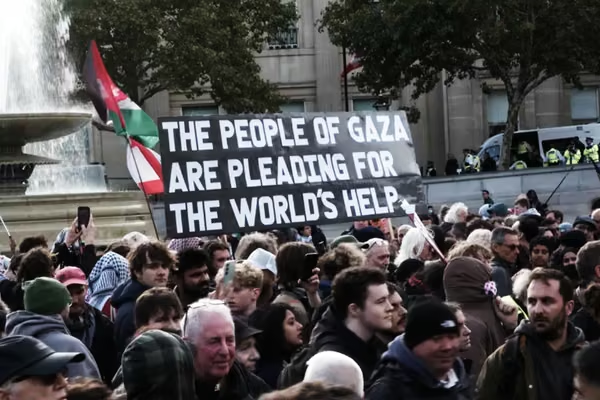
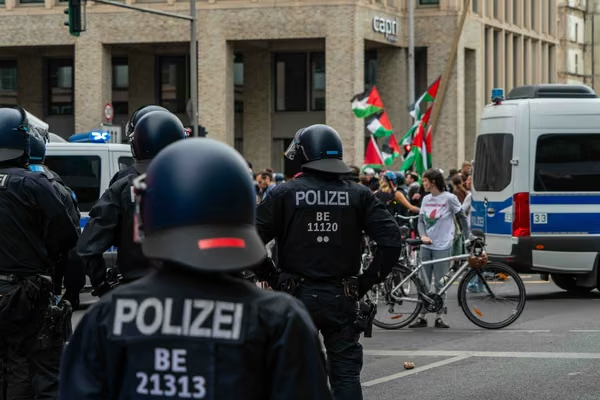
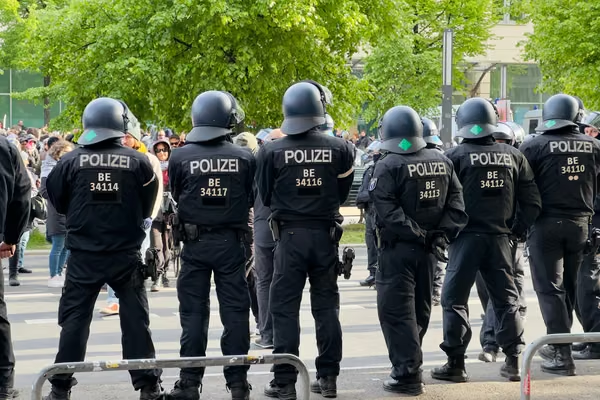
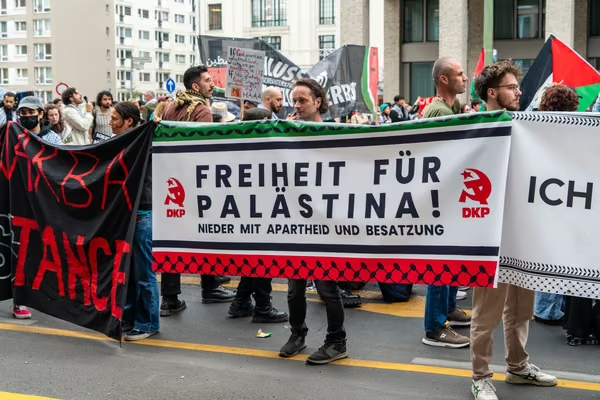
Earlier this month I took part in a march in Berlin with several thousand participants, small by London standards, but an achievement after all the weeks of prohibition. Heavily policed, we were kept well away from a concurrent official event at the Brandenburg Gate, nominally against antisemitism. Led by the Mayor, it was organised by a grouping that included the leaders of all mainstream parties, establishment figures from the media and the arts, and the Israeli Ambassador. Despite this backing, it only gathered numbers similar to the pro-Palestinian demonstration, but it did feature numerous Israeli flags. Without any sense of irony, the event was called ‘Never again is now’. In Germany, ‘never again’ has a very restricted meaning.
Germany needs to stop projecting its guilt, and it should come up with some reparations for Palestinians too.