
50th anniversary of Palestine Land Day
Jewish Voice for Labour Introduction
Today, March 30th 2026 is the 50th anniversary of Palestine Land Day. Land is central to the Palestinians’ struggle for justice; from day one Israel had taken over land owned by Palestinians without compensation, let alone agreement. The dreadful reality has been ethnic cleansing to try to make real the slogan of a “land without (Palestinian) people for the (Jewish) people without a land”. If Israel cannot remove all Palestinians, it definitely wants total control over the land.
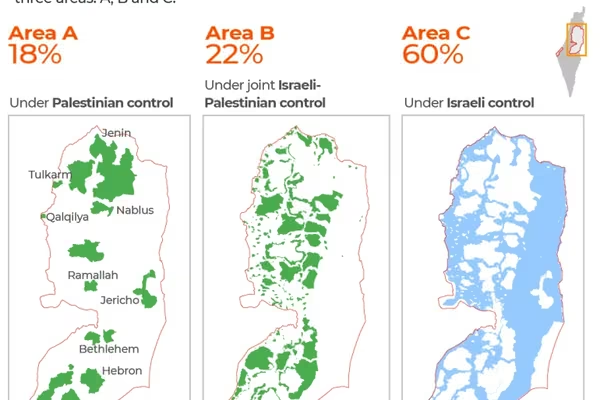
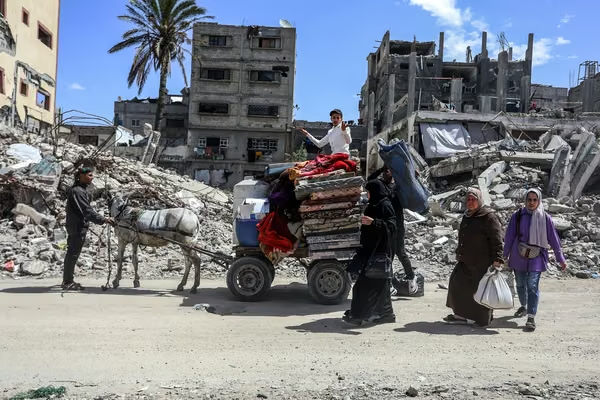
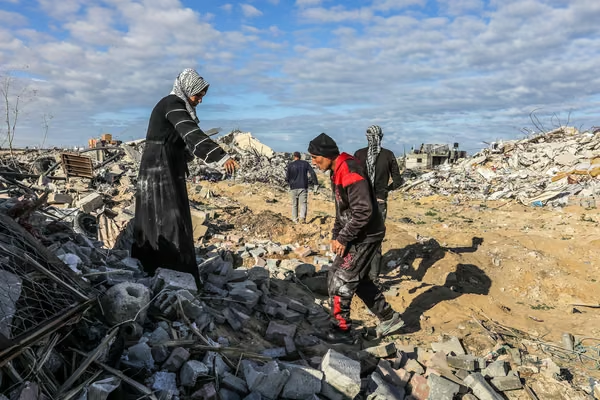
The mechanisms Israel uses vary, much is rooted in powers from Israel’s brutal occupation of Palestine, under which Israel has been able to pass “laws” and edicts such as designating areas as “closed military zones”, Firing Zones, Nature reserves and, of course retaining full control over 61% of the West Bank which means that it rarely if ever grants planning permission to Palestinians leading to demolitions and displacement even while Jewish only settlements with sizes from hamlets to large cities have taken over more and more of the land in the West Bank and when settlements became unmanageable in Gaza, Israel still retained control over most aspects of the lives of Palestinians living there, imposing a siege for nearly twenty years and bombing the area time and time again, leading to a genocide since October 2023.
Land Day’s origins, however, were in attempts to Judaise the Galilee, which is within Green Line Israel, the “borders” that most countries recognise. The protests, including a general strike, however, involved Palestinians in Israel, in the West Bank and Gaza and in refugee camps.
Mazin Qumsiyeh a human rights and environmental activist from Palestine reminds us that this is a day when “We Palestinians declare our connection to the land and insistence on defending Palestine from the Zionist colonizers who wanted it to be changed from a pluralistic society (multi-ethnic, multi-cultural, multi-religious, multi-lingual) to be a monolithic “Jewish state” (to be achieved via ethnic cleansing and genocide).”
To commemorate the day, along with colleagues from the Palestine Institute for Biodiversity and Sustainability in Bethlehem, he is inviting people to visit the botanic garden of the Institure for free because “It reminds us of our Sumud and is a garden of peace and tranquility and growth in the middle of colonial onslaught on our land and our people.”
Fifty years ago protests took place against Israel’s ongoing confiscation of Palestinian land. Land Day or Yom al-Ard recalls the events of that day, 50 years ago when six unarmed Palestinians were killed and more than 100 injured and at least 300 detained by Israel.
On 11th March 1976 Israel had published a plan to expropriate about 20,000 dunams of land in the Galilee. More than 6,000 dunams were owned by Arabs. The Palestine Information Centre tells us that this plan “was a response to Palestinian resistance and was aimed at the judaization of the Galilee.”
The Palestinian Communist Party considers this also relates to the success in electing a liberation minded Mayor for Nazareth in December 1975.
The Palestine Information Centre continues: “Palestinian leaders responded to the plan with marches and general strikes that were held on March 30. The protests took place throughout the Arab settlements in Israel, Gaza Strip, West Bank, and refugee camps for Palestinians in Lebanon. The riots were suppressed by the Israeli Defense Forces and Police. Six Arab citizens were killed, and about 100 were injured.”
That this action was taken by Palestinians in very different circumstances, including some who had been made refugees in 1948 and/or 1967 was also a sign to Israel that the Palestinian people continued to see themselves as one people, united in wanting liberation. That day became one of the pivotal points of the struggle. In 2018 it was the day people in Gaza started their Great March of Return protests, which continued for nearly two years and was brutally attacked by Israeli forces, despite the Palestinians being clearly unarmed and staying within the Gaza perimeter.
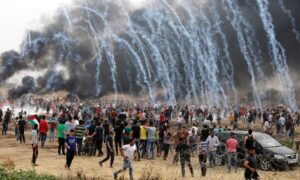
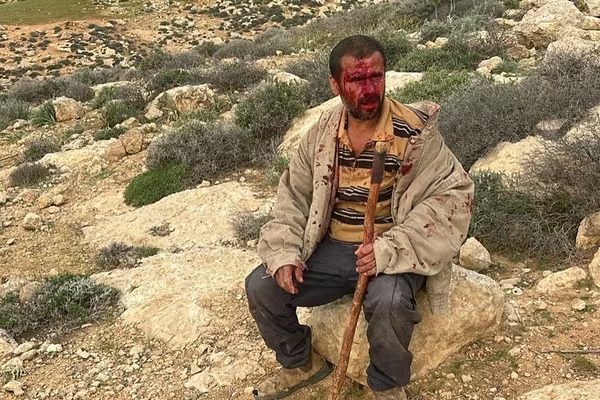
Palestinians continue to hold protests and also to plant olive trees as ways of reaffirming their connection to their land. They are often met with brutality and this year restrictions are so strong that there may be more emphasis on quieter activities such as the space to be together on the land.
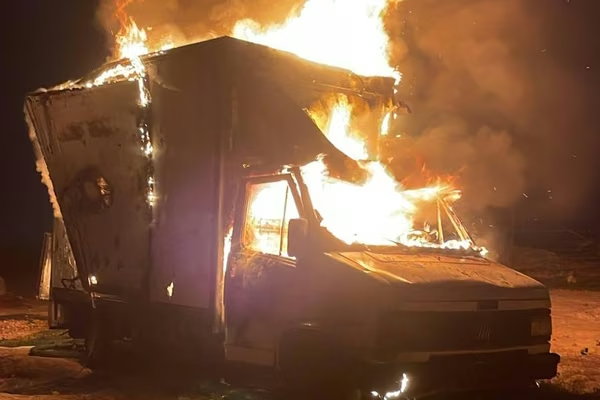
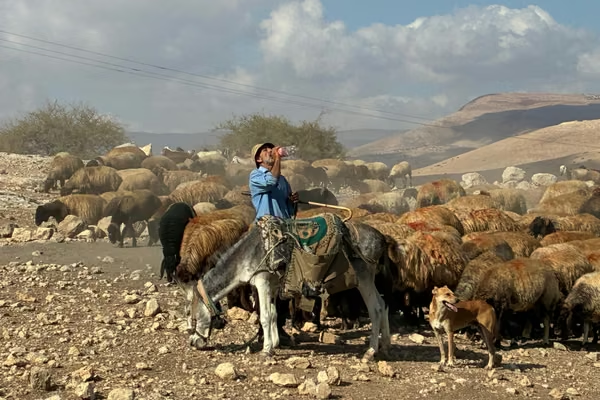
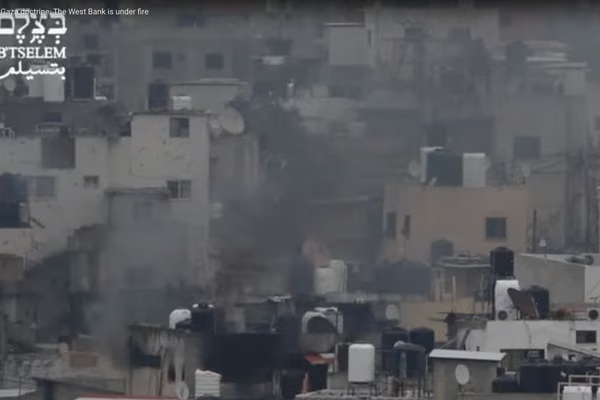
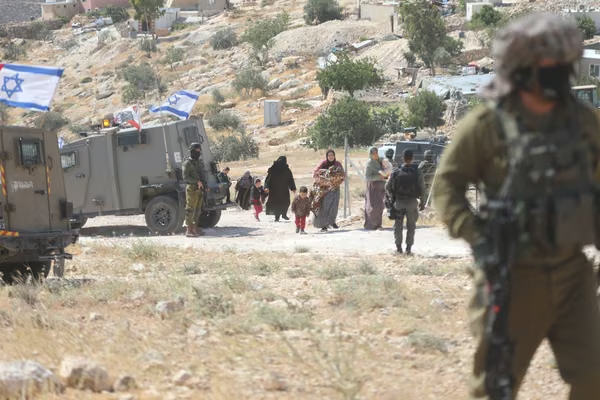
Israel is continuing to seize land sometimes “officially” through government decisions, eg to approve settlement expansion, approve outposts to become settlements which are Jewish-only communities built on Palestinian land and to go ahead with development on E2 East of Jerusalem which will cut the West Bank in two and destroy any chance of a contiguous Palestinian State. They may also declare an are an Firing Zone such as in Masafer Yatta: Where Israel is trying to erase 18 Palestinian communities , or as state land and nature reserves. All of this is illegal under international law. Furthermore we have seen the exponential increase in settler violence, which has led to many evacuation of many Palestinian communities such as Yanoun in the northern West Bank and Zanuta in the southern West Bank and Fasiyal in the Jordan Valley.
In March 22, 2024, Israel’s Finance Minister Bezalel Smotrich declared Israel was seizing 800 hectares (1,977 acres) in the occupied West Bank, in a move that would facilitate building more illegal settlements and said:
“While there are those in Israel and in the world who seek to undermine our right to Judea and Samaria and the country in general, we promote settlement through hard work and in a strategic manner all over the country,” Smotrich said
On this, the 50th anniversary of the events, the issues remain the same and even more urgent. The Israeli response to protest – and, indeed, presence has become more brutal. On that day in 1976 six people were killed, many more injured and hundreds incarcerated as a result of their actions. This has become normal and the ongoing brutality attracts remarkably little response, let alone action from western governments.
How far we have descended when in 1980 even the right wing Conservative Prime Minister, Margaret Thatcher who was a supporter of Israel and vehemently opposed to what was labelled terrorism, banned arms sales to Israel. She also “endorsed the EEC Venice Declaration, which called for an end to Israel’s “territorial occupation” and expressed support for Palestinian self-determination and the PLO’s association with peace negotiations.” (See When Thatcher turned against Israel in The Jewish Chronicle and Peter Oborne’s essay on “How far Britain has fallen from Thatcher’s support for international law in Middle East Eye “)
Information from:
Palestine Information Centre When Land Becomes Unreachable: From Land Day to Gaza’s Yellow Line
Land Day: What happened in Palestine in 1976? | Israel-Palestine conflict News | Al Jazeera
For further information on the origins of Land Day, especially with detailed information on what led up to the demonstrations on 30th March 1976, see In Defense of Communism: 50th anniversary of the Land Day: the Communist Party of Israel and Hadash (This includes information about an online meeting that has now taken place but the historis information about the Galilee in 1975 is fascinating)

An important reminder. It is worth also reminding that much of the legalised lawlessness pursued by the Zionists continues that operated by the British colonial occupation, including some of the retained laws.