
“The Old Oak”: Ken Loach’s new film on general release
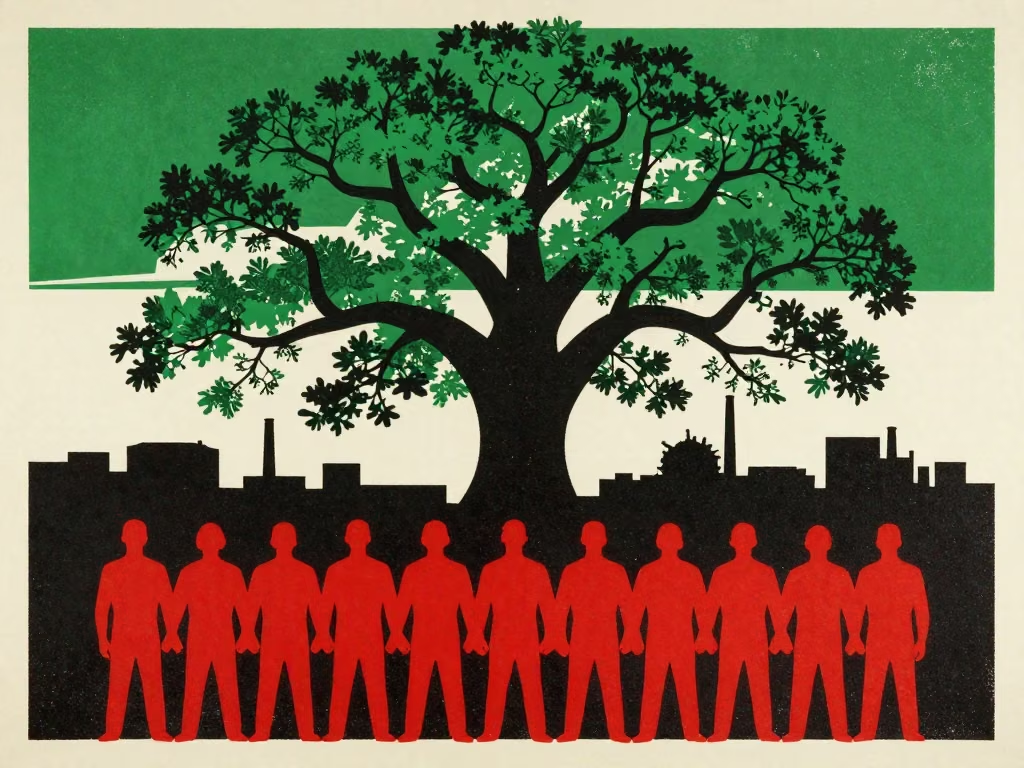
“The Old Oak”: an appreciation of Ken Loach
An unrivalled legacy of films summed up by Mark Perryman of Philosophy Football
Ken Loach’s latest film The Old Oak, opens in cinemas this weekend. It is widely reported that this will be his last. At 87, if it really his time for Ken to hang up the clapper board and exit across the cutting room floor, there is little doubt that apart for his bitterest critic (see below) this is a moment to mark an unrivalled career in film.
Documentary, thriller, history, but most of all a unique mix of comedic socialist-realism characterises Ken’s work. He is an unashamed leftist but what makes Ken Loach films so special, arguably unique, is the way they combine a compelling exposure of society’s failings with a lighter touch to lift spirits and aspirations. It was the critic David Widgery who was the first to name a fundamental cultural failing of the left: ‘miserabilism’. Without exception Ken’s films, however depressing the circumstances they depicted, always find the means to go above and beyond leaving his audience feeling miserable. That’s not to say he’s a hopeless romantic in the manner of many films that seek to portray the sunny side up of capitalism. Rather, his work is rooted in an unapologetic, some would say unreconstructed, class politics centred on the liberatory potential of collective action, in particular trade unionism. And at the same time, his movies invite us to sit back and enjoy, in between the popcorn.
Compare and contrast to Richard Curtis, a latter-day contemporary. Four Weddings and a Funeral (1994), Notting Hill (1999) and Love Actually (2003) a trilogy it would be a tad miserabilist to deny chuckling along to, but this is a twee, middle-class version of England entirely uninterested in anything apart from its unchanging self. The coincidence with the ascension of Tony Blair was surely not coincidental. And there has been plenty more of that ilk ever since.
Of course, there are films that share Ken Loach’s cinematic ambition. Brassed Off (1996) and Pride (2007) are two obvious examples, both depicting the 1984-85 miners’ strike in a Loachian manner and along the way a counter-narrative to Blairism. But these were pretty much one-offs, fondly enjoyed because they were so rare. Steve McQueen’s extraordinary Small Axe (2020) five-film anthology each film revolving around immigration, racism and resistance, the shared location London, is perhaps the closest thing yet to what Ken Loach has managed to achieve.
However, what, to date, makes Ken unique is the scope and longevity of his work; he has kept on, keeping on, making films for the best part of sixty years. An extraordinary achievement, and while the values he champions, and to some extent the subject matter, have remained unchanging, his films are never samey.
The early days classics Up the Junction (1965) Cathy Come Home (1966) and Kes (1969); the 1990s Riff Raff (1991); his first Palme d’Or for The Wind that Shake the Barley (2006); featuring Eric Cantona as himself Looking for Eric (2009) followed by the late flowering of I Daniel Blake (2016) and Sorry We Missed You (2019). Homelessness and poverty, the ‘gig economy’, Irish republicanism, modern football, the cruel indignities of the social security system. What other filmmaker can match Ken for this kind of subject matter and damn good films to boot? But don’t take my untutored word for it.
Here is just a short selection from an impressively long list of awards Ken Loach has won: the 2006 Palme D’Or for The Wind That Shakes the Barley and in the same year he was awarded the accolade of a BAFTA Fellowship; the 2012 Cannes Jury Prize for The Angels Share; a second Palme D’Or in 2016 – one of the few to achieve this – for I Daniel Blake. which also landed the 2017 BAFTA for outstanding British film of the year,
And for the wider cinema-going public film reviewers greet his films with near universal praise. The Guardian has made The Old Oak its 4 star film of the week describing it as “a ringing statement of faith in compassion for the oppressed.” And the Evening Standard has welcomed it with this positive endorsement: “we need someone with Loach’s righteous fury to make films about the deplorable treatment of Britain’s often invisible and maligned underclass.”
Not a single reviewer, not a single awards jury – his films have won an astonishing 117 awards in total – has ever cited Ken Loach for antisemitism. And as a sometime filmgoer I can’t for the life of me remember a single antisemitic trope appearing in any of his many films I’ve seen. If anyone can, do please let me know. Which rather leaves the Labour Party expelling him for antisemitism a tad out on a limb doesn’t it? And it begs the question as to what does the Labour Party know that legions of film reviewers, film award panels, and filmgoers don’t?
Endlessly repeated, Labour dignitaries claim Ken’s expulsion was for antisemitism. It wasn’t. Most recently Rachel Reeves made precisely this claim until, unlike most, she was corrected by her interviewer Simon Hattenstone, who happens to be Jewish. Yes Ken signed a petition protesting against members a high proportion of whom are Jewish, being expelled under the charge of antisemitism. That’s a protest not a trope. A former Director of Public Prosecutions is presiding over the replacement of this right to protest with guilt by association. And along the way as Labour under Sir Keir expels more Jewish members than at any other time in its history the title of a much celebrated account of antisemitism Jews Don’t Count is reinvented by Labour as ‘Some Jews count more than other Jews.’
Earlier this year Jamie Driscoll was banned from standing as a Labour candidate for North East Mayor for, checks notes, interviewing Ken Loach at one of Newcastle’s leading arts venue about the film, The Old Oak, and two previous films – I Daniel Blake and Sorry We Missed You – made in Jamie’s patch… the North East. The reason for the ban? By appearing with Ken Loach, Jamie was allying himself with antisemitism.
Has Ken ever erred to such an extent to deserve being ostracised by Labour, and only by Labour, to such an extraordinary extent? In 1987 Ken directed the play Perdition written by his long-time collaborator Jim Allen, which was then withdrawn before it was due to open at the Royal Court Theatre. The play centred on a much-contested suggestion that one branch of Zionism sought to negotiate with the Nazis free passage to enable some Jews to escape being sent to the concentration camps. In typing those words the very obvious explosion of anger that giving any kind of platform to such a tale can act as a means to legitimise antisemitism is startlingly obvious. In my personal opinion Ken’s made a bad choice, but enough to disqualify his entire legacy of work? I don’t think so. At the time, 1987, Neil Kinnock’s Labour Party, not exactly backward at expelling known Trotskyists and others, didn’t think so either, taking no action against Ken who’d been a party member since 1962. Is the suggestion therefore that Kinnock, was soft on antisemitism? Well, if he was, why does he continue to sit in the House of Lords as a Labour Peer? Put simply, none of this adds up and outside the world of the current Labour leadership few would countenance a blanket ban on Ken Loach or condemn any kind of association with him.
So, this weekend as Ken’s film opens what is it to be?
* A Labour Party three-line whip barring the Shadow Cabinet, MPs and members from a crafty looksie at The Old Oak accompanied by Constituency Labour Party picket lines (oh I forgot Labour MPs are barred from those too) outside the flicks to collar any waverers. Because that is the logical conclusion of where Labour’s strictures on Ken Loach have ended up. Anything less and we’re tempted to suspect all the huff and puff about Ken’s antisemitism is for show, aren’t we?
* Or a celebration of a much-loved maker of films that fire up indignation and hope in equal measure? Films that depend not on a star-studded line-up but jobbing actors we’ve never heard of, and for most parts ones who have never ever acted before. The Old Oak follows this uniquely Ken Loach tradition and is none the poorer for it. Quite the opposite. And Ken Loach is most certainly the only director who would choose (spoiler alert) as the happy ending to his final film Syrian refugees and a former mining community coming together to make a banner they then march behind together at the Durham Miners Gala. The words they choose for their banner? ‘Strength, Solidarity, Resistance’ in English, and Arabic. What a way for Ken to close his final film.
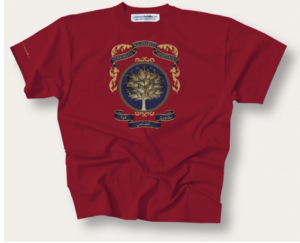
It makes a great banner, and a great T-shirt too – to get one click on the image below:
Mark Perryman is the co-founder of the self-styled ‘sporting outfitters of intellectual distinction’ aka Philosophy Football











it is a wonderful film, it really moved me, so much so that this 72 year old had to wait ages before i could leave the theatre to gather my composure and wipe my tears away!
Just seen the film and it is truly amazing and searing! A fantastic elegy to two very different communities that come together.
Thanks Mark for a great review and fitting tribute to one of my heros. ????????????✊????
Whilst I agree with most of Mark Perryman’s assessment of Ken Loach’s remarkable life I completely disagree that he made a ‘bad choice’ when producing Jim Allen’s Perdition. He did no such thing and Perryman is in no position to make such an assessment.
Perdition was NOT ‘centred on a much-contested suggestion that one branch of Zionism sought to negotiate with the Nazis free passage to enable some Jews to escape being sent to the concentration camps.’
Before he makes such an assessment Perryman should get his facts straight.
Rudolf Kasztner, the leader of Hungarian Zionism reached an agreement with Eichmann around the beginning of May 1944 that in exchange for remaining silent about the holocaust and where the deportation trains were going, to the extent of misinforming Jews about what ‘resettlement’ meant the Zionist and Jewish elite, would get a train out of Hungary.
Kasztner kept quiet about and suppressed Rudolf Vrba’s Auschwitz Protocols which revealed in detail that Auschwitz, previously thought of as a labour camp, was in fact an extermination camp.
In other words Kasztner kept in ignorance half a million Hungarian Jews for 1,640 of the Jewish/Zionist elite. This was a war crime.
Even far-right Zionist Paul Bogdanor in Kasztner’s Crime, who set out to absolve Kasztner, found the evidence so compelliing that he labelled him a Gestapo agent. Perryman, on the basis of no knowledge, has no right to criticise Ken Loach over this.
Perdition was lambasted by the Zionists because of course they didn’t want public exposure of their betray of the Hungarian masses
Bought the T-Shirt.
Seeing the film tomorrow night.
And treasure a conversation with Ken in the queue for a Labour Party Conference in Liverpool before the madness began.
This is Ken Loach’s letter to the Guardian at the time of the controversy that the play he directed arose. The letter supports much of what Tony Greenstein says in his comments and eloquently defends the intentions of Jim Allen and Loach to at least raise the issue of Zionist priorities and actions at a dreadful time for European Jewry. The implied and outright accusations against Ken Loach of antisemitism by Zionist ideologues is familiar to all who defend Palestinian rights.
Your so-called experts who attacked Perdition repeat the lies that were told when the play was first produced and then censored by the Royal Court in 1987 (Can censorship ever be justified? December 22).
As its first director, I can say that the essential story the play tells – of collaboration of some Zionists with the Nazis in Budapest in 1944 – was not challenged and stands as historical fact. Minute details were rigorously pursued. The torrent of misinformation about Jim Allen’s play came from those who objected to the political critique of Zionism and the consequent dispossession of the Palestinians. Max Stafford-Clark, then director at the Court and responsible for the play’s censorship, now says that the charge of antisemitism was “bandied about” (Theatre community defends ‘courageous Birmingham Rep, December 21). He doesn’t have the decency to say that this was unfounded.
The writer Eric Fried, many of whose family were murdered by the Nazis, wrote: “I am envious I have not written [this play] myself … To accuse the play of faking history or anti-Jewish bias is monstrous. Perdition should be staged wherever possible.”
The charge of antisemitism is the time-honoured way to deflect anti-Zionist arguments. The play has been successfully produced at least three times since Stafford-Clark’s climbdown. The Rep should have stuck to its guns with Behzti. Let’s hope another theatre understands the principle at stake.
Ken Loach
London
Looking forward to seeing the film as soon as I can,- also greatly relieved to see someone else pick up on. Mark’s wrongful remarks about Perdition (expressed in a peculiarly convoluted sentence that betrays a certain amount of doubt and fear). Perdition, like the Ken Livingstone / Lenni Brenner furore, dealt with historical FACT. Some time we have to have the confidence to look straight at history in all its contradictions. For example, we can’t deny that the most extreme Revisionist Zionists were actually the ones who supported calls for a Jewish led boycott of Nazi Germany in the 1930s. We ought to be able too look at all these ways that humans behave under vicious pressure and learn from them. If KNOWN Facts have to be suppressed every time someone gets angry at the messenger, what hope have we of researching more deeply and finding out more of what really happened?
Perdition is deemed to be ‘a wrong choice’, without any argument to support that assertion. Jim Allen’s treatment, and Perdition’s censorship by the Royal Court remains a badge of shame for that theatre.
Perdition is a drama about a difficult subject in a difficult time. But it is not antisemitic and it is a shame that the record of common knowledge is tarnished by such casual condemnation, even if the motive is conciliation and bridge-building. Think about it. What a shame if difficult topics should be out of bounds for Jewish history. Jewish history is strong enough to bear the truth.
Five of us went to see Ken Loach’s latest film – The Old Oak – this week.
An excellent film, dealing in a thoughtful and optimistic way with inter-related issues of poverty, unemployment, prejudice and immigration.
Loach addresses all the issues thru his principled lens and shows how communities can be rebuilt by falling back on socialist, trade union and humanitarian principles and values.
The Labour Party should be forever shamed for expelling a member with Loach’s history.