
The Internationalism of Rosa Luxemburg
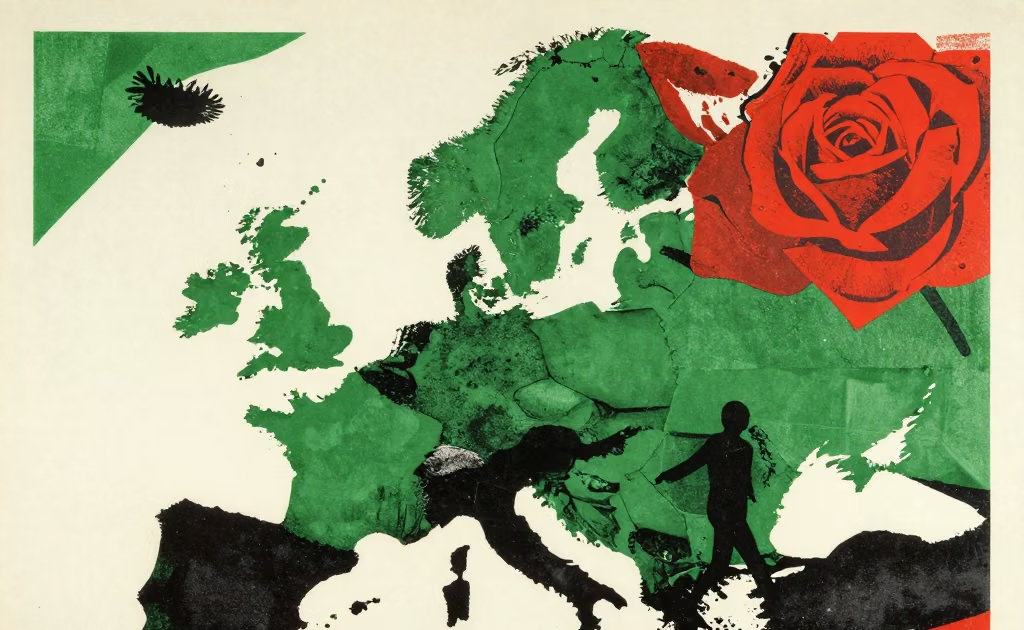
JVL Introduction
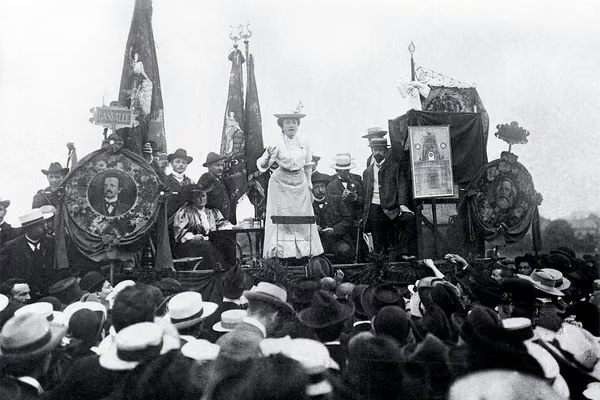
Polish-Jewish revolutionary Rosa Luxemburg was born 150 years ago in the Polish town of Zamość.
She became one of the outstanding intellectuals and activists of German Social Democracy, prominent on its revolutionary wing as well as a co-founder of the Social Democracy of the Kingdom of Poland party (the SDKPiL).
In revulsion at the SDP’s support for the war, Luxemburg, along with Karl Liebknecht, Clara Zetkin and Franz Mehring, founded a new organisation in January 1916 which would later become the Spartacus League.
Arrested and imprisoned for two-and-a-half years she was only released when the November revolution broke out in November 1918.
Arrested again in January after the Socials Democratic leader Friedrich Ebert gave free rein to the Freikorps to suppress the new revolutionary wave which swept Berlin she and Karl Liebknecht were captured, tortured then summarily executed.
In this article from Tribune, reposted below, Michael Löwy celebrates her socialist internationalism.
This article was originally published by Tribune on Fri 5 Mar 2021. Read the original here.
The Internationalism of Rosa Luxemburg
Throughout her political life, Rosa Luxemburg remained committed to an internationalist version of socialism – one which fought for the working-class beyond national boundaries and against imperialism.
Loading article text…

















Why no mention of her absolutely seminal ‘The Mass Strike’?
Richard Purdie. The article is not about the entirety of the works of Rosa Luxemburg.It’s about her internationalism. Given the rise of nationalism across the globe surely you can appreciate why the author chose to concentrate on this. After all, we have ended up with an English nationalist government courtesy of Brexit.