
Political blackness and Palestinian solidarity
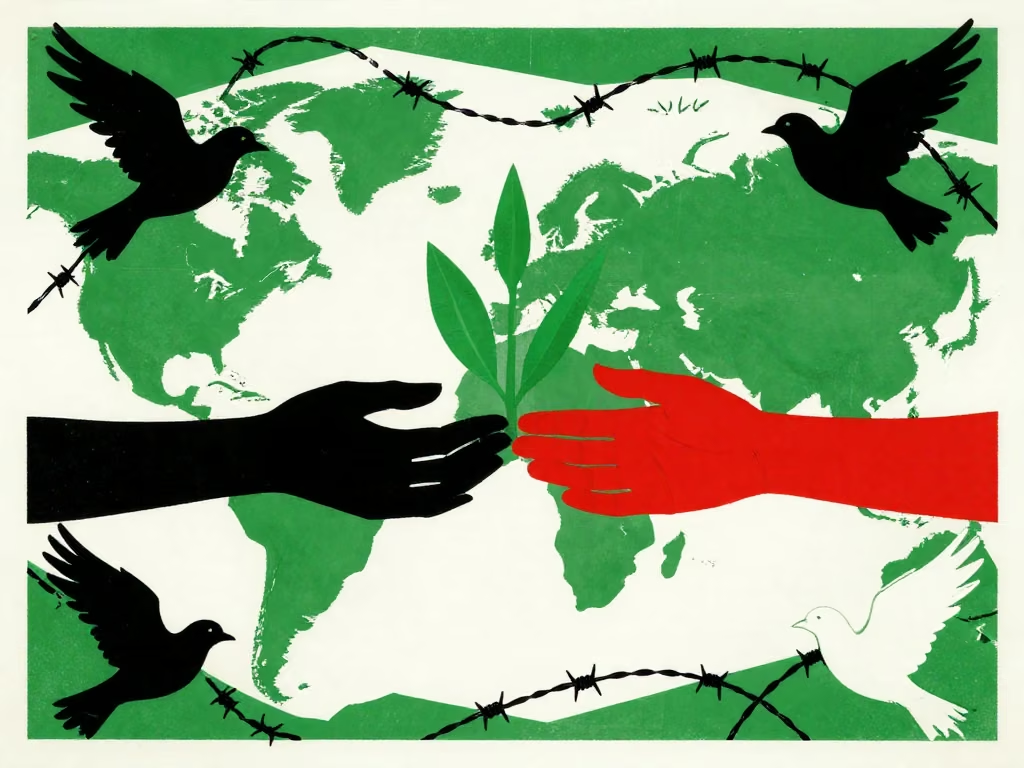
JVL Introduction
Annie Olaloku-Teriba writes about how for the 1960s movement “blackness was a structural position brought into being by material conditions, rather than any innate quality of particular people. A position created by American society, which then made possible the radical critique of that society.”
But she also tells the story of how the internationalist political solidarity that emerged out of this analysis was displaced, in the States and elsewhere, by a fragmentation into communities of colour, competing with each other for advantage, rather than struggling together.
Material conditions are now very different from those of the 1960s and we can’t simply reappropriate the old. We need to find a new language about how we identify ourselves, and with whom we find common cause to help us build new solidarities needed for the challenges we face.
Thanks to Red Pepper, where this first appeared. Please subscribe to it using this special offer.
This article was originally published by Red Pepper on Tue 22 Sep 2020. Read the original here.
Political blackness and Palestinian solidarity
The question of Palestine has become a black political litmus test, argues Annie Olaloku-Teriba, defining the very nature of black identity and politics
Loading article text…


Thanks for this extremely important analysis regarding ‘political Blackness’ and ‘ethnic Blackness’ in the struggle against racism in its different forms.
Just had another 30 day ban off Facebook for criticising Israel and its treatment of the Palestinians
Excellent analysis; something I have been waiting to read for ages. Given the references to The Black Panthers it is worth viewing ‘Black Panthers: Vanguard of the Revolution’, which is on YouTube. It is problematic, especially on the politics, but does enough to remind us how important this movement was.