
One rabbi’s radical reading of the tradition
JVL Introduction
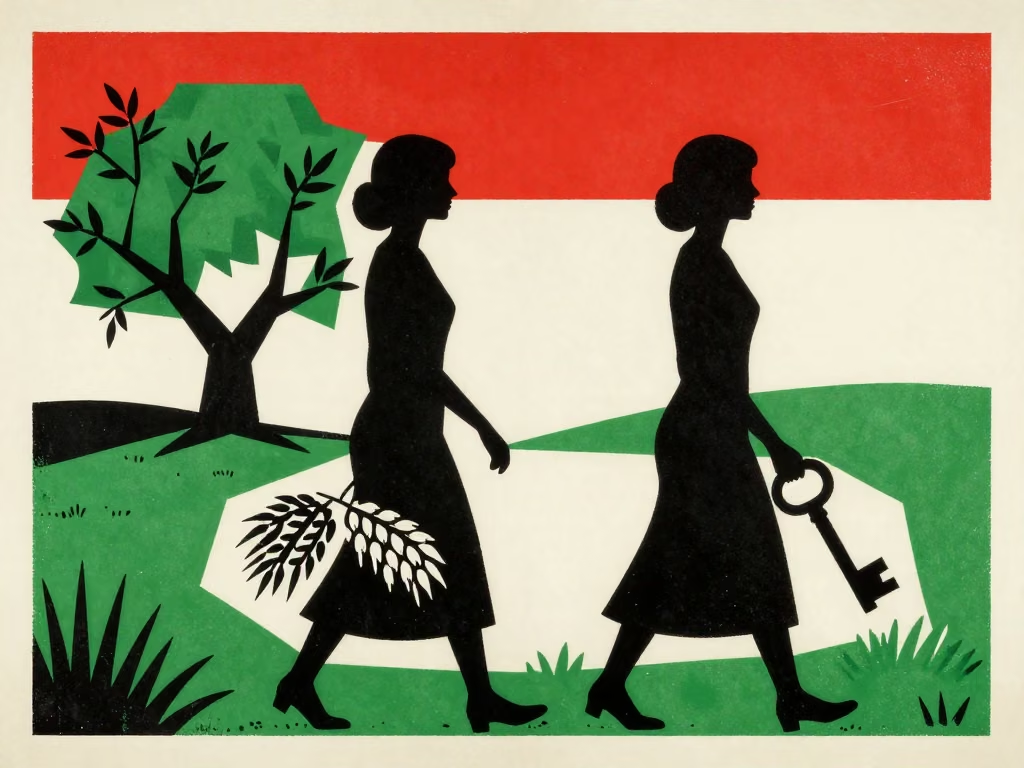
For Rabbi Brant Rosen the Book of Ruth, traditionally read on the Jewish festival of Shavuot which has just begun, shows us that the ultimate path to redemption is found through not through power and violence – but rather through mutual love and solidarity.
A book which opens with a devastating famine in Bethlehem and ends with a new harvest and the vision of an abundant future – never more needed in that same region today: liberation, holding out a future of equity, justice and peace for all who live between the river and the sea
This article was originally published by Shalom Rav on Fri 26 May 2023. Read the original here.
On Shavuot, the Book of Ruth and Palestinian Exile
Loading article text…



I love it! More sermons like this are very welcome. My daughter’s batmitzvah parasha was in a similar vein: “Remember the stranger for you were strangers in Egypt.” She compared it with our need to welcome refugees. A mitzvah.
This is such a beautiful story, retold within such a compassionate & Wise address.
As usual I am being picky, but I prefer Brant Rosen’s longer and more analytical writings to this little sermon/ homily! A lot of the book of Ruth is actually taken up with the complications of levirate marriage and inheritance, with Ruth demonstrating utter submission while two men decide who will marry her:
‘ Boaz, being a close relative of Naomi’s husband’s family, was therefore obliged by the levirate law to marry Ruth (Mahlon’s widow) to carry on his family’s inheritance. Naomi sent Ruth to the threshing floor at night where Boaz slept, telling Ruth to “uncover his feet and lie down. He will tell you what you are to do.” (3:4). Ruth did so. Boaz asked her who she was, and she replied: “I am your handmaid Ruth. Spread your robe over your handmaid, for you are a redeeming kinsman” (3:9 NJPS). Acknowledging he was a close relative, Boaz blessed her and agreed to do all that was required. He noted that “all the elders of my town know what a fine woman you are” (3:11 NJPS).
However, Boaz told her that there was a closer male relative. Ruth remained in submission at his feet until she returned to the city in the morning. Early that day, Boaz went to the city gate to meet with the other male relative before the town elders. (The relative is not named. Boaz addresses him as ploni almoni literally “so and so”.) The unnamed relative, unwilling to jeopardize the inheritance of his own estate by marrying Ruth, relinquishes his right of redemption, thus allowing Boaz to marry Ruth. They transfer the property and thus redeem it, and they ratify the redemption by the nearer kinsman taking off his shoe and handing it over to Boaz. ‘
This procedure also has an alarming resonance in the psalms by Ruth’s grandchild King David: ” Moab is My washpot; Over Edom I will cast My shoe”.
Deeply insightful. Thank you. I wonder if it is of further significance that Ruth was the great-grandmother of King David, and both Jews and Christians believe that the promised Messiah – who will establish true and lasting peace, justice, equity and prosperity, not only in the Holy Land but in the whole world – will be a descendant of David.
This story, is very moving and powerful for those that care about others, especially if they are suffering, (in this story of) famine, they travel across a border knowing they will be safe, the strangers will allow them to feed off their crops, supplies and drink from their water sources etc.
(It reminded me of my favourite saying, ‘A stranger is a friend I haven’t met yet’.
What goes through the minds of people like Netanyahu when they read a story like this, is impossible to understand and it seems impossible to change their their mindset.