
Jury Equity, the Filton 6 and the arrest of Trudi Warner
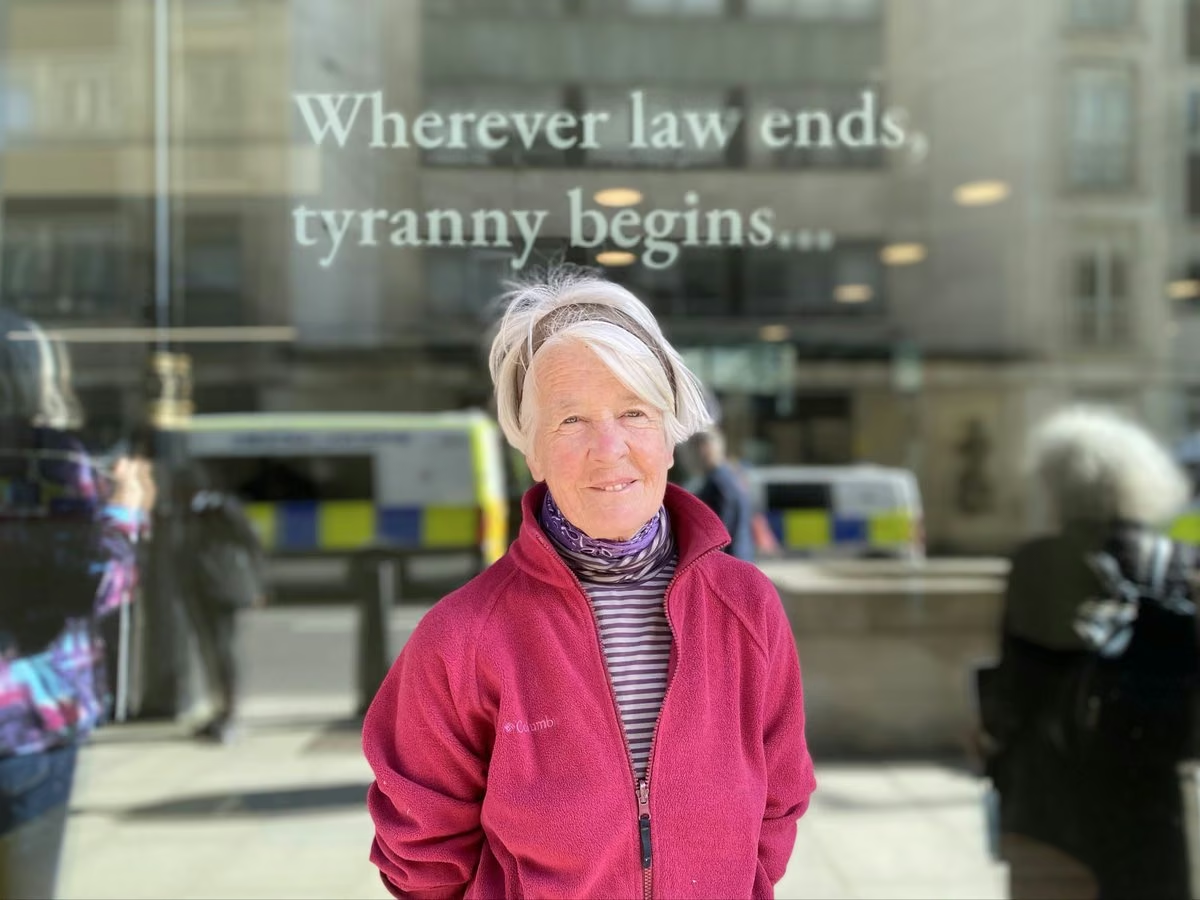
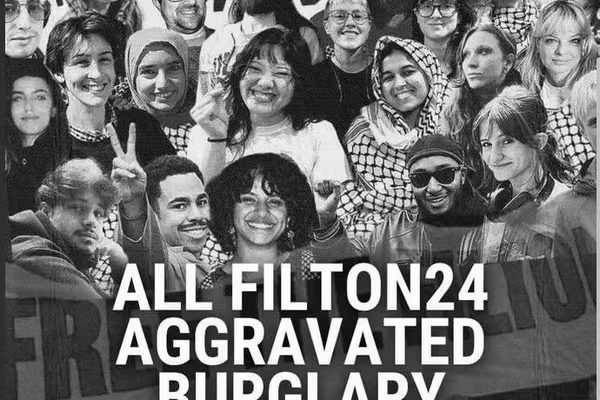
On Thursday 23rd April, Trudi Warner along with one other person, was arrested outside Woolwich Crown Court, during a trial of six of those accused of damage at the Filton Elbit Systems factory in 2024. The film of her arrest is here. She was holding a jury equity sign saying: “Juries have the absolute right to acquit according to their conscience.” This expresses the same principle in English Law that is displayed on a plaque outside one of the courts at the Old Bailey.
Trudi had first been arrested in March 2023 for holding a similar sign outside inner London Crown Court during a trial of Insulate Britain activists. The judge claimed she was in contempt of court, and this was pursued by the government’s Attorney General. She was found to have acted within the law when it was presided over by a different judge. It is therefore legal to hold such a sign under English case law.
However, on this occasion the police arrested her under section 14 of the 1986 Public Order Act which allows for restriction on assembly in a particular area, based on a belief that because of noise levels or otherwise it will, “result in serious public disorder, serious damage to property or serious disruption to the life of the community”. The police had managed to argue for this restriction because on previous days there had been noisy protests from Palestinian justice supporters. Yet there was clearly no serious public disorder, property damage or disruption to community life from two people sitting quietly holding lawful placards.
And on the next day eleven more people came and sat peacefully with their jury equity signs. All were arrested under the section 14 restriction designed for protests so disruptive that there is adequate justification for ignoring rights to free expression.
Checks and balances
Jury equity provides a check and balance within the legal system limiting the extent to which judges can apply idiosyncratic interpretations of the law or depart too far from natural justice in their advice to juries. Some judges have tried to wish it away, seeing it as an annoying restriction on their powers, especially as a series of verdicts have been delivered against their direction. These include the Shell 7, in 2021, for their spraying of the Shell HQ with , “Shell Lies” and “Shell Kills”, the toppling of the slave trader Edward Colston’s statue in January 22, an Insulate Britain trial in 2024, and this year the not guilty verdict given to six health workers who had drawn attention to the consequences of global heating in the unprecedented UK temperatures, by shattering a few panes of glass at the London Offices of J. P. Morgan the biggest financier of the fossil fuel companies.
Consternation in the judiciary
Some judges have reacted by limiting what juries can hear from defendants by preventing them talking of their motivations, the employment of a “reasonable excuse” defence – acting to limit a greater harm – or even using the words “climate crisis” or “fuel poverty”. This more punitive arm of the judiciary has had many successes with harsh prison sentences handed out to both climate protesters and pro-Palestine activists, most recently the 20-month sentences given to three people who had occupied and damaged the roof of the Teledyne weapons factory in Shipley .
Secret manipulation
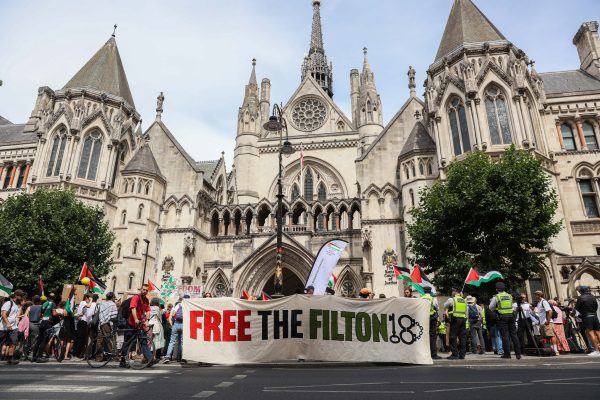
The trial at Woolwich Crown Court is being conducted under special circumstances and with a particular degree of secrecy. It has been said by those attending the trial that the principal defence lawyer and the judge are at loggerheads. They have a history of conflict since both took part in the previous trial of the same defendants and the defence barrister was censured by the judge at that time. There are reporting restrictions on what can be disclosed about the trial in the UK. Zarah Sultana made a speech about this in the house of commons during the passage of the Crime and Policing Bill, which aims in part to ratchet up the restrictions on protest. She claimed parliamentary privilege for the disclosure. Her speech can be heard here. A full report of the trial is being produced by Real Media. The special circumstances around this trial make it particularly important that the jury is in full knowledge of its rights, to apply the checks and balances that their role is given in English law.
To be or not to be a terrorist?
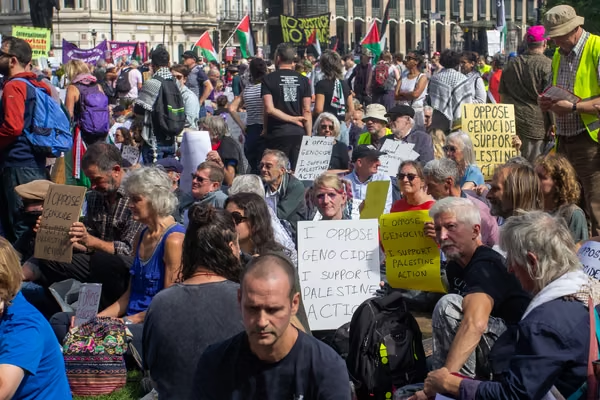
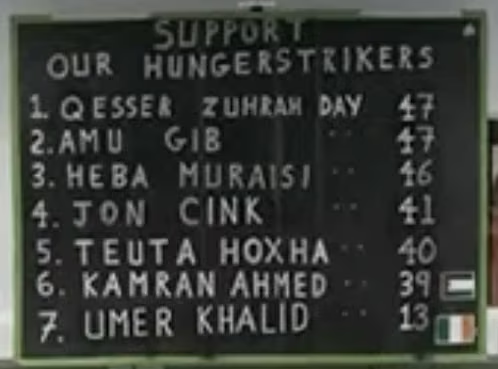
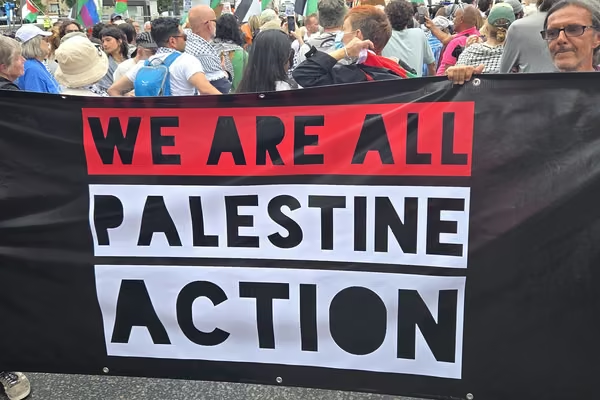
The actions of the Filton 24 against the Elbit Systems factory, as part of Palestine Action, took place before Palestine Action was proscribed as a terrorist organisation in 2025. However, those arrested were kept in prison. on remand and treated within the prison system as if they were terrorists. Many went on hunger strike, several coming close to death. The ban was found to be unlawful on 13th February 2026 after a series of protests organised by Defend Our Juries during which around 3,000 people were arrested for holding a placard: ”I oppose genocide, I support Palestine Action” . The Filton 24 had been released on bail, save for the one young man accused of grievous bodily harm. The Metropolitan Police immediately announced that they would no longer arrest people for holding a placard. However the government was given the right to appeal, and the Met reversed its decision culminating in the arrest of another 530 people ranging in age from 18 to 87, peacefully holding signs, on Saturday 11th April.
The prosecution is treating the trial at Woolwich Crown Court as if it is of a group of terrorists, despite the ban on Palestine Action being unlawful. It seems that the government, the prosecution and judge in this trial are determined to build a judicial system with minimal juries, and maximum penalties for protest. Much hangs on the appeal against proscription and the resolve of supporters of Defend Our Juries, justice for Palestinians, environment and peace campaigners to continue to assert their rights to protest. These can be ignored or penalised, but they cannot be taken away.


Thankyou for this full report which captures history and brings us up to date. It is a crucial moment to fight for the rights of juries which is a long held principle of democracy. We cannot let this slip by – whether or not you agree with the actions on trial the principle is crucial to protect