
The Filton 24 and the Palestine Action proscription
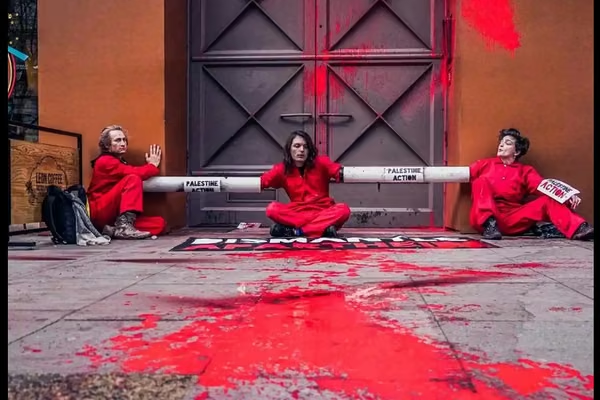
We post three articles below on some huge victories for Palestine Action – the acquittal and dropping of charges in the Filton 24 case, and their success in the appeal against proscription (which the government is appealing).
1. Haroon Siddique’s two reports in the Guardian on the dropping of the aggravated burglary charges against 18 Palestine Action activists, following the jury having earlier cleared six others of the offence.
2. Pending the outcome of the government’s appeal against the ruling on Palestine Action, we repost Doughty Street Chambers’ helpful report Proscription of Palestine Action ruled unlawful.
RK
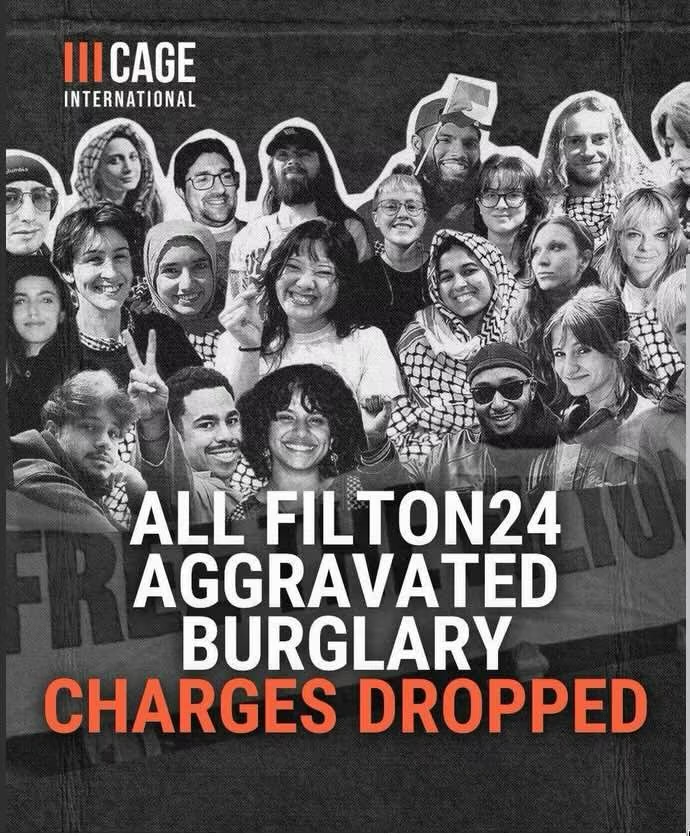
Aggravated burglary charges against 18 Palestine Action activists dropped
Prosecutors drop charges over break-in at Israeli defence firm site after jury cleared six other defendants of offence
Haroon Siddique Legal affairs correspondent
Guardian, 18 Feb 2026
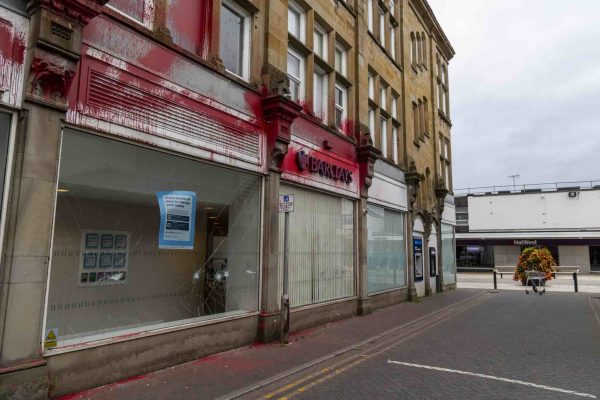
Prosecutors have dropped aggravated burglary charges against 18 defendants accused of a Palestine Action break-in at an Israeli defence firm’s UK site after a jury cleared six other defendants of the offence.
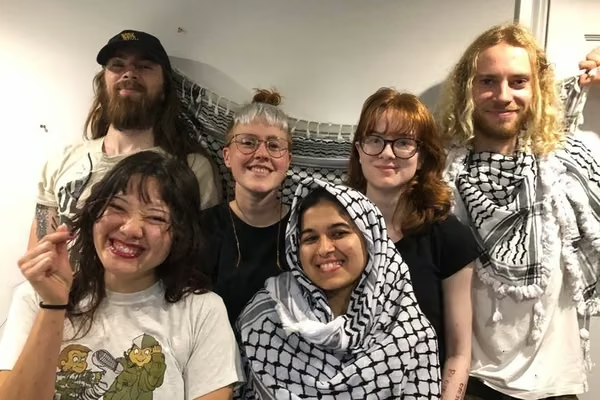
Charlotte Head, 29, Samuel Corner, 23, Leona Kamio, 30, Fatema Rajwani, 21, Zoe Rogers, 22, and Jordan Devlin, 31, were all acquitted of aggravated burglary, which carries a maximum sentence of life imprisonment, with respect to the 6 August 2024 raid on the Elbit Systems factory in Filton, near Bristol.
At a case management hearing at Woolwich crown court, south London. for all 24 defendants charged in relation to the break-in, Deanna Heer KC said: “The prosecution has reconsidered the sufficiency of the evidence … In light of those verdicts and in respect of all the remaining defendants the prosecution offers no evidence on count one, aggravated burglary.”
The remaining 18 defendants accused of involvement were all being held in prison awaiting trial, except for Sean Middlebrough, who absconded while on conditional release from Wandsworth prison, south-west London, in October last year.
However, following the prosecutors’ decision not to pursue the aggravated burglary charges, five of them – William Plastow, Ian Sanders, Madeline Norman, Julia Brigadirova and Aleksandra Herbich – were granted conditional bail.
Plastow, Ian Sanders, Madeline Norman have been in custody for about 18 months while Brigadirova and Herbich have been in jail since November 2024.
Bail applications for another eight of the 18 are expected to be heard on Friday. All of the 18 continue to face criminal damage charges, and some are also charged with violent disorder
Heer confirmed that the Crown Prosecution Service would be seeking a retrial of the six acquitted of aggravated burglary on the charges that the jury failed to reach verdicts on after more than 36 hours of deliberations.
Heer told Mr Justice Johnson on Wednesday: “As we indicated at the end of the trial, we now confirm the prosecution intention to seek a retrial in respect of all those allegations which no verdict was returned by the jury.
“That is criminal damage against all defendants, the three defendants on the allegation of violent disorder, and with Mr Corner on the allegation of causing grievous bodily harm with intent.”
Jurors cleared Rajwani, Rogers and Devlin of violent disorder but failed to reach a verdict on the charge with respect to Head, Corner, and Kamio.
None of the six were convicted of any offence and, at the conclusion of the trial, all of them apart from Corner were set free on conditional bail, after having spent about 18 months in custody.
Aggravated burglary requires an offender to commit a burglary while with a weapon which they intend to use to cause injury or incapacitate a person. The first six defendants to be tried were carrying sledgehammers but their lawyers told the jury that they were intended to be used to destroy property at the Elbit site.
Wednesday’s court hearing took place amid tight security, with at least two dozen police officers positioned around the court building and a heavy presence of court security guards.
Members of the public seeking to watch the court proceedings were initially held outside the court gates by security.
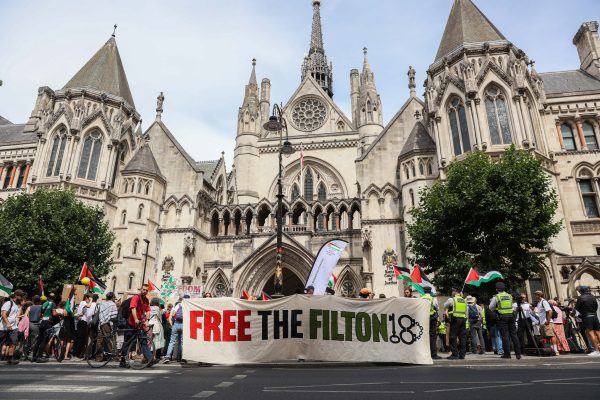
At the gates of the court, around 50 supporters of the defendants waving Palestinian flags could be heard chanting “Free Palestine” and “we have won” after news emerged about some of the charges being dropped.
Reacting to the aggravated burglary charges being dropped, Naila Ahmed, head of campaigns at human rights organisation Cage International, said: “It’s an incredible feeling, and just one in the long list of victories that we hope will continue to come.”
Palestine Action activists cleared of aggravated burglary at Israeli defence firm site
None of the six activists were convicted of any offence over break-in at Elbit Systems factory near Bristol in 2024
Haroon Siddique Legal affairs correspondent
Guardian, 04 Feb 2026
Six Palestine Action activists have been cleared of committing aggravated burglary over a break-in at an Israeli defence firm’s UK site.
Charlotte Head, Samuel Corner, Leona Kamio, Fatema Rajwani, Zoe Rogers and Jordan Devlin were accused of threatening unlawful violence and using sledgehammers as weapons after a prison van was driven into Elbit Systems’ factory in Filton, near Bristol, on 6 August 2024.
But after a trial at Woolwich crown court, south London, none were convicted of any offence.
All six were acquitted of aggravated burglary, which carries a maximum sentence of life imprisonment, and jurors found Rajwani, Rogers and Devlin not guilty of violent disorder.
The jury deliberated for 36 hours and 34 minutes but could not reach verdicts for charges of criminal damage against any of the six defendants. This was in spite of all of the defendants, except Devlin, telling jurors they had entered the factory without permission and damaged Elbit’s equipment including computers and drones.
Additionally, no verdict was reached in the allegation that Corner, 23, inflicted grievous bodily harm on police sergeant Kate Evans, or on the charges of violent disorder against Head, Corner and Kamio.
Before the verdicts on Wednesday, Mr Justice Johnson told the jurors he was not going to ask them to deliberate further, because “you believe that you can go no further than you have got to already”.
The activists hugged one another in the dock as a dozen of their supporters cheered from the public gallery above.
Deanna Heer KC, prosecuting, had told the jury that the defendants were all armed with sledgehammers, which she said were not only intended to be used to damage property but also as weapons “to be used if necessary to threaten and damage people”.
Heer alleged security guards were sworn at, had sledgehammers swung at them and were whipped, while one was sprayed with a foam fire extinguisher.
Rajiv Menon KC, representing Head, said any violence by the defendants was clearly unplanned, that the defendants had not expected security guards to enter the factory and were “completely out of their depth”.
He compared Head to the suffragettes, while describing Elbit Systems, of which Elbit Systems UK is a subsidiary, as a “dreadful company [that] has played a critical role in the killing of tens of thousands of Palestinians”.
The defence also argued that the security team had used excessive force and pointed to missing CCTV footage.
During the trial one juror asked the judge whether it would count as a lawful excuse if a defendant believed they were performing a life-saving action by destroying weapons used to kill civilians in an illegal genocide. Johnson said it would not, but Menon reminded the jurors of their absolute right to acquit.
Heer and Johnson both told the jurors, before they began deliberating, that they should disregard their views on the conflict in the Middle East.
After the verdicts, Rogers’ mother, Clare, said: “Our loved one’s action against Elbit Systems and the state’s brutal response have exposed the true values of the government. The government is determined to do business with Israel and protect its weapons industry at any cost.
“Our loved ones dared to poke this beast – and no expense has been spared in policing, prosecuting and imprisoning them without trial. Imagine if the government had put the same amount of money, resources and political will into preventing a genocide.”
A spokesperson for Defend Our Juries, which has organised rallies opposing the ban on Palestine Action, which took effect on 5 July last year, said the verdicts were “a huge blow to government ministers” who had “tried to portray Palestine Action as a violent group to justify banning it under badly drafted terrorism legislation”.
Amnesty International also said it showed how disproportionate the proscription decision was.
Proscription of Palestine Action ruled unlawful
Doughty Street Chambers, 13 Feb 2026
Today the Divisional Court handed down its judgment in the judicial review challenge to the Home Secretary’s decision to proscribe Palestine Action as a terrorist organisation.
The three judge court upheld two grounds of the claim.
Firstly, the decision was not consistent with the Home Secretary’s policy on proscription.
The policy required the Home Secretary, when deciding whether to exercise the discretion to proscribe, to take into account into account “other factors including [1] the nature and scale of the organisation’s activities, [2] the specific threat it poses to the UK” and three other factors.
The Home Secretary took into account the view that proscription would be advantageous, for example because it would mean the offences at s.11-13 of the 2000 Act could be used against people supporting Palestine Action, and would provide “significant disruptive benefits”. The Court held that, for the purposes of the policy, this was not a relevant consideration. The purpose of the policy is to limit the use of the discretionary power, and any “other factors” must be of the same nature. They must contribute to the particular need to proscribe the organization above and beyond the necessary belief that the organization is one that is concerned in terrorism. The operational advantage, relied on by the Home Secretary, would apply equally to any organization that could be proscribed, so it is inconsistent with the purpose of the policy (§89- 95).
Secondly, the decision breached articles 10 and 11 ECHR.
The Court held that this was not an ab ante challenge to the compatibility of the Terrorism Acts, or any of the provisions in those Acts, with Convention rights. The decision was not a general measure, albeit that it had to be approved by Parliament by affirmative resolution. It is a challenge to a specific, executive decision.
The Court noted that ECHR rights do not afford any protection to violent or non-peaceful protest. But what needs to be justified is not the restrictions on violence committed by a few members of Palestine Action; it is restriction on peaceful protest, under the Palestine Action banner. That is:
“this case is primarily concerned with the rights of individuals who have not acted unlawfully either before or since proscription, who would have wanted to express support for and associate with Palestine Action – whose stated aim is “to stop genocide and other atrocity crimes by causing disruption to corporate actors who aid, abet, facilitate and profit from those crimes” – and who wished to engage in peaceful protests under the banner of Palestine Action, but are stopped from doing so.” §115.
The Court decided that the interference with article 10 and article 11 is very significant. The reasoning to support that, included:
- The criminal law consequences of proscription are very significant.
- The ‘chilling effect’ is relevant: that is, the “the fact of proscription and the heavy penalties for the offences under the 2000 Act will mean that it is reasonable to expect people to be risk averse, to adjust their behaviour and to avoid doing things that run any significant risk that they might commit any of those criminal offences”: §121.
- Some weight attaches to the position of journalists and academics, who will want to err on the side of caution of what they report. But “all ought to… understand that journalists’ opinions and preferences are not per se aligned to the news events they report” §123. The implication is that a journalist does not commit an offence under s.12 of the Terrorism Act 2000 of expressing support for a proscribed organisation, by reporting or teaching what others say about it. The court accepted that s.12 offences could cause genuine problems for organisations campaigning against the fact of proscription and the use of the power to proscribe: §123.
- The Court held the “interference with article 11 rights is stark: the very purpose of proscription is to put measures in place that are designed to ensure that an organisation ceases to exist.” §135
- However, little weight was given to the impact on those arrested for holding ‘I Support Palestine Action’ banners, because they knew or ought to have known they were supporting a proscribed organization. The fact that police made errors, arresting people for action which was not in fact criminal, was also not considered relevant: §118-120. The Court did “not consider that the proscription of Palestine Action is likely to result in any general impact on expressions of support for the Palestinian cause.” §136.
The Court rejected the Claimant’s argument that there was a less intrusive measure that did not unacceptably compromise the achievement of the objective pursued.
However, it held that the measure was disproportionate, and a fair balance had not been struck. Only a very small number of the organisation’s actions amounted to terrorism within the definition in the TA 2000. The criminal law was in any event available to prosecute those actions, and other criminal acts of the Palestine Action members. The “nature and scale of Palestine Action’s activities, so far as they comprise acts of terrorism, has not yet reached the level, scale and persistence that would justify the application of the criminal law measures that are the consequence of proscription and the very significant interference with Convention rights consequent on those measures.” §140.
The court dismissed two other grounds, regarding procedural unfairness and failure to have regard to relevant considerations.
Further submissions will be made about remedy.
Adam Straw KC and Rabah Kherbane acted for the Intervener, the UN Special Rapporteur on Counter-Terrorism and Human Rights, instructed by Daniel Machover of Hickman & Rose solicitors.
Read the full judgment here.
Media includes:


Could you tell me how to obtain the analytical material of PSC PA? Thanks.
You can find it on their website