
Diversity is not the issue, we must challenge the system that benefits from racism.
JVL Introduction
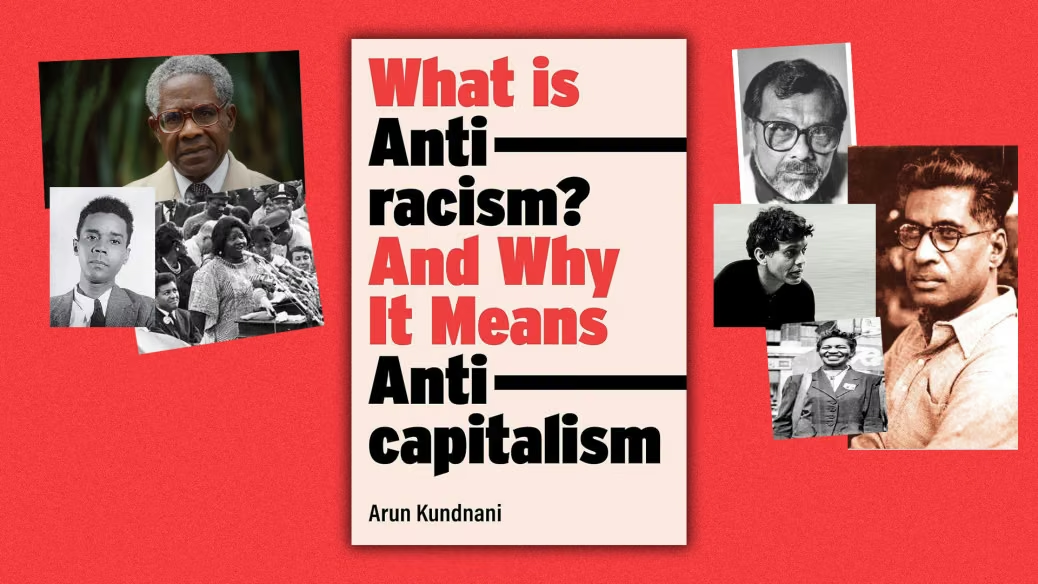
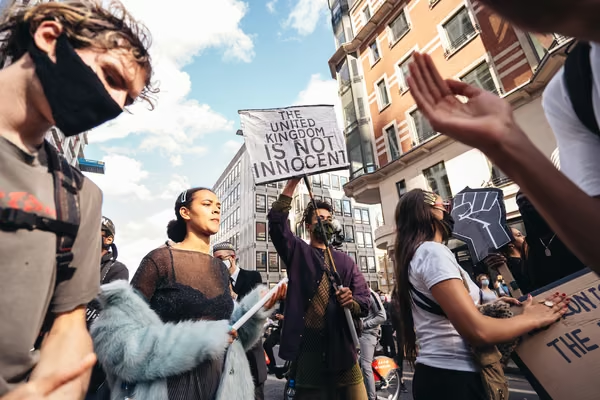
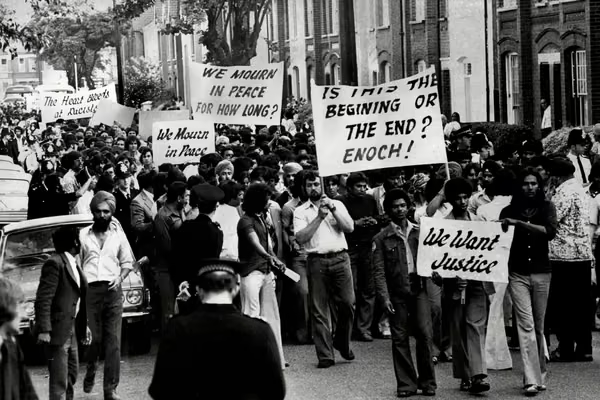
This article is several months old but it seems appropriate to post it now with what is happening on the streets of the UK – and in the political discussions of our political and other elites. This review of Arun Kindnani’s book “What is Antiracism and why it means Anti- Capitalism” highlights the importance of addressing the structural racism and regards the diversity training and soon that have been common as, at best, limited and, worse, may lull many into a false sense of complacency; after all we have come a long way from “No Blacks, No Dogs, No Irish” but most people of colour in the UK were not shocked at the race riots that will mark the UK in summer 2024.
As Arun writes: “The border violence of detention and deportation… is driven by the need to maintain a worldwide racial division of labour; it does not diminish in the slightest if the deportation officer who carries out the violence and the capitalist who profits from it have done terrific jobs of examining their unconscious bias,”
The issue is, of course, structural so that we need to understand that “…recent right-wing successes – ladened with anti-refugee and Islamophobic vitriol – are not a reaction against so-called anti-racist progress, but rather them “making explicit what’s already implicit in the violently racist practices of liberal states.”
LL
This article was originally published by The New Arab on Wed 11 Oct 2023. Read the original here.
What Is Antiracism?: How liberal ‘diversity training’ cancelled structural racism
While liberal anti-racists obsess over diversity; new forms of racism have seeped into the routines of liberal regimes. Arun Kundnani’s ‘What Is Antiracism?’ instead theorises an anti-racism that is radical, universal, and anti-capitalist.
Loading article text…

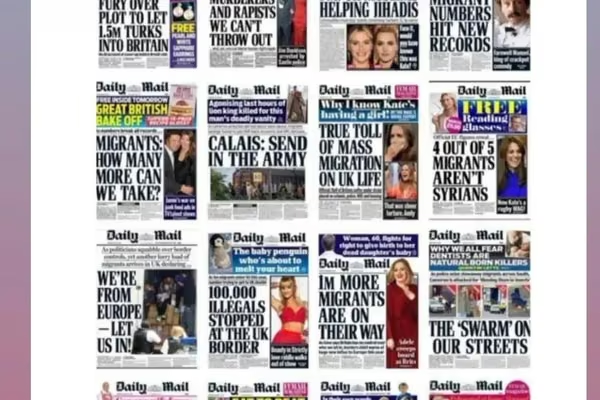
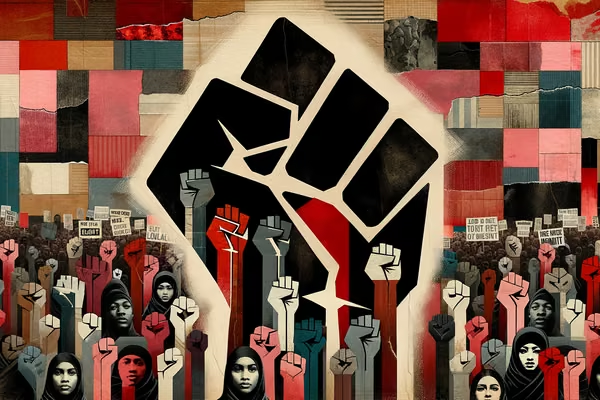






What is the conclusion that we should draw from this article? That liberal anti-racism, diversity training, racial awareness and all their sub-components simply act to reinforce racial capitalism and at the same time to fragment opposition to it. By turning us inwards and concentrating on individual prejudices we exculpate the system as a whole.
At a time when we have seen racist riots in Britain for the first time in living memory, we still have those who believe that you can separate out racism in Britain from the racism of imperialism as if Britain was literally an island.
I refer to Stand Up To Racism which has tried to exclude the issue of Palestine from its mobilisations. That is a recipe for disaster as the link between Zionism and racism against Muslims is too well documented, both in Britain and abroad.
This is an essay that deserves to be read carefully.
‘ … confronting our irrational prejudices. We are racist because we are uneducated … ‘.
‘ … understanding the system and its function … ‘.
Whatever the nature and depth of ‘our’ prejudices, ‘we’ need to find ways to come to terms with the realities of the world in which we live. One basic problem is that the majority of English/British people know virtually nothing about the heavily detailed history of the evolving interaction between England/Britain and the rest of the world. A more fundamental problem is that they don’t want to know. Under the combined influences of prejudice and laziness, most people seem to believe only what they want to believe.
May I be so bold as to suggest that only a painstaking study of the huge corpus of fully referenced secondary and primary sources can provide us with any reasonable understanding of the system and its function.
Warning! There is a lot of it, but the Navigation Act of 1651 would be a good starting point.