
Can Standing Together bear the weight of its contradictions?
JVL Introduction
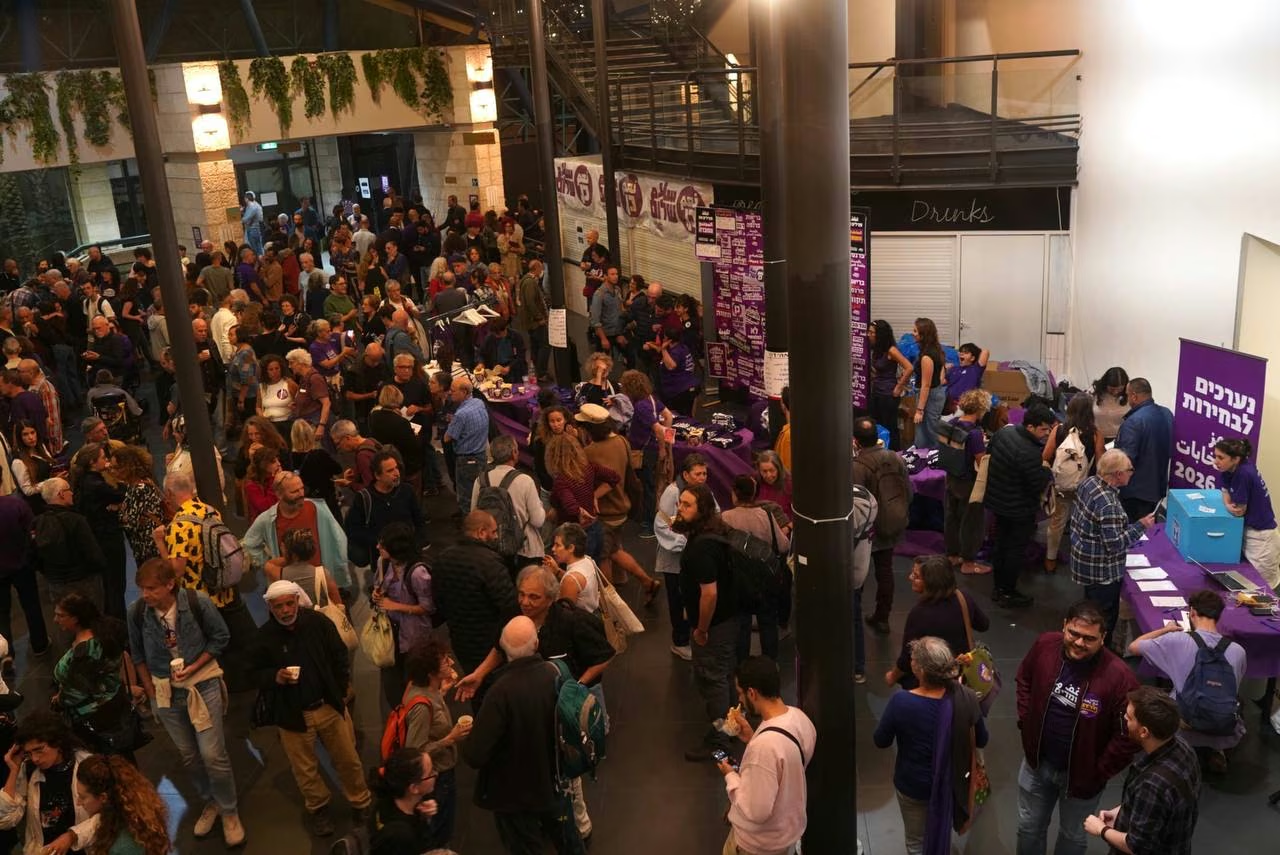
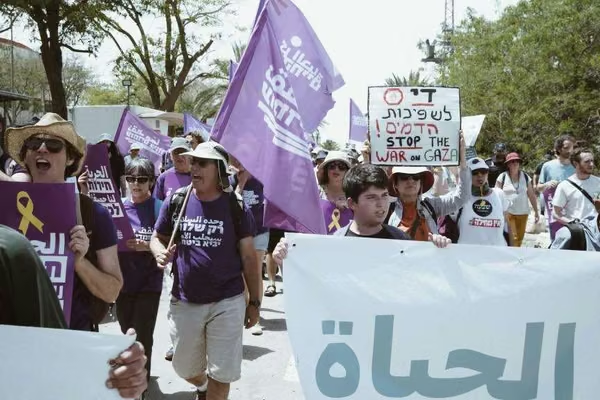
Standing Together, the Israeli Jewish-Arab movement, has just celebrated its tenth anniversary.
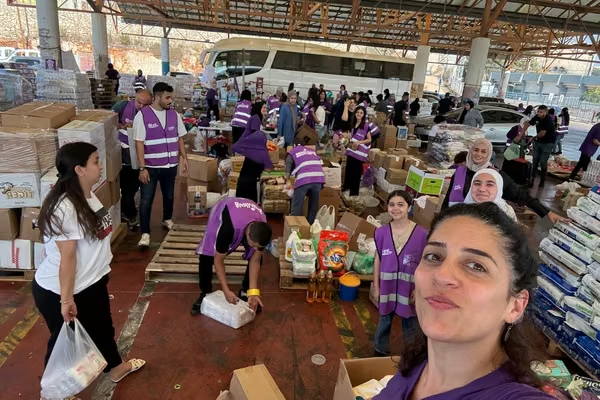
It is an active, vibrant, uneasy coalition whose c. 6,000 Jewish and Palestinian members are attracted by its overlapping network of causes: in particular it has done valiant work within Israel to oppose the war on Gaza and provide material support to its victims; as well as addressing the explosion of gun violence and organised crime in Israel’s Palestinian communities which the government has allowed to fester.
As Samah Watab puts it, for Jewish Israelis “the movement’s appeal lies more in advancing social justice, Jewish-Arab coexistence, or the hope of reviving a progressive Israeli identity, for the Palestinian activists it represents one of the last remaining spaces to confront structural violence and organized crime.”
The subject of Zionism is inevitably fraught. As a movement the official position is “committed to complete equality between all the people who live between the river and the sea”. Anyone who will work with them on that basis is welcome and they are not asked about their Zionism even though that ideology is generally understood to underpin the structures of oppression that the movement is engaged in fighting.
Can Standing Together find ways of negotiating the contradictions which this article identifies? Can it, as it hopes to do, collapse the traditional distinctions within Israeli society and build “a new political majority” on the basis of shared material interests — a broad camp that would include Palestinians and Jews, and both self-professed leftists and those who have not traditionally identified as such?
RK
This article was originally published by +972 Magazine on Fri 19 Dec 2025. Read the original here.
Can Standing Together bear the weight of its contradictions?
The Jewish-Arab movement is celebrating its 10th anniversary after a period of rapid expansion. But as it grows, so do questions about its political stances, its electoral ambitions, and the limits of binational organizing.
Loading article text…


Pretending fundamental differences don’t exist and refusing to deal with them often destroys human relationships and organisations, as we know …
Perhaps the best way ahead is for “Standing Together” to accept it will only ever be a loose coalition. It will be the “home group” nurturing ever-changing splinter groups that will semi-independently pursue with energy and commitment their own agendas and ideas.
As a Quaker, such a set-up seems natural to me – and I know it works. Part of the reason why the approach works for Quakers, though, is the trust between us arising from the 400 years experience we’ve had in making it work and in sorting out problems as they happened.
It would be far more difficult for “Standing Together” to introduce the same approach as a new idea, taking shape within Israel-Palestine’s very difficult political and legal environment.
Any loose coalition in which splinter groups pursue their own paths is CONSTANTLY at risk of unravelling or of getting the whole organisation (or part of it) into serious trouble.
I sincerely hope that Standing Together can make some headway and persuade Israelis and Palestinians to go back to the way they were – living side by side together. However, with American Synagogues being used to advertise “prime real-estate” in new and illegal Israeli settlements they have a hard task ahead.