
Passover: Liberation and collective punishment
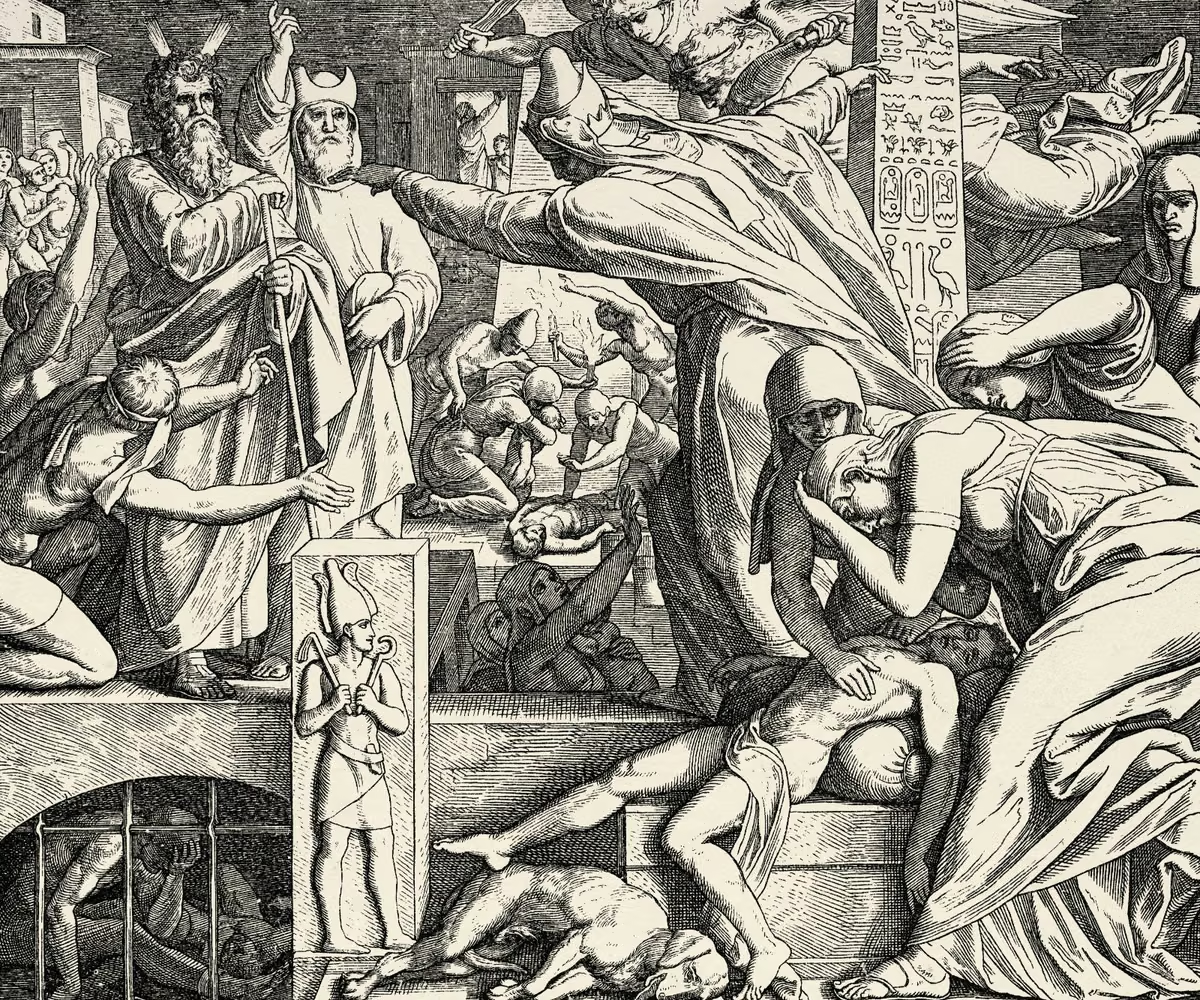
JVL Introduction
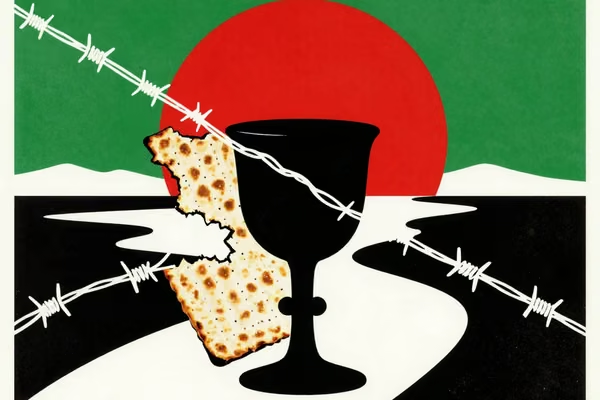
The recitation of the Ten Plagues, writes Rabbi Brant Rosen, “is one of the signature moments of the Passover seder – and for many, one the most morally problematic.”
He considers the original texts and the early arguments about those terrible events – including collective punishment – involved in the liberation of the Jews from Egypt
“Yes, the God of the Torah is a God that demands liberation of the oppressed, but the text also portrays God at times as vengeful, destructive, misogynistic and xenophobic, if not downright genocidal.”
The violence that is part of the Passover remembrance is all too real today and we see endless examples of the powerful exerting power over those who are seen as weak, a threat or less important.
Collective punishment is becoming normalised, certainly for the people of Palestine, of Iran, Lebanon, for those “detained” by ICE in the USA and far too many others.
The risks inherent in the Passover story are that people may feel vindicated in considering only the importance of the victory and not the suffering of the vanquished or the horrors of the methods used.
As we go to our various Seders this year, Rabbi Rosen’s essay gives us much to consider.
Chag sameach! Gut yontif!
LL
This article was originally published by Shalom Rav. Read the original here.
The Destroyer Unleashed: A Meditation on the Ten Plagues
Loading article text…





The important sentence in the article is, “…we are reading what the Biblical writers living in the ancient Near East wrote about God.” That tells you everything we need to know about those people, and from what we see coming out of Israel today the people living there have not changed. Those of us who are Jews in the so-called “diaspora” are completely different from Israeli Jews. We believe in human rights, the rule of law and international law, laws that Israeli Jews seem not to accept and understand..
To simplify the issue I would say when we read Little Red Riding Hood we know it is a fairy story and expected to be enjoyed even though the wolf wants to eat the little girl. There may be lessons in it for children, but it is not expected to be taken literally, similarly for most Bible stories.
Thanks for your insight into the Destroyer who did/does not distinguish between the righteous and the wicked, the terrorist and the aid worker. The problem of interpretation remains complex but you shed a light on a troubling passage.
Not to mention a perfectly environmental explanation for the ten plagues which have been expounded for decades now. No god involved.