
This week when Prince William summed up the horror of Gaza
Robert Cohen has written this thoughtful piece, starting from the fact that Prince William has spoken out about the destruction of Gaza but noting the failure of so many, especially but not only in the Jewish Establishment, to stand up for the most basic human right of all – the right to life. We hear more from those Establishment organisations about how terrible it was to shine “from the river to the sea” on the House of Commons Clock Tower than we hear concerns from them that a charge of genocide against the State of Israel has been deemed plausible by the International Court of Justice. Things are changing and fewer Jews identify as zionist than ever before, especially amongst younger people. But such changes are already too late for at least 30,000 Palestinians, the tens of thousands with life changing injuries, the nearly two million displaced and the more than two million traumatised people.
LL
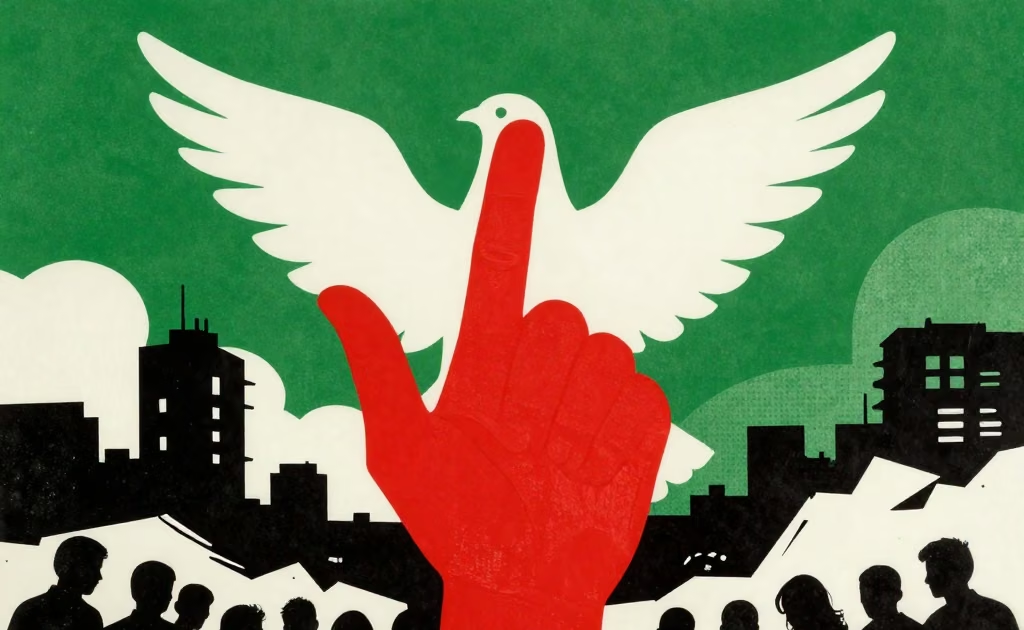
This week the Prince of Wales stepped into the on-going horror of the Israel Gaza War to tell us that “too many people had been killed” and there was a need to “end the fighting as soon as possible”. Yes, Prince William was stating the blindingly obvious. Yet, somehow, it sounded remarkably refreshing.
It was a relief not to see another public figure dancing around the various politically calibrated, fine-tuned constructions involving the words: “ceasefire”, “immediate”, “now”, “humanitarian” “pause”, and “sustainable”. The Prince simply said what most of the British public watching the news each night is probably thinking – this has to stop! And not when Israel sees fit. Not when Hamas is totally destroyed. Not even when all the hostages are released but, as the Prince said, “as soon as possible”.
William’s was a human response to an on-going atrocity. A clear reminder that when children are being killed and orphaned in their tens of thousands we need to think in terms of moral imperatives and not party political or geopolitical calculations. You shouldn’t have to have a detailed negotiating plan or a ten-year framework for peace before you are allowed to say: stop the killing.
When his statement was released, Prince William was about to speak to British Red Cross staff in Gaza. I suspect he wanted to avoid the standard Royal protocol of easy platitudes and sad face and instead say something meaningful. After all, we are watching what one senior U.N. official described last week as “the worst humanitarian disaster I’ve seen in fifty years”.
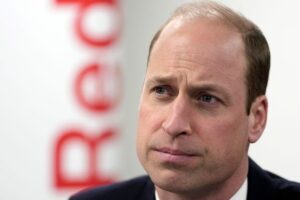
There’s no doubt that Prince William’s words had been approved by Downing Street and the Foreign Office. And perhaps the Foreign Secretary, David Cameron, hoped HRH could give the U.K.’s ‘diplomatic bag’ some extra heft. But that’s probably wishful thinking now that the Israeli Knesset (and not just Bibi’s ghastly coalition) has decided it has no interest in being a partner for peace.
William’s comments made me reflect on how the sympathy which Israel received in the hours and days after 7/10 was squandered in the weeks and months that have followed. One atrocity became the excuse for an even greater atrocity. We have witnessed a merciless pursuit of revenge and ethnic cleansing which has devastated the people of Gaza for a generation (at least) while failing to rescue the hostages or vanquish Hamas (Israel’s stated – and contradictory – war aims). And meanwhile, the rest of the Middle East looks ready to ignite – especially if Israel is callous and stupid enough to launch a major ground assault on Rafah on the eve of Ramadan.
It’s hard not to feel deeply pessimistic right now. As each day passes, the war in Gaza is sowing the seeds of future anti-Jewish terror across the Middle-East and throughout the Jewish diaspora. The two-state solution may be back on the international agenda but in Israel there’s little public or political appetite for its implementation. The eventual departure of Netanyahu is unlikely to change that. As for the current Palestinian leadership, that’s equally unappealing and problematic. For those of us hoping for one secular democratic state with equality for all who call Israel/Palestine their home (what’s normally called a liberal democracy) that’s even more fanciful than the two-state prospect. Tragically, the consequences of 7th October, and its aftermath, look bleak in every direction.
Closer to home
Here in the U.K. our communal institutions and leading Jewish spokespeople are busy ‘fighting the good fight against antisemitism’ while simultaneously fuelling the conflation of Jews, Judaism, Israel and Zionism. How can the Board of Deputies issue statements opposing ceasefires and support Israel solidarity rallies and then be outraged when those demanding Palestinian freedom fail to make nuanced distinctions between British Jews and the behaviour of the IDF? How do you tackle pro-Palestinian antisemitism when the Chief Rabbi goes around the country’s synagogues hailing “our heroic soldiers” in Gaza? Or when the editor of the Jewish Chronicle leans into the problem by writing “I’m proud to ‘conflate’ Jews with Israel, let’s not deny our roots”.
The dominant voices in Jewish institutional life ought to take a close look at the research just published by the Institute for Jewish Policy Research (JPR). The Zionism which has underpinned just about every Jewish organisation in Britain for generations (from synagogue denominations to youth movements and communal bodies) is facing a collapse in support. Only 63% of the JPR research cohort (around 5,000 respondents) identify as “Zionist”. A fall of 10% in a decade and the figure drops further to 57% in the 20-29 age group. October 7th may have shored up support for Israel among older Jews, but among a younger generation it’s likely to be playing out very differently.
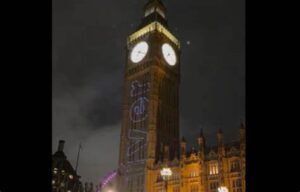 As for the ICJ ruling of “plausible genocide” taking place in Gaza, the implications for diaspora Jewry don’t appear to have sunk in yet. Probably because there have been too many voices either spinning the ruling as support for Israel to continue its war, or else casting the judges’ assessment as just one more example of antisemitism. But even without a final ruling (which will take years) the very fact that the Jewish State of Israel finds itself accused in this way, with evidence considered credible, ought to be causing profound conversations across the diaspora about where the project of Jewish nationalism has led us. Instead, we appear to be in denial about what’s just happened. Instead we are told to be more worried about the slogan “from the river to the sea” being projected on to the Big Ben clock tower at Westminster last week, as if that was the real threat to Jews and Judaism.
However, there are signs that the communal presentation of Israel solidarity is now being tested to its limits. And it turns out that Prince William is in good rabbinic company. Recent comments from Rabbi Jonathan Wittenberg criticising Israel’s military operations in Gaza (“it’s impossible to remain silent”) have been followed by a statement from Progressive Jewish clergy “We are compelled to speak out at this time and to say that the death and suffering endured in both Israel and Gaza must come to an end.” The full text reads like a coded rebuttal to the moral feebleness of institutional Judaism. It’s all very late in the day, but at least it’s happening.

Very well said Robert. A voice of sanity in this terrible British world and recognising the very slowly shifting sands from a few Rabbis. It does need recognition.
Robert asks a number of ‘how can’ questions. Partly because when you are committed to an ideology and a party line, that’s what you say. And partly because Zionism does not object to antisemitism, it is happy to create fear among Jews and increase actual antisemitism because it’s whole raison d’etre is to offer the solution: aliyah. That’s the product, that’s the sales technique. Always has been.
Took him long enough.. but Charles being ill has been an opportunity for William to step out of the Establishment prison cell and speak up..