
Silent on Gaza as they were on the Nazi Holocaust
Published
by
Leah Levane
JVL Introduction
Leading US medical journal exposed for failing – even once – to mention Gaza.
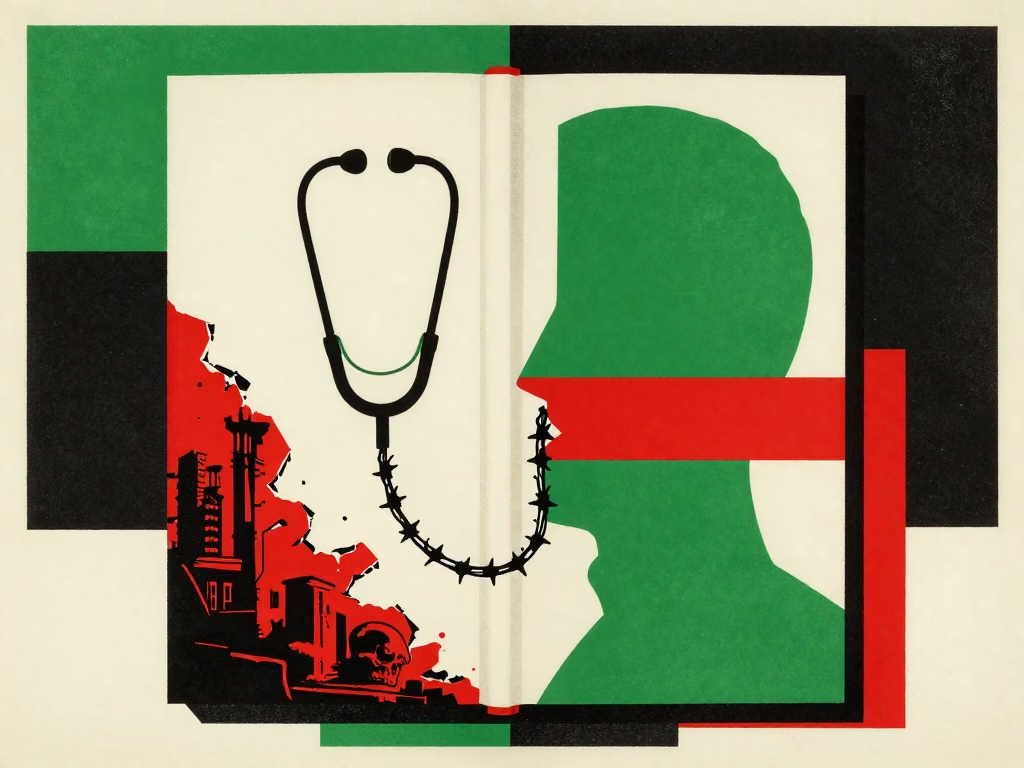
Throughout the 1930s and 1940s, one of the most prestigious US medical journals, the New England Journal of Medicine, had virtually nothing to say, let alone criticise, about the Nazis’ racist medical policies and the subsequent atrocities of the Holocaust. In March this year, two historians of medicine, Joelle M. Abi-Rached and Allan M. Brandt, exposed this deafening silence in the journal’s own pages. At a recent one-day symposium organized by Harvard Medical School and NEJM on “Recognizing Historical Injustices in Medicine and the Journal”, Abi-Rached (who is Lebanese and was working in a Beirut hospital during Israel’s recent pager-bomb attacks) made the obvious connection, questioning why the NEJM has yet to publish any articles about Palestinians and Gaza. The journal’s editor, Eric Rubin, was left flailing about attempting to provide an even half-way rational justification, laying bare in the process the deeply ironical parallels between (and repetition of) the willful failures both then and now by establishment media – whether ‘specialist’ or ‘mainstream’ – to exercise their principal responsibility: forensically exposing the trashing of fundamental moral and ethical values by genocidal actors.
RW
This article was originally published by The Intercept on Thu 17 Oct 2024. Read the original here.
She Exposed a Prestigious Medical Journal’s Silence on the Holocaust. Now She’s Asking About Gaza.
A historian who exposed the New England Journal of Medicine’s silence on Nazi atrocities confronted the journal’s treatment of Gaza during a Harvard symposium.
Loading article text…
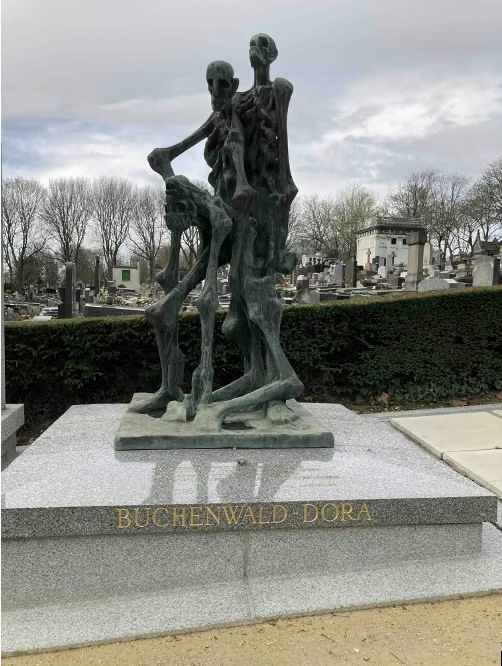
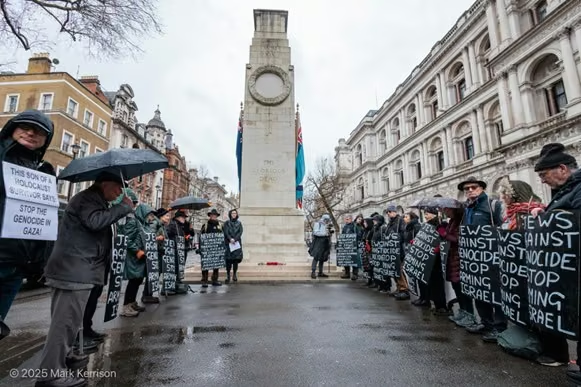
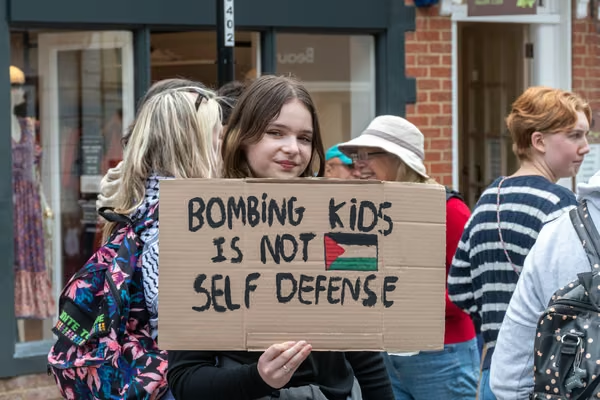
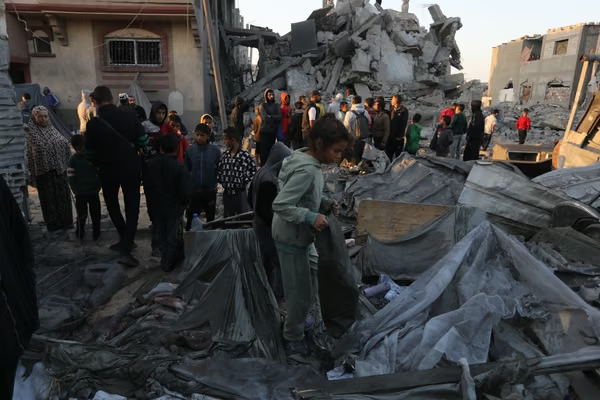
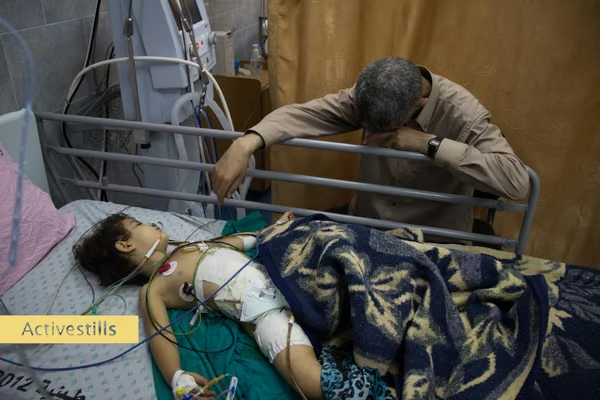


In 1986 the great psychotherapy theorist and psychohistorian Robert Jay Lifton published his monumental study ‘The Nazi Doctors: Medical Killing and the Psychology of Genocide.’ Lifton writes (p 467), in the chapter, ‘Genocide’: ‘Otto Rank, the early follower of Freud and subsequent dissident is a key figure here as a major source of the paradigm of death and the continuity of life — or the symbolisation of life and death — that I have been employing in this book and in other work over several decades. A central tenet of that model would be that human beings kill in order to assert their own life power. To that tenet may now be added the image of curing a deadly disease, so that genocide may become an absolute form of killing in the name of healing. …’
In his introduction to the book, Lifton writes, ‘Psychologically speaking, nothing is darker or more menacing, or harder to accept, than the participation of physicians in mass murder.’
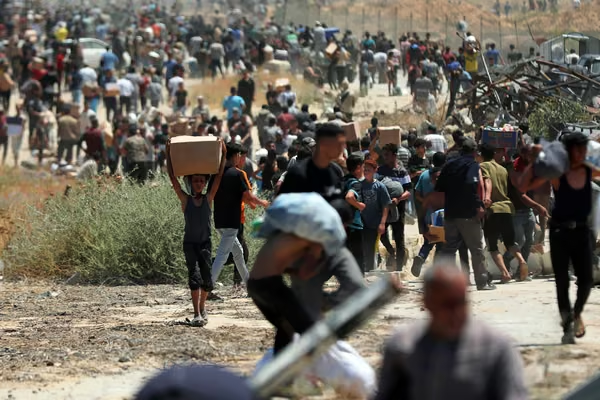
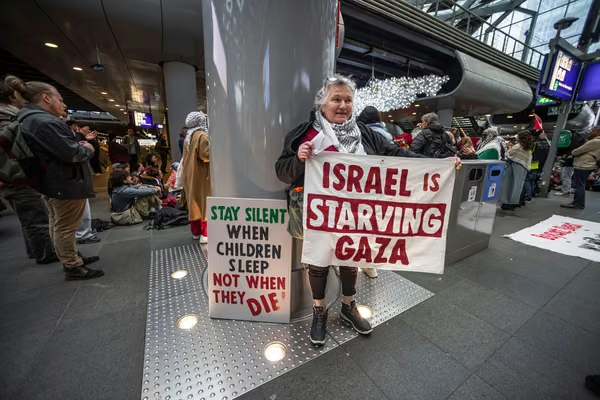
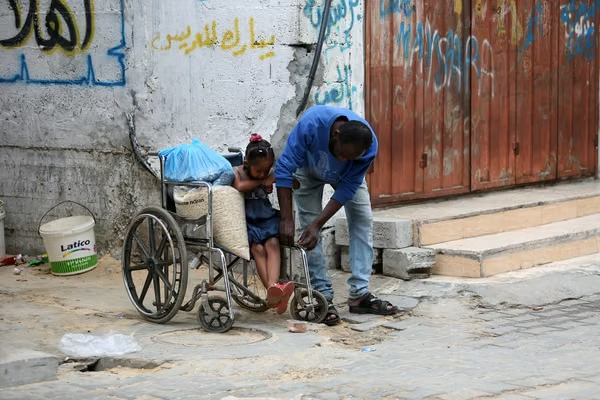
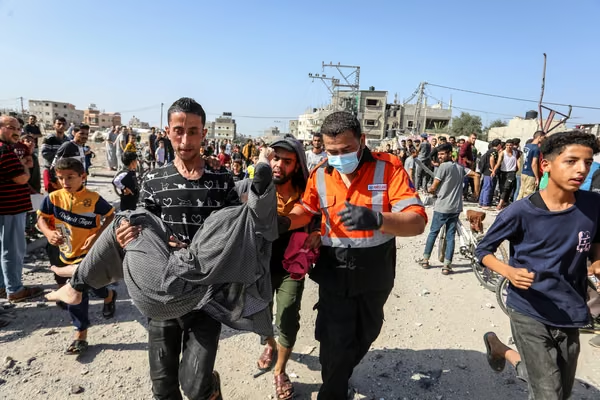
I’m not of course comparing the silence of a medical journal to those who carry out actual genocidal actions, but as Plato taught long ago, silence gives consent. In the piece above, Abi-Rached is quoted: “Is the silence of the journal regarding the pulverization of the health care system in Gaza, and Israel’s relentless attack on health care workers and the creation of a public health and humanitarian disaster and the weaponization of starvation similar or different to its silence during the Holocaust?”
It’s surely certain that at some future time (climate crisis permitting) there’ll be a future Robert Lifton who will take up where he left off and deal not only with the Israeli genocidaires and those around the world who made possible what they did, but also with those who remained silent as their historic counterparts were silent.