
Lessons to learn from Cable Street – never leave others to fight alone
JVL Introduction
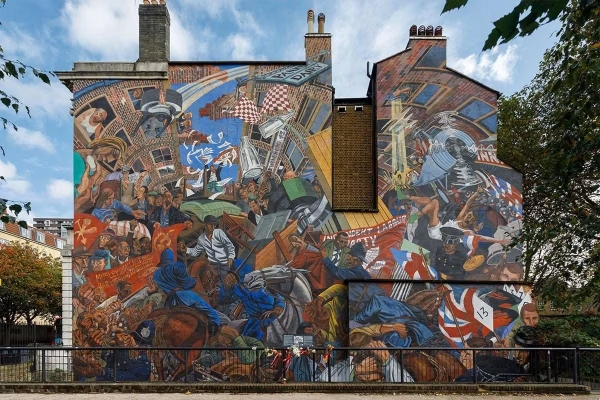
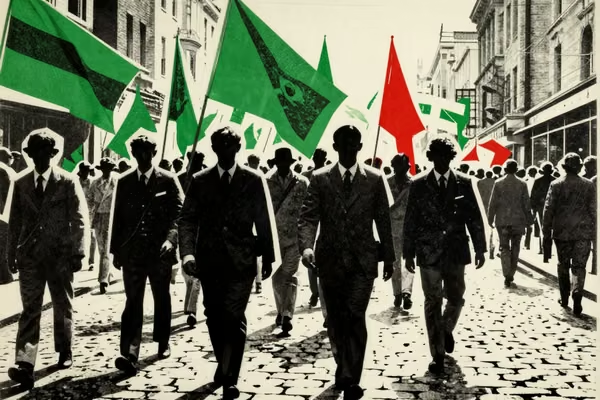
The Battle of Cable Street took place on 4th October 1936 as tens of thousands of workers put their bodies on the line to stop Oswald Mosley’s uniformed thugs from marching through the East End of London.
In the article David Rosenberg looks at the varied Jewish and other responses at the time to the growing threat of fascism.
He concludes that no single targeted group should ever have to bear the brunt of fighting back alone.
___________
Addendum: The BFI has a free-to-view silent film “The Battle of Cable Street“, filmed in 1936 by Lewis Rosenberg. Watch it on the BFI website here.
This article was originally published by the Morning Star on Sat 3 Oct 2020. Read the original here.
Lessons to learn from Cable Street - never leave others to fight alone
Loading article text…
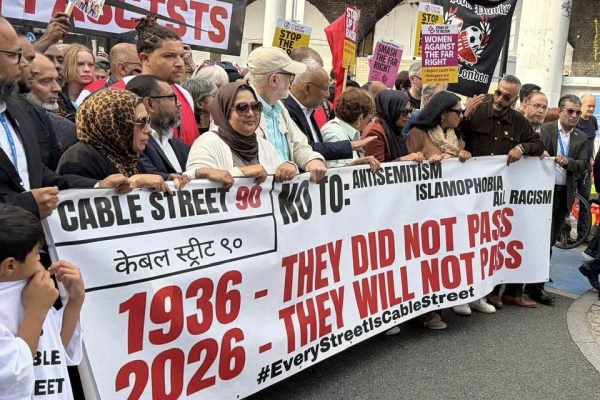
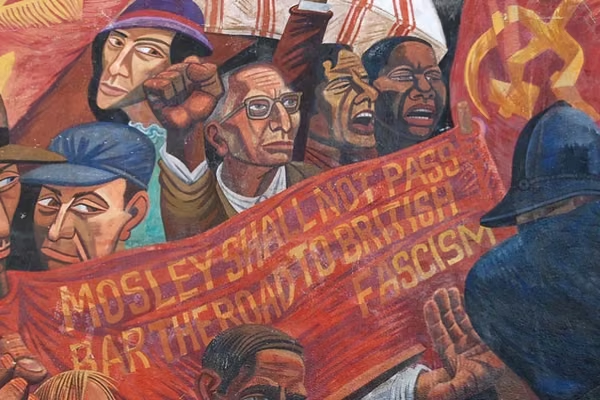
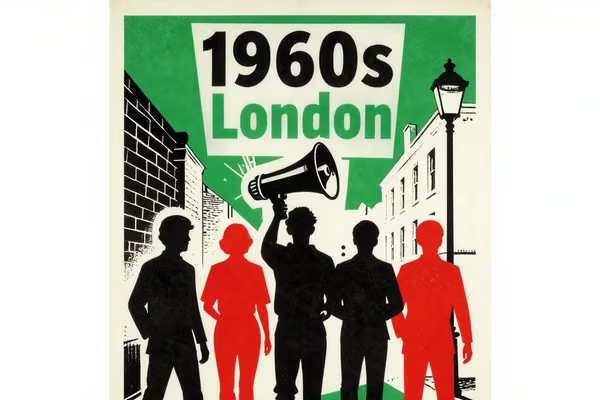

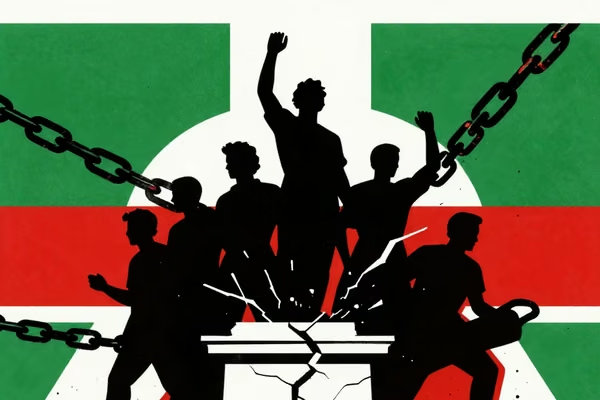


The heroes of Cable Street show what unity and solidarity of the workers can achieve, despite useless, cowardly leaders.
What David misses out is the history of the relationship between the non-Jewish and Jewish working class, which led to thousands of non-Jews joining forces with Jewish workers at Cable Street. In the 1880’s the TUC had passed, 3 times, demands for anti-alienist legislation. William Evans-Gordon, the MP for Stepney’s British Brothers League, founded in 1901 had significant support from non-Jewish workers.
William Fishman, whose book East End Jewish Radicals should also be on the reading list, described how, after the victorious Great Tailor’s Strike of 1912 the anarchist Arbeter Fraint under the leadership of Rudolph Rocker, called on the Jewish tailors to help the dockers and a committee was set up which called for families to feed and accommodate the dockers’ children.
Over 300 children were taken in by Jewish families. They were ‘in a terribly under-nourished state, barefoot and in rags.’
Fishman wrote that:
‘The dockland slogan, ‘No Jews allowed down Wapping’ might have persisted but it was the dockers of Wapping and St George’s who constituted the militant vanguard of the movement which, in 1936, forcibly prevented the Mosleyite incursion into East London.’
This is not forgetting the work of the Communist Party in particular around housing struggles. It was in the class struggle that the Mosleyites were found wanting.
The Jewish bourgeoisie of course, including the Zionists who had little base amongst the Jewish workers, campaigned vigorously against Jewish participation in the Battle of Cable Street
Shouldn’t Phil Piratin’s book “Our Flag Stays Red” be added to the “Further reading”?
Don’t forget to include Gypsies and Travellers. Gypsies were persecuted and murdered in the Holocaust, they and Roma are still persecuted in Europe, and Irish Travellers, especially, face open racism today, including denial of basic human rights to a secure home, education and health services.
Jewish and Black people were present at Dale Farm to support Gypsy and Traveller families. In turn, many GTR people are recognising the common issues as well as the call for solidarity between groups.
Twas the women what won the battle
My nan’s family were from the Isle of dogs, her dad was active in organising workers in local factory, she lost both brothers in WW2
I would like to think they were there,
Again I dont know where I read this account of the battle, but it was clear very early on that the blackshirts were not going to get through, they gave up quite quickly
The police then took it upon themselves to clear a path and attacked on horseback those defending Cable Street
Thats where the women came in, they emptied the contents of their ‘pots’ onto the police from bedroom windows
Pretty soon after the womens action, the police ‘pissed off’
Regards