
Jewish Anti-Zionism remains critical
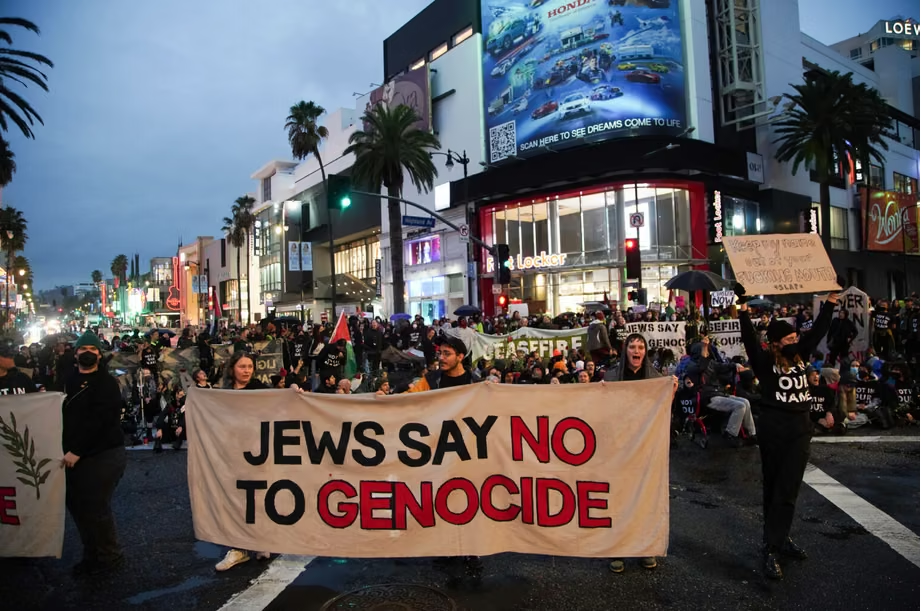
JVL Introduction
A recent article in Jewish Currents, When Jewishness Means Genocide, has prompted this short article by JVL Executive member Graham Bash. The Jewish Currents article is thought provoking and raises important questions most poignantly; are we “reaching the end of the ability to say that ‘I’m Jewish but have nothing to do with Israel.’ There is a state committing horrible acts in the name of being Jewish.”
LL
JVL has always insisted on the distinction between antisemitism and anti-Zionism, and opposed the conflation of Jews with Israel. And rightly so. As anti-Zionist Jews, this is an issue which goes to the heart of what we are.
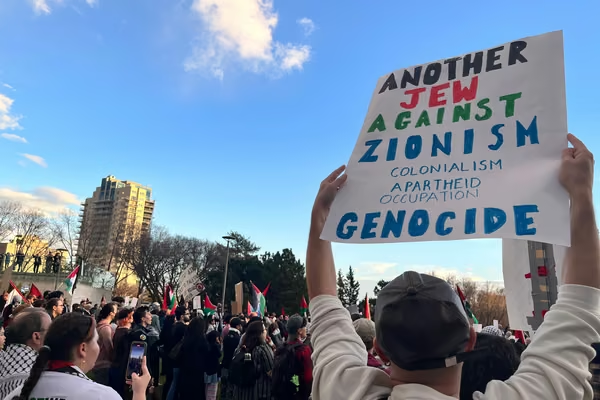
Yet this distinction has been challenged. Challenged, above all, by the Zionists who proclaim that to oppose Israel is antisemitic – but also by a minority within the pro-Palestinian movement who blame Jews for what Israel is and does. The latter, even though very much secondary, is dangerous because it contributes to growing antisemitism. And it divides and weakens the movement for Palestine.
Both the two groupings above are of course our political enemies. But there is a third challenge to this conflation which comes from our political allies.
Take for example, Israel Shahak’s book Jewish History, Jewish Religion – The Weight Of 3000 years. The author was a Jewish anti-Zionist and human rights activist, a Holocaust survivor and professor of organic chemistry. In this book, he makes scathing attacks on Classical Judaism and its modern successor, Orthodox Judaism, for its parochialism, racism and hatred of non-Jews. These, he argues, are the precursor of, and finds expression in, Zionism today.
It was written in 1994, before the current genocide of Palestinians in Gaza by the Israeli state and his arguments are, if anything, strengthened by recent developments. But there are weaknesses – for instance, the development, especially in the United States, of a strong Jewish opposition to, and distancing from, the Israeli State. And he does not deal with what was bound to be a challenge, namely that Judaism is no worse than all the other main religions. It would have been a huge undertaking to compare Judaism with Christianity and Islam. But as his argument has such consequence, that is what was, and is, needed. Still, it is a good antidote to the view that Zionism betrays ‘Jewish values’!
And now, we have something from the same stable, this time a recent interview in Jewish Currents with the philosopher Elad Lapidot. He argues that we can no longer deny the ways in which Judaism has been subsumed by a genocidal Zionism – and that the root of modern prejudice against is not based so much on what they are as on what they do, or rather, what is being done in the name of Judaism.
One of the interviewers challenges his main thesis: “that there’s nothing inherently Jewish about what Israel is doing, and that it actually represents assimilation into a colonial framework. He answers: “If you look at statistics, at least in Israel, the support for Netanyahu and the Gaza war, including the most racist genocidal statements, is correlated to how religious people are -the more religious, the more supportive.”
He argues that we may be reaching the end of the ability to say that “I’m Jewish but have nothing to do with Israel.” There is a state committing horrible acts in the name of being Jewish. Judaism is an “ideology of genocide” and has become the ideology of racism and nationalism. He concludes that: “Zionism, surely as it is embodied in the current State of Israel, is not opposed to antisemitism because it reproduces its own Jewish form of racism.”
Well, this a challenge. Amen to his final conclusion about what Zionism is. But I for one challenge his subsuming Judaism into Zionism and the actions of the Israeli state. And I say that as a Jewish atheist.
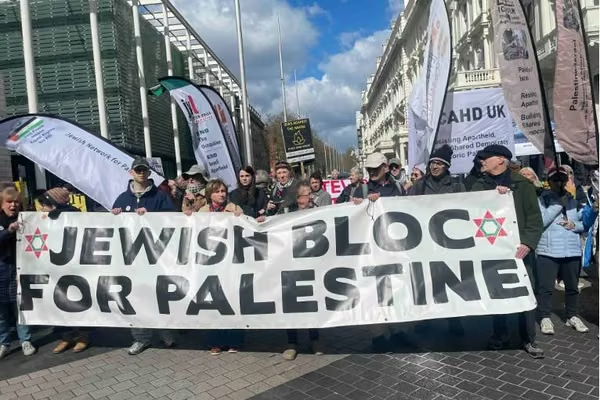
This is a challenge that needs more than words in response. It also needs deeds. Our task of building – or rather strengthening – the forces of Jewish anti-Zionism are perhaps more critical today than ever.
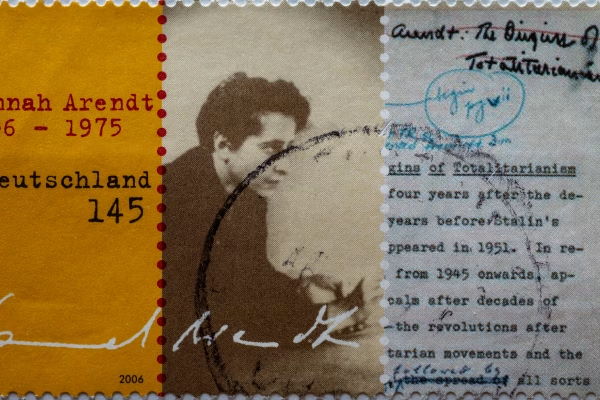
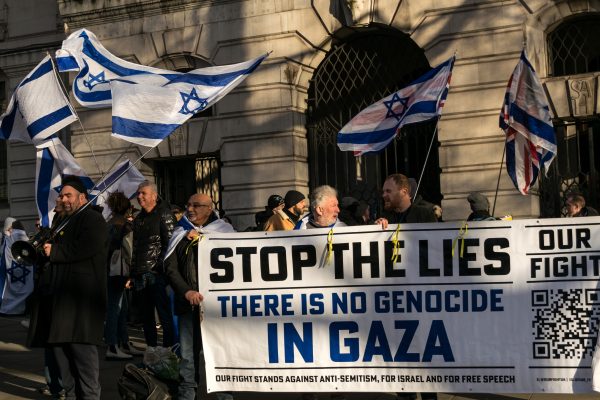


Fundamental to this debate is the Question of what it means to be a Jew. Is it an ethnicity or is it a religion and a culture ?
I am a Christian. If I became an atheist I wouldn’t say I was a Christian Atheist it would make no sense. But the author of this article says he is a “Jewish Atheist”. Of course he has every right to say this but to me it makes absolutely no sense. But I am an Anglican. Saying you were a Catholic Atheist might make more sense. But no Christian would suggest that our faith would give us the right to live in Jerusalem or Rome.
For me I am a White European and so are the Jews who live in Europe.
I actually find German support for Zionism a bit sinister because it suggests that those European Jews who survived the death camps really belong in the Middle East. This seems to suggest that Jews are “the other” something I totally reject.
Being a Jew is an complex synthesis of heritage, culture and religion. The contribution of each varies from person to person. A convert probably has a strong element of religion, no heritage and an indeterminate contribution of culture. Someone like Graham, and like me, has a strong sense of heritage and culture and a rationalist rejection of religion. So for us the self-description Jewish Atheist make a lot of sense.
I am confused by David’s suggestion that Catholic atheist has meaning but Christian atheist does not. I can only assume that he sees Anglicanism as a natural state for the English and lacks religious intent but that other strands of Christianity are real religions as they are othered. This used to be more true when the religion box on forms was filled in as CofE unless you objected. For some Anglicans it remains a national descriptor rather than a religious one but I know many Anglicans who are as deeply invested in their religious identity as any other Christian. Their children who reject their religion they would be entitled to call themselves Anglican atheists on the basis of strong heritage and culture but zero belief.
What is being culturally Jewish, and how does it differ from the religion, especially when some of that cultural aspect comes from the religion ?
Also, can you elaborate on the heritage ? I notice Zionists overstate Jewish origins in the Levant, treating Semitic as a race rather than language group, mixing history and the bible, and acting as if they’re the only Semitic people. Canaan was inhabited long before the arrival of the semi mythical Israelites, a group whose own origin story places them as outsiders, and they weren’t the only or first people to live there.
Heritage relates to many generations of Eastern European Jews, nothing to do with illusory links with Palestine.
Race is an imaginary category at best but even within this loose bag there is no such thing as a semitic race. There are semitic languages, totally different.
As an atheist from an Irish republican Catholic family brought up in England, I feel that my heritage has been shaped by all those factors – positive and negative – and subject to close examination of their influence. I couldn’t however describe myself as a Catholic atheist. It could be asked if being Jewish means more than religion – if that is even the right question?
What does it mean to be Jewish? For me it is primarily political and to a lesser extent heritage. I don’t accept the cultural or religious part.
The problem is that Judaism, the Jewish religion has become a religion of genocide. We see that in our synagogues where the IDF is lauded and collections made for them. We see that in Israel where rabbis such as Mali of Bneir Moshe Yeshiva and Yitzhak Shapira and Yosef Elitznur produce a manual, Torat HaMelech about how to legally kill non-Jews including their children in order to hurt the wicked king.
And then there is anti-Semitism and new anti-Semitism or anti-anti-Semitism. If Jews as Jews identify with genocide then is attacking them anti-Semitic? Why? They are being attacked for what they do not what they are.
It is all very confusing because increasingly what they are is supporters of genocide and racial supremacy. All one can say definitively is that in so far as anti-Semitism exists it is nearly all down to Zionism’s claim on Jews.
The amount of genuine anti-Semitism, i.e. attacks on Jews because they are Jews etc. is minimal because Jews are White in this society. They are protected by the state not attacked by it.
Jewish anti-Zionism can only meaningfully exist by ignoring the religious aspect of being Jewish. It is a political phenomenon. That is why anti-Zionists who become precious over their identity as Jews end up in a dilemma over what being Jewish really means and more often than not begin counterposing that identity to the solidarity that should be their main work.
What is a jewish atheist? Judaism is a religion with a belief in god, Torah, the old testament etc. It isnt a race. Anyone can convert to Judaism.
The problem with jews is the idea that they are special, a chosen people. This is inculcated at a young age such that many who drop the religious crap still think they are jews because they’ve been indoctrinated. Jews are taught to put the interests of other jews first and this is hammered home by recalling the persecutions of past centuries and the need to stick together for protection. It clearly doesn’t work – assimilation into general non-religious or Christian society is a far safer way to avoid persecution than staying in a clique. Although is helps in some ways to have jews joining gentile in protests against genocide and for human rights for Palestinians, it’s a red herring, if these “anti-Zionist jews” still feel they have a special role because of their indoctrination.
Ex-jews need to throw off the mantle of being “chosen” to unite with the rest of humanity on an equal basis in working to extinguish the colonial state of Israel.
Thanks Mike. Interesting that you cite the Eastern European aspect of Jewish heritage – I notice Zionists will either downplay this, or if its mentioned, try to claim people talking about it are really implying the ‘Khazar theory’, denying links to Palestine, and being antisemitic. Its not so much a question of if there are links to the Levant or not, but more about why does that give them an exclusive right and says who ? Yes, on the one hand race is made up, but at the same time, there is human difference – i.e someone from Sudan looks very different physically from a Japanese person, and some Jewish groups did look different and have a different culture than other Europeans and were treated badly. However, in Palestine, where most people are semitic speakers and of the same stock, to use a eugenics sounding term, why should only one group get to make exclusive claims ?
I am a Jewish atheist and had no Jewish upbringing, religious or cultural. My reasons for saying I am Jewish are simple, my nother was Jewish (also and atheist as far as I know: she died when I was 4). This means that Nazi doctrine (and law) would have had me liable to go to the death camps and also that I have the “right” to live in Israel (if they don’t consider me a security threat). (Jews converting to christianity complicates things. Although officially that was no protection during the Holocaust, there are examples – including in my own family – of converts surviving. I don’t know if Israel allows christian converts with a Jewish heritage to “return”).
So being Jewish does no imply anything about one’s views on religion, or anything about “ethnicity”. For many of us, it is a political matter, which has political – and potentially fatal – consequences.
The term antisemitism clearly has problems, not least that it was coined to by an antisemite. Perhaps we should make a concerted effort to use Jew hatred or Judeophobia instead. But most people know that antisemitism is Jew hatred, including those Zionists who dishonestly misapply the term to abuse anti-zionists
There seems to be confusion on the part of some as to what Cultural Judaism means to Jews who are not religious. For me, the culture, history and heritage are important to me as an integral part of who I am (in this we are very similar to those who describe themselves as Cultural Muslims). Israel and Zionism play no part in this and never have. Within this discussion it´s also important to point out that there are very many non- and anti-Zionist religious Jews and organisations, both traditional and contemporary.
The difference with ‘cultural muslims’ is it’s not treated as a race or ethnicity, whereas an atheist or secular Jew who says they are culturally Jewish is, and as some posters correctly point out, this hasn’t always been through choice. Has political Zionism internalized European racial thinking ?
The issue of identity is complicated. As another atheist Jew I have thought long and hard about why I think it is important to identify as Jewish; there are two negative but for me unavoidable conclusions: had I been in mainland Europe during the Nazi era, my atheism would not have “saved” me (assuming I wanted not to stand up and be counted) and that Israel would regard me as eligible for citizenship, despite my atheism. This is on top of heritage, culture, etc. It may be regrettable, but in fighting for Palestine there is a part of the struggle that is about not accepting the allegations of antisemitism, that this is all being done on behalf of the Jews of the world and it is our job (not the wider movement’s) to object to that and demonstrate that “they are not doing it in my name”. It is part of the solidarity movement. (Of course, Israel probably no longer wants me but that is not because it does not recognise me as Jewish but because of being outspoken in support of justice for Palestinians and an end to Zionism
That’s essentially Gilad Atzmon’s argument isn’t it? It seems like a slippery slope to me. Religions are a grab-bag; you can always find something in there to justify your position. And it’s no surprise that those most dedicated to one irrational idea are susceptible to others.