
Beyond antisemitism
JVL Introduction
We missed this article when it first appeared in January and are pleased to make up for it by posting it now.
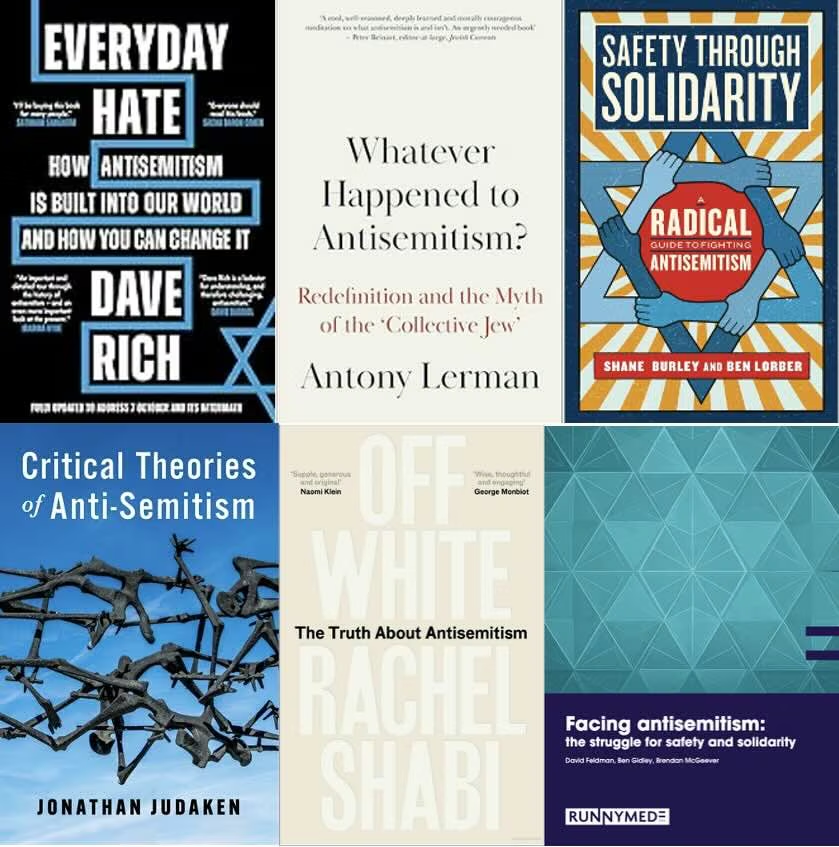
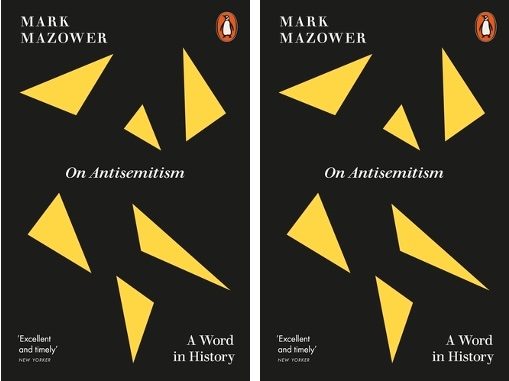
Joseph Finlay provides a wide-ranging overview of the flurry of books which have appeared in recent years on the topic of antisemitism
He divides them helpfully into three broad categories:
- “orthodox” analyses which present antisemitism as a major current crisis that requires immediate (preferably authoritarian or carceral) action;
- those focusing on the weaponisation of antisemitism, and how accusations of antisemitism have been used to damage left-wing politicians and bring down activists within the global Palestine solidarity movement; and
- those that try to take antisemitism seriously as a contemporary and ongoing reality but also critique the way it is used as a shield by Israel and its supporters, particularly since 7 October.
Among Finlay’s many perceptive insights and formulations, here is one I really liked:
There are many discourses that may be simplistic, coarse, deaf to Jewish historical suffering, lacking in strategic foresight or simply uniformed, without being antisemitic. Just because (some) Jews find something uncomfortable, that doesn’t make it antisemitic. And just because something is not antisemitic, that doesn’t make it good, wise or helpful.
And his gauntlet thrown down in the last paragraph:
Do we need to keep doing anti-racism in silos, with antisemitism terminologically separated from other racisms, and with specific bodies focusing primarily on the hatred of Jews? Couldn’t we bring all this work together, and use vocabulary that focuses on the collective liberation of all peoples?
RK
This article was originally published by Vashti on Wed 22 Jan 2025. Read the original here.
Beyond antisemitism
Recent works on antisemitism from the Jewish left forge a new path but ultimately fail to escape the limits of the term itself
Loading article text…


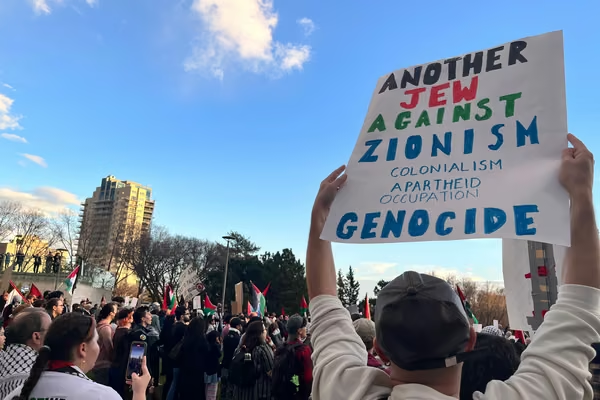



Proponents of the idea that criticism of Israel and Zionism is antisemitic, seem to also, rightly, say that conflating Jewish people with Israel and Zionism is antisemitic, but will, in another breath, say either directly or through implication, that Zionism and the nation state of Israel are innately Jewish. So which is it ?
They will usually come out with complete strawman arguments if Israel or Zionism are called into question, accusing people of denying Jewish people self-determination and a homeland, and ultimately being antisemites. Never will you hear them talking about how Israel is built on Palestinian dispossession, and if they do you can bet that Arabs will get blamed, and if a Jewish person dares to take a Palestinians side, they’ll be labelled as the worst kind of antisemite – a self hating Jew.
Further, the same people will say its antisemitic to exceptionalise Israel and Zionism, but when people do the opposite, which is to talk and view it as being the same to other settler-colonial societies, they’ll pivot to arguments about exceptional Israel is, so again, which one is it ?
Lastly, in the Southern Levant, where many people are semitic, is the term ‘antisemitic’ not obsolete (and thats not a denial of instances of anti-Jewishness) ?
Thank you for this interesting and useful analysis.
My first reaction to this article was ‘oh no not anti-Semitism again’. Why is it that the most marginal of all prejudices merits such lengthy abstract, I nearly said academic, discourse?
When questioning even the need for an anti-Semitism definition at the IHRA webinar two weeks ago I gave the example of my late father. He used to describe to me the fear of going down Ridley Road because if you were Jewish you might get thrown through a shop window.
When he took part in the Battle of Cable Street he didn’t need a definition to know what he was fighting.
What of course is happening is that the memory of anti-Semitism past is being used to justify racism present as we can see with Trump’s ‘concern’ over anti-Semitism. The IHRA does this when it decrees that
‘Using the symbols and images associated with classic anti-Semitism… to characterize Israel or Israelis.’
One of these images was of Jews poisoning the wells of non-Jews. Without doubt anti-Semitic. Is it anti-Semitic to say that Israel poisons the water of Palestinians? We know for a fact that Operation Cast Thy Bread in 1948 was about introducing dysentery bacteria into the water of Acre and elsewhere. It would seem that telling the truth can be anti-Semitic!
Black and White are political colours. In Britain Jews are White and people should get over it. I’ve never been arrested for driving whilst Jewish or suffered police violence because of being Jewish. Clearly I’m, white, not off-White!
As for this reservoir nonsense, where is it located? Can I visit it?
Racial anti-Semitism was a modern phenomenon, which borrowed from medieval anti-Semitism but was an entirely different animal. It belonged to the eugenics movement and ideas of racial hygiene.
What does increase anti-Semitism is the images of Israelis murdering Palestinian children in Gaza. Those who are genuinely concerned about anti-Semitism should devote themselves to stopping the holocaust in Gaza.
“It belonged to the eugenics movement and ideas of racial hygiene”
Funny you mention that Tony. Egyptologist and eugenicist, Flinders Petrie, is buried in Jersusalem. Why does a racist get to be buried there, but a Palestinian kicked out ?
Leftists have no justification for their existence left – except Palestinianism, which is basically a form of antisemitism.
That’s their new Omnicause, and it will go the way of Woke, Climate Change, and Covid.
The truth is that nobody really wants to be associated with lunatics.