
On Professor Jason Arday and increasing authoritarianism
JVL Introduction
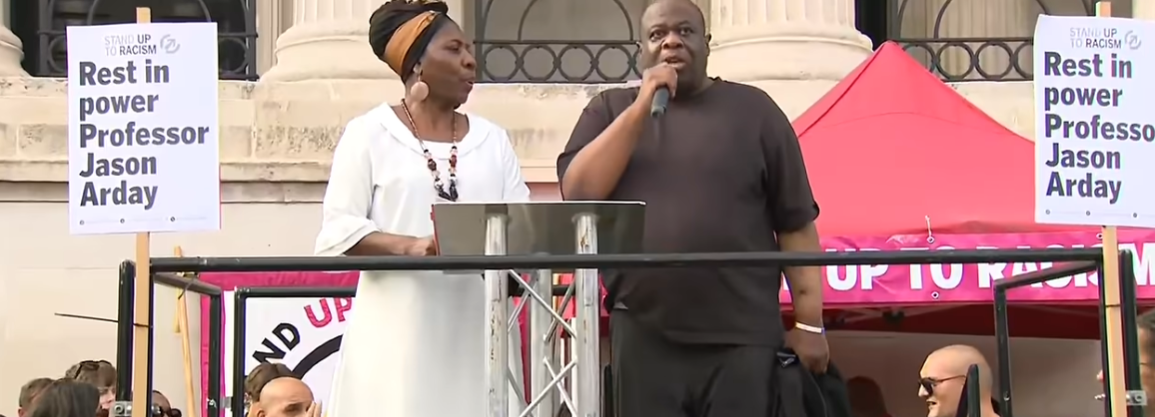
Professor Miriam E. David, a JVL member and convenor of our Education Group, is incensed by how Jason Arday was treated and, like so many, upset at the tragic consequences of the onslaught. Like Jason Arday, Miriam is a sociologist of education. In his treatment she also sees the attempts to denigrate programmes to promote Equality, Diversity and Inclusion and sees this as part of a wider assault on the humanities and social sciences and the ongoing pressure on universities to contract in the context of major cuts and the growing impact of AI.
Here she explores what happened to Jason Arday and those wider issues of concern around what counts as evidence, knowledge and plagiarism, disabilities and racism. She refers us to those behind the vicious campaign that led to Arday’s resignation and to his death. She focuses in particular on his main accuser, Nathan Cofnas and argues, for example, that being Jewish ought to have made him at least question the racist assumptions about ability but instead he argues that Jewish intelligence is supreme. There is much in this thoughtful article for us all to consider whether or not we are academics.
Arday as a Lightning Rod for Global contestations over Equality and Diversity in an increasingly fractured and authoritarian world
Introduction:
The tragedy of Professor Jason Arday who, in 2023, had been appointed the youngest ever Black professor at the University of Cambridge as a sociologist of education, his subsequent resignation on 5 August 2026 and death on 14 August has already garnered more ‘column inches’ in the legacy and social media than can possibly be read and understood by the proverbial ‘man on the Clapham omnibus’. Clapham is where Arday grew up and surely it should be comprehensible to his local London community? But it is not and nor is it even for those of us more involved in aspects of global higher education, the expansion of its reach through AI technology into our everyday lives and through new forms of social media. It felt like watching a wildfire out of control in the heat wave, or the recent horrendous ice, mud and water slides in Nepal and Tibet. The story quickly spiralled into salaciousness and vitriol, with no care or humanity for the key participants. I have no acquaintance with them, but as a sociologist of education myself, I felt initial disbelief, then horror, and ultimately personally and politically violated.
As a feminist member of a Jewish socialist political group (JVL) I want to reflect on how this tale became even more than a ‘racist feeding frenzy,’ as Chris Smith former Labour MP and now Chancellor of the University of Cambridge described it.[i] Lord Simon Woolley, the Black principal of Homerton College, Cambridge, went further in calling it ‘a public lynching’ at the vigil for Arday on 17 August 2026.[ii] The vilification of Arday is a lightning rod for wider right-wing moves to destroy higher education as an Enlightenment humanistic project through deleting departments and faculty, making them ‘redundant’ with spending cuts, replacing them with ‘knowledge’ labs, and the development of AI forms of technology. Social media are already making this process of global reach easily available. That is how the story became so melodramatic so quickly. It is also about how values of equality, gender, social (including for disabled people), and racial justice have been reignited as contentious, and are in danger of being erased in the public sphere as authoritarianism marches on.
The background story of Professor Jason Arday:
The onslaught on Arday became increasingly virulent as he rose to be a Black star in the elite higher education firmament. Since Arday’s death there have been innumerably more vile words, for example by Michael Gove, former Tory Education Secretary and now Editor of The Spectator wrote a piece reproduced in The Times, attacking the Education Faculty in Cambridge, its Head personally and teacher education in the UK more generally.[iii] By contrast, Cambridge as an institution, and the key participants, have remained silent. There have also been fewer supportive comments in the media than detractors although during Arday’s life at Cambridge he was showered with honours, including honorary degrees. He was also the keynote speaker at the 75th anniversary conference for the British Sociological Association (BSA) in April 2026, of which he was also an elected trustee.[iv]
A Jason Arday – Wikipedia page has been created, that sets out Arday’s life from his childhood in Clapham with Ghanaian parents and a diagnosis as neurodiverse and autistic, through his adolescence and into his education and activities as a young man and into higher education and subsequent professional developments. As an [v]adult, he developed a wide-ranging set of expertise in sport (running marathons and playing football), teaching and becoming an educator in higher education institutions, although much of this contested as he became a media and public personality. His veracity was called into question especially given his success as a professional academic and Black activist with a neurodiversity diagnosis.
Arday’s diagnosis has been little understood and until recently unusual, although there is now more evidence of many people in higher education being diagnosed with autism. Susanne O’Sullivan, an Irish neurologist based in London wrote in 2025 about the rise of neurological diagnoses and their varied positive and negative effects, The Age of Diagnosis: How Our Obsession With Medical Labels Is Making US Sicker[vi]. Professor Simon Baron-Cohen[vii] is an expert on neurodiversity at the University of Cambridge. He pointed out towards the end of July 2026, that safeguards for Professor Arday were not put in place, as they should have been. Of course, all universities should protect the staff that they appoint; they have a duty of care, but many do not fulfil their obligations, increasingly as they are subject to global competition, financial stringencies and imbalances between science, technology, engineering and maths/medicine (STEM) and humanities or social sciences.
Dr Nathan Cofnas: the chief antagonist:
The story culminated with an intense focus on ‘plagiarism’ in Arday’s doctoral work, conducted over 10 years previously, although exactly what this was never defined. He was simply referred to as a fabulist, fraud or as fabricating his work. From July 2026, as the media frenzy hotted up, Cambridge began to threaten investigations into his academic record despite having appointed him through a rigorous process. The media attacks reached their zenith in the summer months of July and August 2026, with the main antagonist being a Dr Nathan Cofnas, a self-professed ‘race realist’ who had also been at Cambridge, over a similar timeframe to Arday. Cofnas was dismissed from Emmanuel College in the summer of August 2024, making him an ‘angry White man’. He is still appealing his dismissal.
Cofnas is an American Jew (born 1986/7) and almost exact contemporary of Jason Arday’s (born 1985). The BBC radio announcement of Arday’s inquest (26 August 26) seemed to present it as a modern-day duel between Arday and Cofnas: or left and right. There were clear imbalances of power and politics, since Cofnas was secretly funded by an extreme right-wing American-German tech billionaire – Peter Thiel.[viii] Thiel, who founded first PayPal and then Palantir using AI ingratiated himself with Cambridge through Professor James Orr and associated with right-wing political parties. David Runciman, professor of politics for 30 years until his retirement argued in The New Stateman [ix]12 August 2026 snobbishly that ‘race, class, snobbery, wokery – somehow they’re thrown into sharper relief when the setting is that cloistered little world of ancient colleges and elite reputations… James Orr, who works in the Faculty of Divinity. He is also, as of this spring, Reform UK’s head of policy. Orr is best known for his intellectual friendship with JD Vance and for the private chapel he has built in the grounds of his house outside Cambridge where he hosts likeminded thinkers for reflection and prayer…Cambridge has always had its secret right-wing cabals and networks, just as it’s always had its spies. But the point about them was that they used to be secret…Not any more.’
There are multiple interlocking and complex threads to this tragic story, but it behoves us to concentrate on race relations between Blacks and Jews in an increasingly unfair and rapacious capitalist system governed by autocracy. The transformations of global higher education and forms of ‘knowledge’ are also a thread in this story as it has unfolded with a lack of clear specification of what counts as evidence.
The appointment of Jason Arday in the Cambridge Faculty of Education:
The whole sorry saga has been less than four years in the making. The post to which Arday was elected or rather appointed was created in the Autumn of 2022, alongside another post to replace a retiree in the Faculty of Education. Interviews were in November. I happen to know as I wrote a reference for a female Black, Asian and Minority Ethnic (BAME) candidate who was also interviewed. The University announced the appointment in February 2023 with Arday a ‘trophy’ or symbol for their belated policies on equality, diversity and inclusion (EDI). Arday took up his post later in 2023. As time wore on this became ridiculed in the right-wing media as being woke 1.0, using an Americanism for their different diversity, equity and inclusion (DEI) policies. There had been a long legislative tradition, dating back to the 1970s of developing equal opportunities for sex or gender, BAME communities and disabled people in the UK. Of course, the same had been true in the USA, with even older policies through The Great Society legislation in the 1960s from which we borrowed. Our policies, thus far, have not been subject to the same ridicule as meted out by far-right politicians as in the USA.
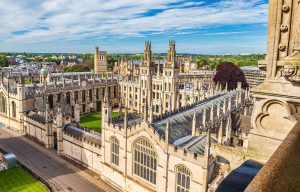
The appointment process, involving external assessors and academics from across the University was intense and in-depth. Appointment to prestigious posts requires evidence not only of a PhD but also a range of international publications and presentations. The range of academic qualities and balancing them with potential to develop research and students lie at the heart of any University appointment process. As Mike Cushman argued, on 24/8/2026, appointments to a chair at Cambridge and indeed every university are made not on a PhD or a record of community engagement but on a body of published research. ‘If any of those who hounded @JasonArday had bothered to look they would have found an impressive publication record of widely cited work in leading ruthlessly reviewed journals and books.’ [x]
There is also the peer review of academic colleagues through the regular government funded research assessments which have latterly become known as the Research Excellence Framework (REF). Arday would have been included in the 2021 submission to the REF 2022 from the University of Glasgow where he was before appointment to Cambridge.
The overarching public assault on Arday was about more than just his research and publications record. It was also about whether his public presentation of himself was as a fabulist or a fraud. Did his early claims about neurodiversity and autism stack up? The conservative media took Arday’s claims to have run marathons and played semi-professional football at face value rather than seeing them in the relevant context: the context of a childhood and early adulthood on a council house estate in Clapham, as journalists such as Owen Jones and the writers for the Byline Times have pointed out. [xi]
The increasingly narrow focus was about Arday’s doctorate supervised and completed at Liverpool John Moores University (LJMU) in 2015/6. But there is very little comment in all the publicity about what a doctorate is, changing views about writing a thesis or changing approaches to doing education research in the increasingly neo-liberal university transmuting into an international rapacious capitalist enterprise and what is plagiarism generally as an equivalence to academic fraud. The final main pile-on against Arday continued to be about the very vexed question of plagiarism and its meanings in July and into August 2026. This was orchestrated by Cofnas in his Substack post.
What is a PhD or Doctorate?
Only in recent generations has a PhD been required for appointments in the social sciences including education. For example, the late Head of UCL’s Institute of Education, also a sociologist of education, did not have a PhD; a colleague and co-author of mine obtained a PhD by publication (usually at least 8 peer-reviewed articles in prestigious journals) and I converted a research project conducted on the planning of educational change across the now extinct local education authorities (LEAs) into my PhD at Queen Mary, University of London. There are countless other examples. Moreover, a specific practice-based doctorate has been developed in many professional fields such as business and education. I developed an Education Doctorate (EdD) at Keele University from 2005. A staple of such has become reflecting on professional practices such as being an administrator, in business, an educator or teacher. The phrase ‘reflective practice’ is used in the title of Arday’s PhD. The full title is An Exploration of Peer-Mentoring among Student Teachers to Inform Reflective Practice within the Context of Action Research. This is the kind of title that students on my Gender & Education Management (GEM) doctorate might have chosen.
What is sociology of education?
In all the verbiage, I have seen no questioning of what the sociology of education is, how it might differ from education and/or sociology. Is the ownership of knowledge susceptible to change as forms of knowledge change – a form of epistemology? I have supervised over 40 doctorates and examined 76 doctoral theses, including for the University of Cambridge’s Faculty of Education. I have also been involved in doctoral education. During my long career, the field has changed and morphed into new methodological approaches, such as auto-ethnographies, action and qualitative research. There has been a shift from a focus on equality of opportunity or outcome in terms of social class and family background to one of gender and ethnicity or race and disabilities, sexualities and from compulsory education or schooling into preschool and higher education. In other words, the field has mushroomed and developed into exciting and interesting feminist and anti-racist projects, aiming to become more respectful of the diversity of people involved in educational endeavours. Knowledge and epistemologies have exploded into fascinating new and developing fields. It is rich and powerful.
Examples of relatively new developments is how social class, ethnicity or race and gender are interwoven in studies of academia, including the policy of widening participation to forms of higher education. Professor Diane Reay is a former PhD student at South Bank University, whom I supervised with Professor Heidi Mirza, and she is a retired professor in Arday’s faculty. Together with Professor Stephen Ball we wrote Degrees of Choice: Social class, race and gender in higher education [xii]based upon a funded research project. The book is now widely read and cited. Heidi Mirza has produced a very substantial body of work on education, gender and race over her career. She subsequently worked with Jason Arday to edit a most successful book entitled Dismantling Race in Higher Education: Racism, Whiteness and Decolonising the Academy[xiii]. They invited many contributors to discuss their experiences and evidence of racial and gender contestations in academia.
In the three years since Arday took up his post, alerted to the so-called problems in his work, Liverpool John Moore’s University reviewed the claims about his thesis in 2024 and found there to be some issues but none that would warrant calling this academic misconduct. Another investigation into a paper Arday wrote resulted in some minor adjustments. All this was clearly very unsettling and upsetting for Arday. He wrote about ‘the unrelenting level of public scrutiny and personal attack’ in his letter of resignation on 5 August 2026, although vowing to continue his ‘scholarship given the transformative power of universities’.
Jack Grove, a journalist on The Times Higher Education (THE) a weekly magazine for academic professionals conducted yet another investigation into Arday’s work in 2025. He shared his findings with Arday before publication and was rebuffed, not unnaturally, given the furious level of scrutiny. Arday asked a high-profile firm of libel lawyers – Peter Carter Ruck – to tell Grove to desist. Grove mindful of the legal costs did not publish the piece. This was a sensible move on Arday’s part but unfortunately, in the long run, it did not pay off.
Professor Hilary Land and I had been sued for libel in 1983 by Lady Elspeth Howe – Sir Geoffrey Howe’s wife, Thatcher’s first Chancellor of the Exchequer – using Peter Carter Ruck. We had written about her becoming the first deputy chairman (sic) of the then new public body, the Equal Opportunities Commission (EOC). It was in a chapter entitled ‘Sex and Social Policy’ for a Fabian Society book called The Future of the Welfare State: Remaking Social Policy that had been checked for libel by Geoffrey Bindman solicitors. At the time, I found it very frightening as I was a young feminist academic. The issue was settled out of court, and the offending sentence was to be removed from new editions of which there were none, as far as I am aware. This is another example showing that academic knowledge and values can be heavily contested and are not immutable.
What is plagiarism?
In the changing world of scientific knowledge, what is plagiarism? A friend and colleague wrote a piece on plagiarism for The Sage Encyclopaedia of Higher Education published in 2020. When asked he said that he felt that academic practices had changed beyond recognition since writing that piece so recently. The assumption in his contribution was that allegations of plagiarism were defined as ‘an ethical construct’ as compared to copyright infringement being a ‘legal construct’. Plagiarism, at the time, mainly related to undergraduate student work. He discussed the rise of college and university policies in association with the internet and the development of software tools such as Turnitin ‘which is a fee based online plagiarism detection tool’. He also cited a German comparative study of 28 software systems in 2013 that found they did not detect plagiarism but parallels in wording and could throw up false negatives and false positives. [xiv]
Kojo Ahiakpa, a Ghanaian plant scientist wrote that plagiarism is endemic in today’s global academy, not just concerning student practices. His essay circulating widely in academic circles on social media is entitled ‘plagiarism pressures in global higher education’.[xv] He concluded:
‘The Arday case is significant not (my emphasis) because it reveals a unique failing of DEI policies, but because it illustrates a universal pattern where elite institutions are structurally reluctant to police plagiarism and fraud, whether the perpetrator is a celebrated diversity hire at Cambridge or a paper-mill client at a Chinese medical school. The sheer scale of retractions in China, over 17,000 in three years dwarfs the Arday affair, yet it has barely registered in Western public consciousness. If we are serious about protecting the integrity of scholarship, we must abandon the comforting fiction that misconduct is a problem of ‘other people’s’ policies, and instead confront the global incentives, publishing structures, and institutional cowardice that make academic fraud a rational choice for too many researchers. The ivory tower is cracking everywhere. It is time we repaired the foundations.’
The background story of Nathan Cofnas:
To return to the key antagonist, Nathan Cofnas, the ‘angry Jewish white man’, was appointed as an early career postdoctoral researcher in biological philosophy at Emmanuel College, Cambridge in 2022. He had undertaken his undergraduate studies in New York City, his Masters in Hong Kong and doctoral studies in Oxford before being appointed to Cambridge. Cofnas became interested in the now much discredited eugenics and ‘hereditarianism’ theories in his youth and developed this approach through his studies at Columbia University, NYC.
Eugenics had its origins in the turn of the twentieth century. British scientist, Francis Galton, coined the term in 1883, inappropriately applying principles of artificial selection and Social Darwinism to humans. Eugenics also aimed to establish that there were intellectual differences between races that were seen to be immutable, making it racist, discriminatory and xenophobic. It was the theory that the Nazis used to target Jews, Romani and disabled people for persecution and extermination in the 1930s and 1940s. After the Holocaust, it became much discredited, particularly amongst the families of those persecuted and exterminated. It is curious that someone of Cofnas’ Jewish background could take up hereditarianism with such fervour. Yet Cofnas adopted the ideas with vigour, producing a book entitled Reptiles with a Conscience: The Coevolution of Religious and Moral Doctrine, as his first. It was published in 2012 by the Ulster Institute for Social Research but was subsequently withdrawn.[xvi]
The Ulster institute came out of similar eugenicist traditions. It was founded in the early 1970s by Professor Richard Lynn, a British psychologist who also was a self-styled ‘scientific racist’ and ‘white supremacist’. He argued that there was a genetic link between race and intelligence. He later developed a theory about sex differences in intelligence. He was also well known in educational circles for his controversial theories about the association between race and intelligence in the post-war period. He advocated IQ tests for the determination of educational abilities and forms of selective schooling. Between 1969 and 1975, a series of 4 Black Papers on Education were produced edited by C.B. Cox and J.E. Dyson, as a manifesto for selectivity in education from a conservative perspective and against progressive child-centred methods. Richard Lynn volunteered to contribute to volume 2 entitled Fight for Education alongside other key psychologists such Cyril Burt and Hans Eysenck. Many of the contributors were later discredited for fabricating their research evidence, most especially Cyril Burt whose studies lay behind many selective educational policies of the wartime. The Black Papers created a febrile atmosphere in educational policies.
‘The great moving right show’ was how the late great Black Professor Stuart Hall dubbed the election of a Tory prime minister in 1979, coining the term Thatcherism in a seminal article for Marxism Today. There was a similar movement to the right in the USA, despite multiple critics of ‘scientific racism’.
Nathan Cofnas and the revival of the right-wing
At Cambridge, Cofnas researched and taught a course on ‘scientific racism or eugenicism’ in which he espoused theories about a hierarchy of races, with Jews rather than white people as the superior race, and Blacks at the bottom of the pile. It could be considered like ‘turkeys voting for Christmas’. He garnered support from the far right both in the UK and USA. He joined a small right-wing group in Cambridge funded by Peter Thiel, who had inveigled his way into Cambridge to develop a base for his own agenda of right-wing policies and the influence of new forms of AI. So far, no-one has commented upon the fact that AI in its essence is either a form of plagiarism or infringement of copyright, scooping up masses of books in data centres and using them to develop technical tools without human intervention or creativity. Furthermore and of great importance, Palantir, one of his companies has been used as a tool of war, developing drones for the use by the Israeli Occupation Forces (IOF) on Gaza.
Cofnas was himself attacked by fellow students whilst a research fellow for his egregious racism. In 2024 he argued that ‘black people would disappear from almost all high-profile positions outside of sports and entertainment under a meritocratic system.’ The contestation was such that he was ultimately dismissed from his position in August 2024. Cofnas is still fighting this as case of unfair dismissal with Cambridge. In March 2026, he obtained a position as a postdoctoral researcher at Ghent University in Belgium where he has also courted controversy. Initially the university supported his right to express his views in the tradition of free academic expression.
Since his attack on Arday by using ‘plagiarism detection software’ Turnitin on Arday’s doctoral thesis and Arday’s subsequent death, he has also been subject to criticism, albeit not as vicious as that on Arday. Cofnas joked on his blog that the Arday incident is ‘what happened if you don’t give Cofnas a job… After the revolution, I’ll be the head of the department of eugenics and race science at Harvard.’ He showed no remorse about Arday, and in a You Tube video with Dr David Starkey, a right-wing historian also dismissed from Cambridge, joked about the stupidity of Black people. Curiously Starkey mentioned that the two of them were upholding Christian values. This showed the cleavages in the right-wing positions, and indeed Starkey, founder of the Free Speech Union, has since parted company with Cofnas.
On 20 August 2026, Cofnas was suspended from Ghent University, pending a preliminary investigation launched after the death of Arday. A petition attracting several hundred signatures, including many international right-wing elitist male misogynistic professors such as Charles Murray, Steven Pinker and Lawrence Krauss called for his reinstatement on grounds of academic freedom. A counter petition to Ghent University, by liberal and leftist academics supported the suspension on grounds of his dangerous and scientifically discredited studies. On 30 August 2026, Ghent confirmed that they had reached an agreement with Cofnas to restrict his work to the research topics for which the one-year appointment was made: an investigation into the future of liberalism! He has been barred from teaching for 3 months and required to work remotely. The university claims that it is continuing with its ongoing preliminary inquiries. But the US ambassador to Belgium – Bill White, a committed Trump supporter, donor and fund-raiser – had become involved in the dispute to be ‘saving Belgium from a complete global media meltdown and well-deserved spanking by @elonmusk…’
Concluding thoughts:
As what has happened to Jason Arday has continued to dominate social media it has become clear that this is a full-scale assault on liberal and humanitarian values, with racism and misogyny at its heart. Such values once drew on Jewish traditions of morality and community. Small wonder I felt violated as equality, fairness, gender and social justice were trashed in the bonfire of rubbishing the humanities and social sciences, including education. The outpourings of right-wing commentators were unleashed on Arday’s tragic passing and Cofnas as an angry Jewish white supremacist was but the final nail in the coffin of humanitarianism. This was a very well-orchestrated far right plot of Trumpian authoritarian proportions to recreate global higher education in his image with the support of tech billionaires such as Peter Thiel. AI is clearly transforming all our lives, and there is no safeguarding for us as AI gobbles up our words robotically and without humanity. There have been other examples in the recent past, like the dismissal of Claudine Gay, Black President of Harvard, also for plagiarism. There is also the dismembering of the world famous sociological institute The New School for Social Research in New York without much comment, except in Dissent, August 2026[xvii]. There will be more and we must be prepared to resist.
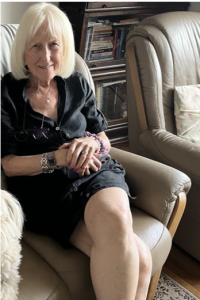
Professor David is internationally respected for her work on gender, social diversity and inequalities in education, including higher education. Amongst many other achievements and contributions, in 2004 she was a founder Trustee of the British Shalom Salaam Trust.
References
[i] https://www.bbc.co.uk/news/articles/clyxklg3xypo
[ii] https://www.bbc.co.uk/news/articles/cwymmp30711o
https://www.independent.co.uk/news/uk/home-news/jason-arday-family-vigil-b3034527.html
[iii] https://www.thetimes.com/article/0ed750a5-5783-4bf8-8d76-9c4135aab3a9?shareToken=955c01d7d45d23671226428221ba04ff
[iv] https://es.britsoc.co.uk/remembering-professor-jason-arday/
https://www.bbc.co.uk/news/articles/cd7lj3703epo
[v] https://bylinetimes.com/2026/08/19/jason-arday-we-must-rage-rage-against-the-journalism-of-cruelty/
https://goodlawproject.org/the-guardian-and-professor-jason-arday/
[vi] published by Thesis. ISBN 10: 0593852915 / ISBN 13: 9780593852910
[vii] a cousin of Sacha Baron-Cohen, the comedian and creator of Ali G. They were both mocked by Toby Young in The Spectator 31 July 2026 https://spectator.com/article/professor-arday-is-the-gift-that-keeps-on-giving/
[viii] https://bylinetimes.com/2026/08/18/the-peter-thiel-linked-race-science-network-that-penetrated-cambridge-university-and-targeted-jason-arday/
[ix] https://www.newstatesman.com/cover-story/2026/08/a-dream-of-cambridge
[x] https://scholar.google.com/scholar?hl=en&as_sdt=0%2C5&q=Arday+jason&btnG=
[xi] https://www.youtube.com/watch?v=dv8MXCHcBVU
[xii] (Reay, David & Ball, 2005),
[xiii] Arday, Jason; Mirza, Heidi Safia, eds. (2018) Palgrave Macmillan. ISBN 978-3-319-60260-8
[xiv] M.E.David & M Amey (eds.,) (2020) The Sage Encyclopaedia of Higher Education volume 3, p.1177-1180.
[xv] https://www.facebook.com/KojoAhiakpa/posts/when-professor-jason-arday-resigned-from-the-university-of-cambridge-in-august-2/10233755366377870/
[xvi] https://en.wikipedia.org/wiki/Nathan_Cofnas
[xvii] https://dissentmagazine.org/online_articles/new-school-fired-faculty-austerity/?fbclid=IwY2xjawT_oX1wZG9mBWV4dG4DYWVtAjExAHNydGMGYXBwX2lkEDIyMjAzOTE3ODgyMDA4OTIAAR7_CUxEEdZashrD4KHDUSYm5XrBV7iqRsmwGQkuMhKtK9fBqU4Gopmlg8hgBA_aem_WjjtyNpvdQ9z70mIAyByCA

The racism he experienced form left and right was horrendous and all too common
BUT Jason Arday killed Jason Arday. Not the toadying Cambridge academics, not the racist press.
Jason Arday killed Jason Arday leaving children, wife, parents and family to pick up th pieces of the mess he contributed to creating
Do not ask me to canonise him.
Just thnak him for people on allsides to air and publicise their prejeudicse
“Turkeys voting for Christmas”. Not very clever turkeys. Apologies for mixing the metaphors ( is that correct ?) …
Zionists have been trying to ride this particular tiger for decades and the rodeo isn’t going too well these days.
This is a really helpful analysis, bringing in things I’d not previously been aware of, and especially useful to have someone speaking from the same area of academic life as Arday had been part of. Thank you.
The idea that Jason Arday ‘killed Jason Arday’ is rather a simplistic asinine argument to a much more complex nuance.
The public scrutiny from many that just drank the legacy media and took it for truth and this helped to create a collective group imagining and judgements of an academic they did not know, nor were famaliar with his achievements.
Cofnas seems to have an ability to deflect from his own shortcomings and deflect it on others. Where was the evidence to support his allegations? Was this a jealous individual venting? This guy with his eugenics blah blah blah really is just load of blah blah blah and no-one should have given him the time of day let alone a platform to spout his racism in the form of challenging alleged plagiarism. Cofnas has issues and is looking for a bit of fame.
The people who made it impossible for Jason Arday are responsible for his death.
Et tu Brutus.
The media hounded Jason Arday to death. If anyone should be accused of fabulism it is they because they drew a lot of emphatic conclusions from rumour, inuendo and ignorance, and out of thin air, conflating , eliding, and saying 2 +2 makes 5. . They also credited people who were not in Arday’s class at school of knowing he could speak until 11 while failing to bring to the fore two boys (now men) in his class who spoke out that he could not speak until after 11. They did not hear Simon Baron Cohen either, who said on the R4 Today programme a lot of things about autism, learning difficulties, suicide and autism, and also said he had accompanied Arday to John Moores for a review of his PhD where Arday was cleared. Yet I have seen Substacks where the pile on continues by Oxbridge types and self proclaimed rightwing old fogeys, saying they could find no proof that Baron Cohen ever met Arday! I have pointed out the error of their ways. This John Moore’s review came about because of Emeritus Professor called Harris, a mildly spoken but to me I am sorry to say passive aggressive obsessive, is an American on a mission to debunk Critical Race Theory. He wrote to Arday, to Cambridge and he wrote to the THE. He is now the poster-old boy for the Campaign for Academic Freedom which counts ‘free speech union’ Toby Young as a supporter. The trigger for Arday’s suicide, autistic as he was, was the media hounding and the Cambridge decision to investigate, which combined with a sense of anger and hopelessness brought on suicidal feelings. [Cut to within our limit of 300 words – ed]
Thank you for a thought-provoking article. Fascinating that you mention that Cofnas was secretly funded by Peter Thiel and that Thiel “ingratiated himself with Cambridge through Professor James Orr and associated with right-wing political parties.” This article was of course written before the Channel 4/Verbatim exposure of Orr in his efforts to raise funds for Reform, apparently in breach of the regulations for political donations. Orr has now been suspended by Farage …
I was also interested to read about the Ulster institute and its founder Professor Richard Lynn, who “advocated IQ tests for the determination of educational abilities and forms of selective schooling.” Those tests were actually put into use: when I took the 11-Plus around 1968, it consisted entirely of verbal and visual IQ tests. My mum went to the local library, borrowed all the Eysenck paperbacks like “Know your own IQ”, and got me to practice the tests. As a result I got into grammar school, and eventually into Cambridge. So I guess I am one of the beneficiaries of this scientific racist crap, but it shows there is nothing innate about IQ.
Another outstanding, well researched and well argued thought-provoking piece summarising the key issues facing academe today. It is extremely useful for creating an informed resistance to right-wing attacks on DEI and understanding where these attacks originate.
The author argues that Jack Groves’ 2025 investigation into Arday’s work which he shared with Arday and her experience of being jointly sued for libel in 1983 are examples which ‘show that academic knowledge and values can be heavily contested and are not immutable’. Another interpretation is that they are examples of SLAPP or ‘strategic litigation against public participation’. See the publication Big Issue 31 August – 6 September, p11.
Nullius in verba is the motto of the Royal Society and is usually translated as “take nobody’s word for it”. It emphasises the need for evidence: saying something is racist or antisemitic is a statement of opinion, not a statement of fact. Saying someone is racist or antisemitic may be considered defamatory by the person accused and lead to the person making it having to prove it in court. In other words bold claims need strong evidence to back them up.
This applies to both those who accused Jason Arday of plagiarism and to any public claims he may have made about his early life or achievements. No evidence of plagiarism seems to have been forthcoming and after the waters have been so successfully muddies I doubt we shall ever know whether Arday’s claims were true or false. In accordance with what I wrote in the first paragraph I decline to express an opinion on the motivation of those made the accusation of plagiarism.
The author refers to the investigation into Arday’s work by Jack Groves, but does not provide any link to his version of what followed from his sharing it with Arday. Like Groves I question why an investigation into a civil matter by a journalist should become the business of the police. Is this an example of a creeping authoritarianism in our society?
https://www.timeshighereducation.com/opinion/i-was-reported-police-over-arday-case-i-was-just-doing-my-job
These events take place against the context of how the extreme right taking over our institutions, have able to frame things. ‘Diversity and Inclusion’ is label now used to suggest talentless minorities are getting a free ride at the expense of a white majority. The reality is these access policies, came in on the back of what used to be called ‘Equal Opportunity Programmes’ that benefit the working-class – those minorities not also helped by these, then just got fine-tuned help. Neoliberals have seen-off these equality programmes, now in a double-whammy minorities who’ve been scapegoated for disappearing resources, are simultaneously targeted as the next domino to fall. Would even the next Benjamin Zephaniah, succeed against the brutalities of our current system?
Thank you to Miriam David for this wide ranging and comprehensive article, touching on some of the structural problems with higher education. The disgusting racism that targeted Jason Arday is shocking, and feels institutional, which would suggest why James Orr manages to keep his job at Cambridge. Also institutional is the relentless pressure to publish including through the REF, and the lack of care towards most staff. It was bad enough when I was a professor and head of department at a London university, I imagine it’s even worse now.