
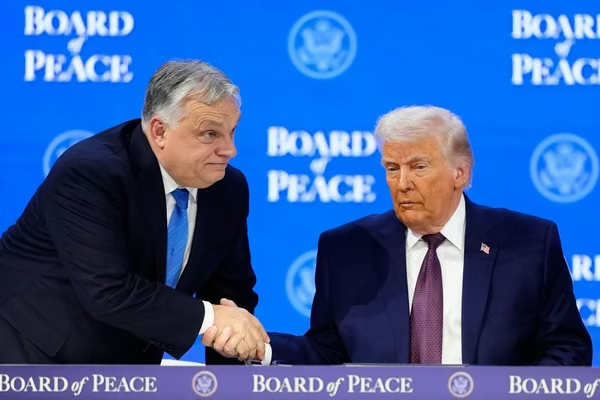
The “Board of Peace” and its dangers for Palestinians
JVL Introduction
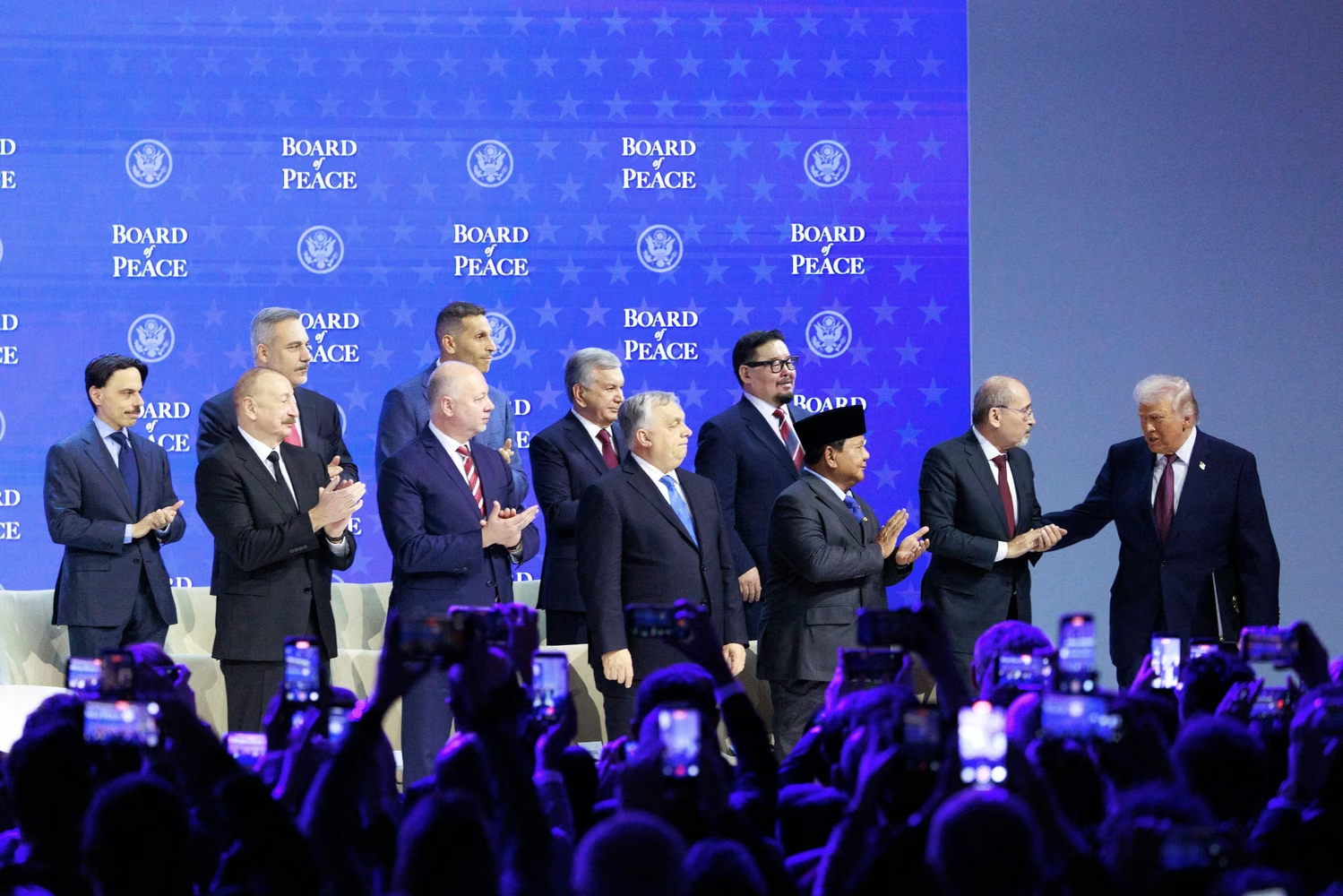
Here is a detailed analysis of what is wrong with the so called “Board of Peace”. As plans are further outlined, the dangers that face the Palestinian people become clear. For example, it continues and reinforces the link between the Palestinians’ struggle with the “fight against terrorism” and, of course, the exploitation and ongoing control of the people, the land, and the opportunities for profits. Palestinian involvement has been relegated to the lower – but still important – tier of “operations” and needs to be resisted at every level. This is, Turner argues, colonialism and disaster capitalism as well as a framework of counter insurgency and permanent domination by Israel. She draws on experience from other countries, especially Iraq but argues that the situation for Palestinians is even worse!
Noting the presentations at Davos, Mandy Turner notes: “in this vision, Gaza is not a society that has endured a genocide, but a problem space to be restructured and monetized. Palestinians are not regarded as political actors with rights; instead, they are reduced to being obstacles, risks, or future labor inputs. What is being offered is not peace. In business vernacular, this is a hostile takeover.”
There are suggestions as to where to focus our energy to resist this travesty. This is a long paper but important and informative.
LL
This article was originally published by Security In Context on Fri 6 Feb 2026. Read the original here.
Colonial Administration, Counterinsurgency Pacification, and Disaster Capitalism in Trump’s Plan for Gaza: These Are the Dangers Palestinians Face
Abstract: This article analyzes the governing, security, and economic aspects of the Comprehensive Plan to End the Gaza Conflict proposed by the US administration, endorsed by UN Security Council Resolution 2803 (17 November 2025), and further fleshed out in the speeches made by Trump and Kushner at the World Economic Forum in Davos in January 2026. The governing aspect is an international transitional administration made up of a Board of Peace overseeing the Gaza Executive Board which will, in turn, control the Palestinian National Committee for the Administration of Gaza. The security aspect is an International Stabilization Force, a new Palestinian police force, and the Civil-Military Coordination Center. The economic aspect is a blueprint for international investment in skyscrapers, beachfront hotels, special economic zones, and securitized residential compounds. I draw on the example of Iraq after 2003 but outline the even bigger risks that Palestinians in Gaza face: a colonial administration that could sign Gaza up to the Abraham Accords; a property grab facilitated through the projection of Gaza as “terra nullius”; investment by companies connected to Israel and the UAE supported by the United States’ IMEC plan; and permanent Israeli occupation and military violence. I conclude by arguing that only Palestinians, particularly in Gaza, have the right to decide what happens to their land, resources, and future. This requires Palestinian sovereignty and self-determination. Currently, in the absence of self-determination, I argue that there are two spaces where pressure should be applied: state leaders who have joined the Board of Peace and the Palestinian experts on the National Committee.
Loading article text…


Comments are now closed.