
Intifada myths
In what seems to be a systematic and deliberate re-writing of history, Intifada has been reduced to reckless Palestinian violence. This obscures what it was: mass non-violent Palestinian resistance to occupation and repression. Intifada only turned violent when peaceful protest was met by extreme Israeli violence and killing.
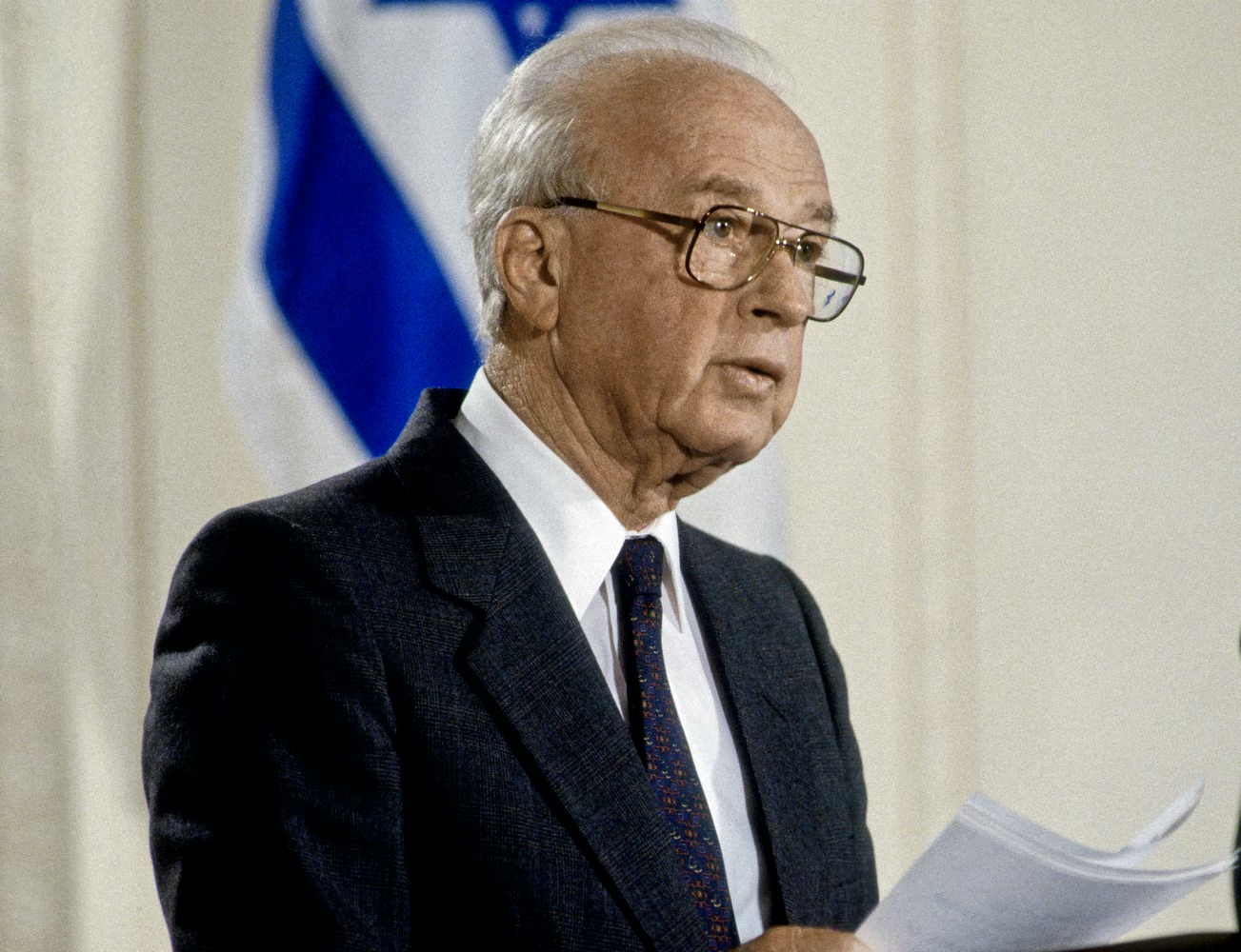
Even at its most intense, Palestinian violence, even including the morally unjustifiable suicide bombings, fell far short of the violence inflicted by Israel. Killings and beatings always inflicted without repercussions for the perpetrators, meeting Rabin’s demand for “Force, might, and beatings”.
MC
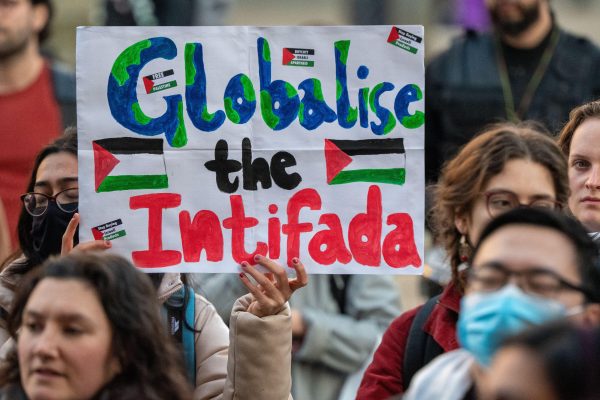
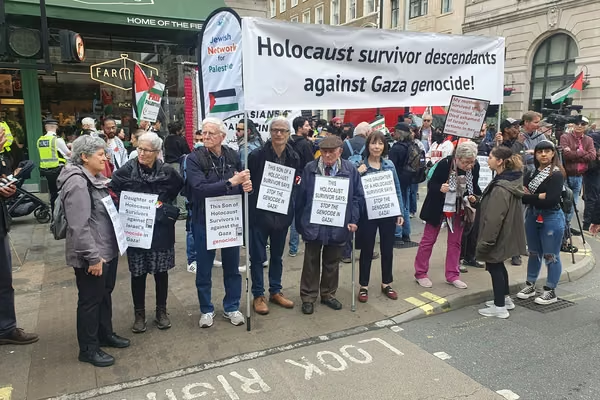
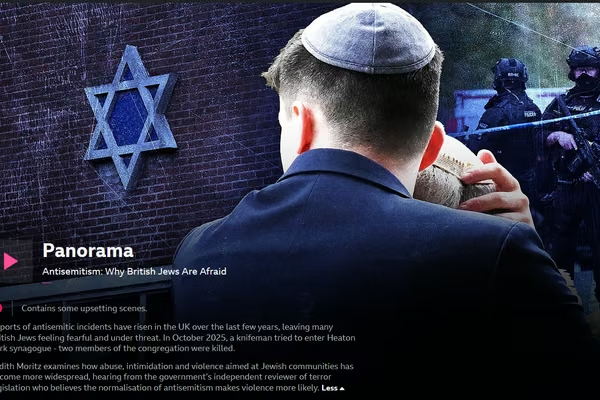
It is regularly asserted that the slogan “globalise the intifada” is antisemitic because it glorifies violence and justifies terrorism. There is no doubt that some Jewish people, believing these false accusations, are frightened by it despite it not being generally heard at the big Gaza demonstrations.
Defence of the use of the slogan ‘Globalise the Intifada’ have largely rested on correct but narrow reminders of the literal meaning of Intifada as ‘shaking off’. This ignores the far more pernicious rewriting of history that demonisation of the slogan rests on.
The Palestinian Intifadas are constantly represented solely as outbreaks of irrational Palestinian terrorism. It is true that, particularly in the second intifada there were acts of Palestinian violence but concentrating solely on these forgets there were two, quite different Intifadas and, more importantly Israeli violence and killing far exceeded that of Palestinians.
The basic facts are well laid out in the Institute for Middle East Understanding’s explainer https://imeu.org/resources/resources/explainer-the-first-intifada/240 which, despite its title covers both Intifadas.
The First Intifada
- The first Intifada which lasted from 1987 to 1993 was a response to twenty years of occupation and repression. In it “Palestinians used tactics such as protesting, stone throwing against Israeli soldiers, commercial strikes, refusing to pay taxes to Israel, and other acts of civil disobedience and non-violent resistance.”
The Israeli reaction was anything but non-violent.
- Israeli soldiers and settlers killed more than 1,100 Palestinians during the First Intifada, including 250 children.
- More than 100,000 Palestinians were injured, mostly from gunshots, beatings, and tear gas inhalation. According to Save the Children, an estimated 50,000 to 63,000 Palestinian children required medical treatment for injuries sustained in the first two years of the First Intifada alone, including at least 6,500 who were shot by Israeli soldiers.
- Approximately 120,000 Palestinians were imprisoned by Israel during the First Intifada.
- In 2000 it was revealed that between 1988 and 1992 Israel’s internal secret police, the Shin Bet, systematically tortured Palestinians using methods that went beyond what was allowable under government guidelines for “moderate physical pressure,” Israel’s official euphemism for torture. The methods included severe beatings, including kicking, violent shaking, tying prisoners into painful positions for long periods, and subjecting them to extreme heat and cold. At least 10 Palestinians were tortured to death and hundreds maimed.
The Intifada was one of the main stimuli for the process that led to the Oslo Accords of 1993 and 1995.
The failure of the process outlined in the Accords to slow, let alone reverse, settlement growth on Palestinian land led to increasing frustration and the outbreak of the Second Intifada. The Second Intifada is remembered solely as an era of suicide bus and café bombings. These occurred and were both morally wrong and strategically ineffective and the strategy was abandoned and in fact disowned in 2005.
The Second Intifada
But these violent elements are only part of the story and only occurred in a brief phase of the struggle.
- While most of the Second Intifada still consisted of non-violent resistance, it became more violent than the First Intifada after Israeli soldiers and police used live ammunition on unarmed Palestinian protesters in its early days, killing at least 47 people and wounding around 2,000 others in just the first five days, setting off a downward spiral of events in which Israel’s violent repression was far more deadly. By 2005, when the Second Intifada was largely crushed by Israel, Israeli soldiers had killed more than 3,000 Palestinians, while about 1,000 Israelis were killed.
It was Israel that led the descent into violence and indeed terrorism, but state terrorism is seldom recognised for what it is. Rabin may be remembered as a peace maker but in 1988, as Minister of Defence, his strategy to end the Intifada was not negotiation or compromise but a simple demand for “Force, might, and beatings”.
The attempt to demonise the demand to “globalise the intifada” is really an attempt to head-off a movement which is calling for the legitimate right of resistance of the Palestinian people against Israeli ethnonationalism to be taken up and supported worldwide. We support that right to resist however it is labelled.
In the light of the real history of the Intifada and who was most responsible for violence and killing, then if we are to interpret ‘Globalise the Intifada’ as a call to violence, it would be, ironically, a call for unrestrained Israeli violence and a return to Rabin’s ‘break their bones’ policy.
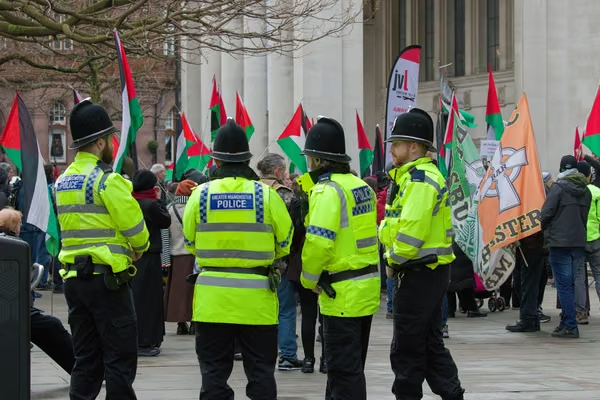
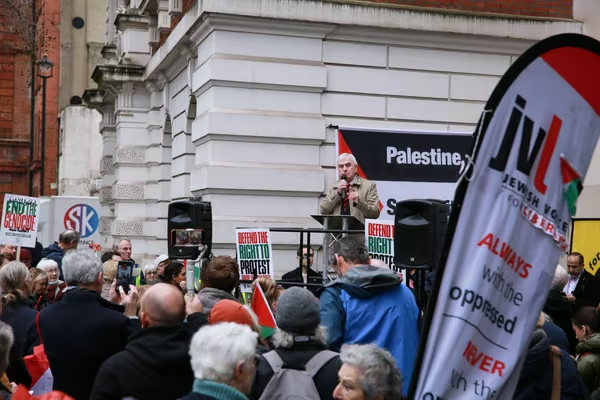
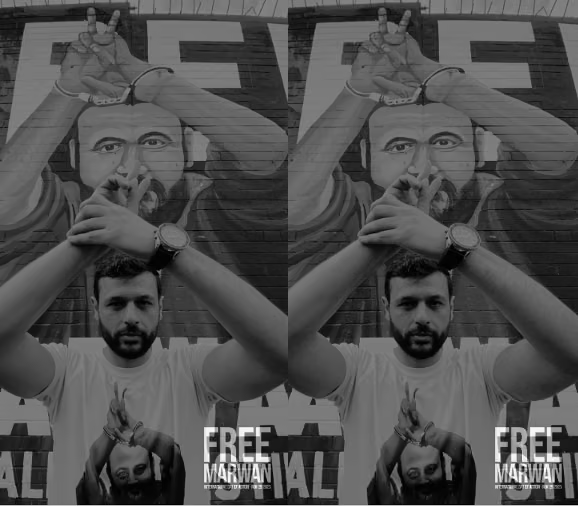
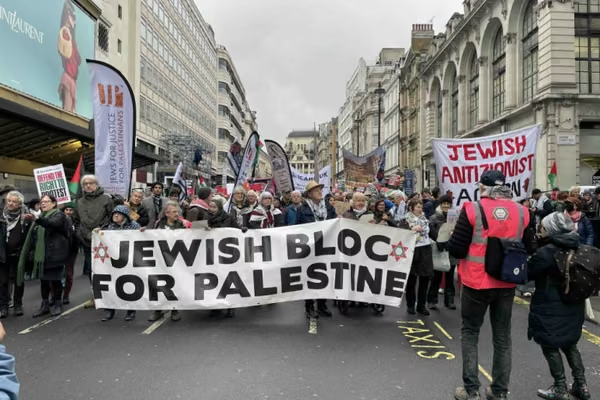
Palestinian civil society has called for an international campaign of boycott, divestment and sanctions in support of the resistance to Israeli occupation. This is the meaning of globalise the intifada, the slogan Starmer plans to criminalise. It is truly a blood libel on the Palestinians that they just intend to kill Jews.
For many years I have found Dr Mary King’s analysis helpful.
https://www.youtube.com/watch?v=DpzyY4UqQQU