
Church of England votes to support Palestinians – despite the Chief Rabbi
JVL Introduction
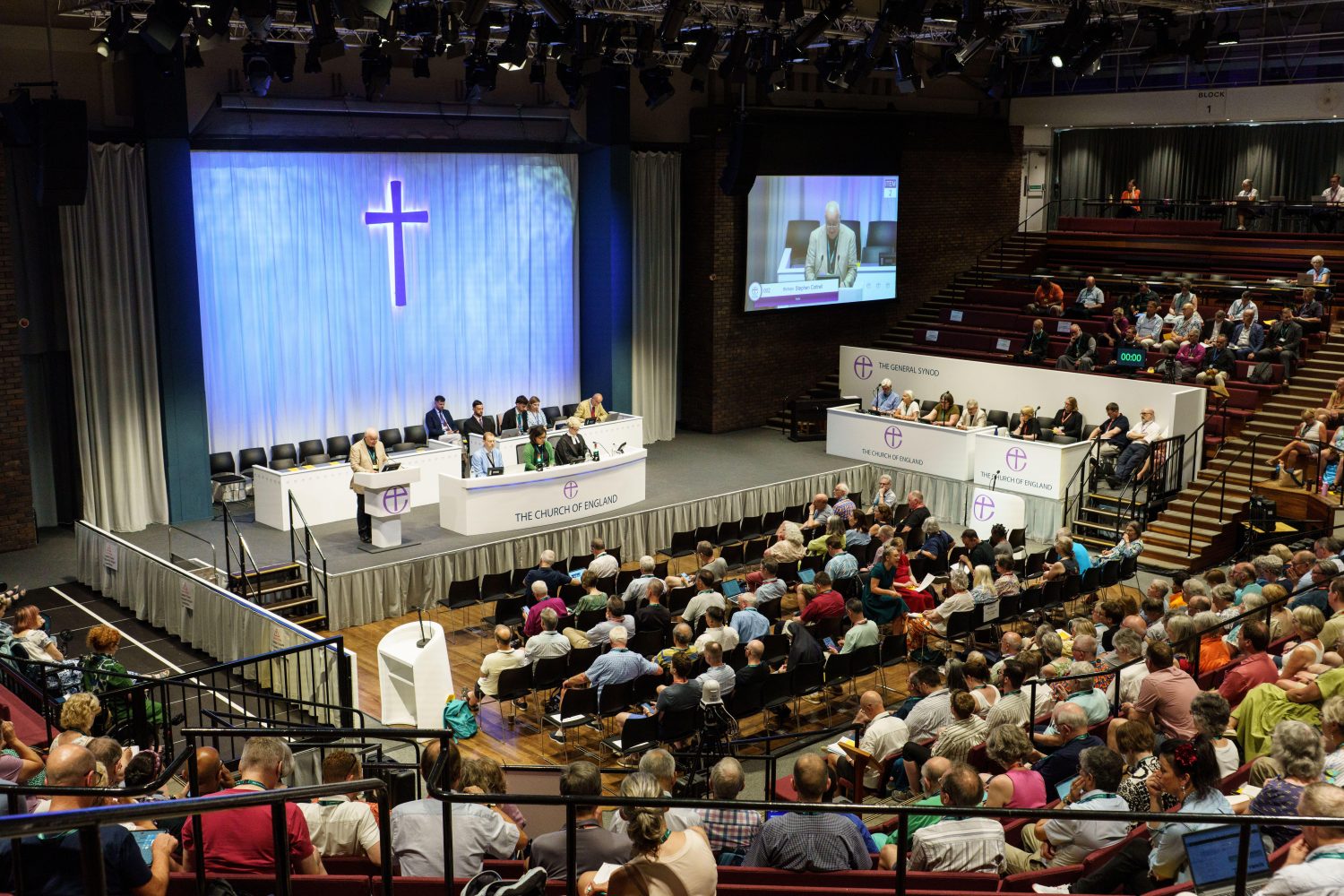
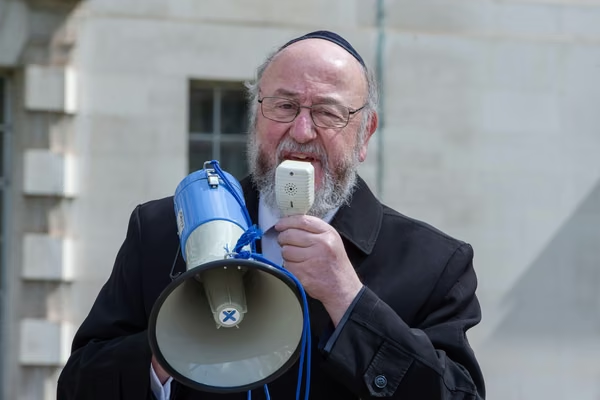
We were delighted to learn that the Church of England’s General Synod has today, July 13th, resisted the pressure from the UK’s Chief Rabbi and others from the Jewish Establishment who wanted them not even to debate the motion from Carlisle asking the Church to engage with the Kairos II document. (see our Ultimate Chutzpah article here) They went ahead with the debate, which began on Sunday 12th and continued today when they voted in favour of the motion, despite the warnings from the Chief Rabbi.
While they changed the original “engage with” to “hear” the Palestinian plea, this marks an important rejection of pressure from the likes of the Board of Deputies and the Chief Rabbi.
Last year Palestine the Synod voted to support a Declaration for an end to genocide in Palestine.and this statement is clear and asks the churches of the world to change their focus and priorities in addressing the terrible conditions endured by Palestinians.
The Jewish Establishment seem capable only of seeing things through one lens, a Zionist lens and claim that the document spreads a toxic narrative about Jews. It does not. The likes of the Chief Rabbi and Board of Deputies would do well to hear this Palestinian plea and try to spend a few minutes seeing things from a Palestinian point of view, much as they expect the world to always engage with – and, indeed, agree with their singular and destructive narrative.
This article includes sections of the Kairos II document as well as elements of the Board of Deputies’ briefing against the Synod discussing it.
Church of England votes to support Palestinians – despite the Chief Rabbi
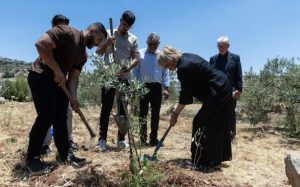
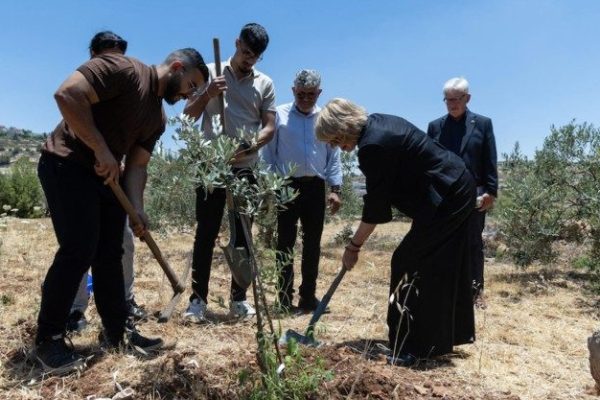
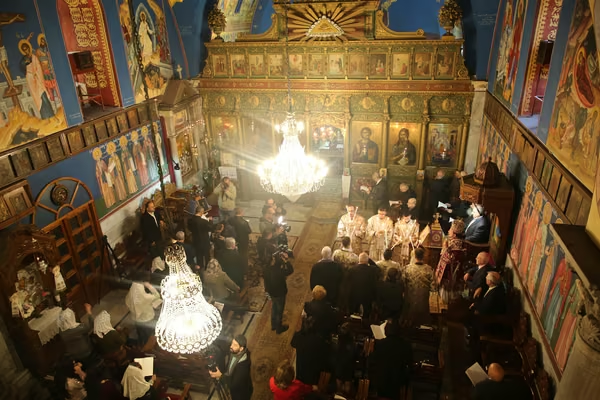
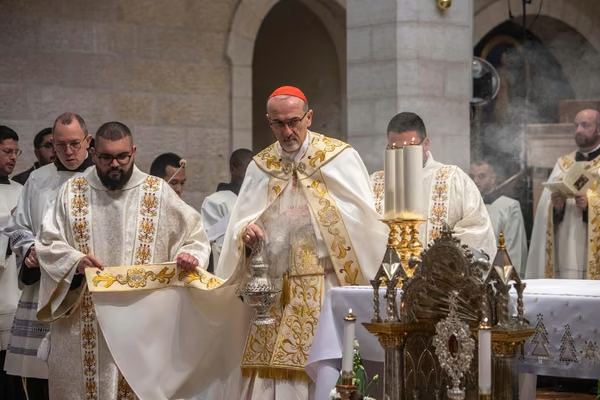
Archbishop Sarah Mullally returned from a visit to the West Bank in June. She spoke to open the debate on the motion on the Kairos II document at the 2026 Synod held in York. She said that Palestine is “disappearing” and called for a “new and active solidarity” for the peoples of the Holy Land. She also called for more action on antisemitism and Islamophobia, both of which are rising in the UK.
The document in question, Kairos Palestine – the Palestinian Christian Initiative. Faith in a Time of Genocide, was published in November 2025 and their introduction reads:
We, the Palestinian Christian Ecumenical Initiative, issued the Kairos Palestine Document in 2009 — “A word of faith, hope, and love from the heart of Palestinian suffering.” The Heads of Churches in Jerusalem heard this cry, welcomed it, and offered their support. Likewise, the document resonated widely, both locally and internationally. Then, as now, we gathered — women and men, clergy and laity — from across the different church families in Palestine. After prayer and reflection on the suffering of our people under occupation, we released that cry of hope in the absence of hope, affirming our faith in God and our love for our homeland, convinced that our struggle is ultimately about human life and dignity.
We live now in a time of genocide, ethnic cleansing and forced displacement unfolding before the eyes of the world. This moment — a moment of truth — demands from us a new stand unlike any before it. It is both a decisive moment and. Today, we renew our stand for truth and our commitment to fundamental religious, theological and moral principles. We look at our reality and take a renewed stand, responding to the voice of the Holy Spirit deep within us, listening to the call of faith in this time of genocide. We renew our message of faith, hope, and love — offering a faith-inspired vision for the time after genocide.
You can read the full document here.
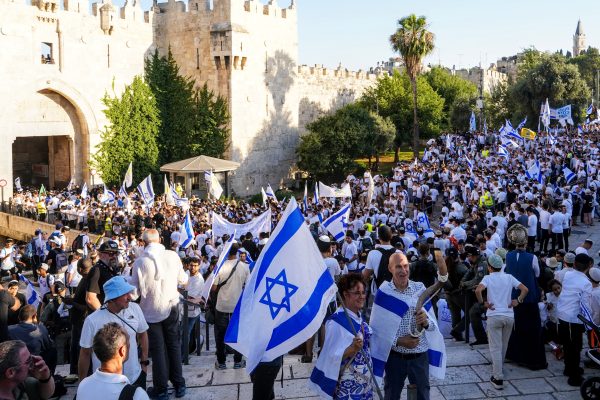
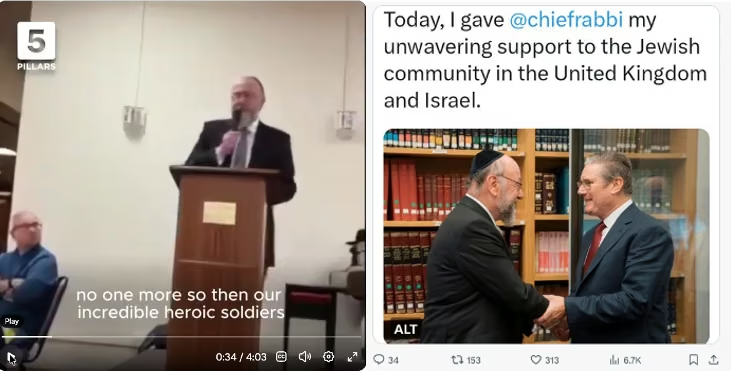
The idea that the Church of England would even debate this document was too much for the Jewish Establishment. As well as the Chief Rabbi’s warning, the Board of Deputies of (some) British Jews (BoD) “published a briefing for members of the General Synod of the Church of England setting out concerns relating to the Kairos II document.
The BoD briefing “warns of the negative impact of the Church engaging with the Kairos II document for British Jews and Jewish-Christian relations. It argues that the Kairos documents, especially Kairos II, spread a toxic narrative about Jews, and that their dissemination will do more to perpetuate conflict than make peace.
The Board recognises the motivations of Church members to express solidarity with Palestinians and hear their voices in the current devastating circumstances. The Board also condemns extremism and violence whether from Israelis or Palestinians and support all efforts to advance peace and security for both peoples.
…the briefing argues that the false and destructive claims made in Kairos II erase and distort Jewish faith, identity and historical experience.
The Board calls on the Church to hear, alongside the voices of Palestinians, the voices of Israelis and Jews in Britain and around the world, and to amplify voices of peace and reconciliation.”
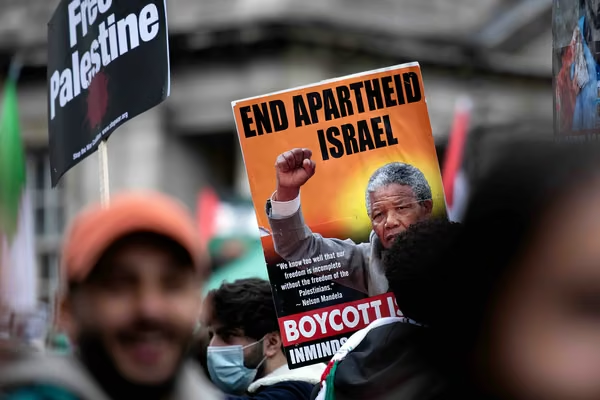
Of course the Kairos II document is not about Jews* and it is not blaming Jews for Palestinian suffering but it does call out Israel for its acts of genocide, ethnic cleansing and for its apartheid policies and practice.
Kairos II refers to Jewish supremacy and seeks to distinguish not conflate Judaism and Zionism, recognises that there is Jewish and also Christian Zionism that is contributing to the desperate situation Palestinians face on a daily basis. It is, above all, a message for Churches of all denominations and it is critical of the reality that too often the Churches have “prioritised Jewish-Christian Interfaith dialogue over the truth, human dignity and life itself, ignoring the context”
They also note that: “Not every Jew is a Zionist and not every Zionist is a Jew. This confusion has done great harm to Judaism itself and to its image worldwide.” (my emph LL)
The motion did not even call for the Synod to endorse the Kairos II document but to engage with it but it was still unacceptable for the Jewish Establishment who claim to care about the “current devastating circumstances” for Palestinians while rejecting wholesale this plea from the Christian community leaders in the Holy Land that expressed those “devasting circumstances” through a Palestinian (and Human Rights) lens.
There is much in the document that is powerful, moving and important about the experience of Palestinians in general and Palestinian Christians in particular and I commend the entire document to you. Here are some key extracts from the document with which we heartily agree regarding antisemitism, anti-Zionism, the role of non Zionist Jews and the importance of sanctions.
Section 3.8
“We condemn all who exploit and support the charge of antisemitism to silence the Palestinian voice of truth. We reject every attempt to conflate antisemitism with opposition to apartheid and with pressure to hold Israel accountable under international law — particularly through the use of definitions and documents designed to serve Zionist ideologies and interests under the guise of combating antisemitism. The misuse of the term antisemitism distorts and obscures the reality of genuine antisemitism which still exists in our world and which we strongly condemn alongside all forms of racism, exclusion and prejudice including Islamophobia. Zionist ideology claims to represent and protect the Jewish people, but in doing so it has conflated “Jew” and “Zionist” as though they were one and the same. Not every Jew is a Zionist and not every Zionist is a Jew. This confusion has done great harm to Judaism itself and to its image worldwide.”
Section 3.10
We repeat and emphasize our appeal to the churches of the world — working together with both religious and secular coalitions — to pressure their governments to isolate Israel, hold it accountable, impose sanctions, boycott it, and to ban the export of arms until it complies with international law, ends oppression and tyranny, and adheres to the principles of justice and peace. We likewise call upon the governments of the world: to press for the prosecution of war criminals whoever they may be under the jurisdiction of the International Court of Justice and the International Criminal Court; to ensure reparations for the Palestinian people, both in their homeland and in the diaspora; and to work for the immediate return of the displaced through the reconstruction of Gaza and the strengthening of its people’s steadfastness.
Section 3.11
More than ever, now is a time for costly solidarity. By its very nature, true solidarity is costly. It has a price. It is a faith-based stance, a human commitment and a moral responsibility. True solidarity is also the embodiment of our shared humanity and fraternity. Either we live together — or we perish together. Today it is Palestine. Tomorrow it will be other marginalized and oppressed peoples.
But perhaps most heinously of all (for the Jewish Establishment) it acknowledges the role that Jewish people have played in solidarity with Palestinians and calls for the churches to stand with us.
Section 3.12
In this spirit, we honor the growing number of Jewish voices that oppose the war and confront Zionism from moral, faith-based and human conviction. In them we find partners in our shared humanity and in the struggle for freedom and human dignity — partners also in religious and political dialogue. For too many years such dialogue was monopolized by Zionists and their allies, its premises built upon the reinforcement of Zionist ideology and the persecution of Palestinians. >We therefore call on the churches of the world to distinguish between dialogue with Jews and dialogue with Zionism — indeed, to boycott dialogue with Zionist voices that have supported and continue to support occupation, apartheid and the genocide of the Palestinian people. Instead, we call upon the churches to stand with and amplify prophetic Jewish voices that call for justice and truth. (my emphasis LL)
* In the densely written 14 page document the words “Jew, Jews or Jewish” are used 11 times (6 of which are in the extracts above) and Judaism just once. Israel is mentioned 32 times and Zionism just 9 times while Palestine or Palestinian are used 71 times and Church or Christian, 68 times.

Thank God that the Church of England has ignored the Zionist establishment and has shown Christian compassion towards the persecuted Palestinians.
This decision by the Church of England has cleared the air with regard to its relationship with Jews and Judaism. The previous archbishop, Welby, must have had a weird relationship with Judaism, which was rectified relatively recently by a DNA test (he thought he had a Jewish father) and he, himself. was an Establishment person, a status which, affected his activities, but which is basically incompatible with Christianity.
I think the point of the chief rabbis comments is the one sided nature of the document. It doesn’t provide both sides of the argument and conclude, rather it adopts a narrative. More importantly, any position adopted by the Church of England will in all likelihood have no effect on Gaza, and although not all jews are ziomsists, most are. An antizionist proclamation gives the green light to attacks on jews.
‘An antizionist proclamation gives the green light to attacks on jews.’
I hope you don’t mind me saying so Jonathan, but you are spouting complete and utter garbage. And YOU know it!
PS Perhaps you’d like to tell us what you think about Israel’s mass murder of tens of thousands of women and children and toddlers and babies and newborns and doctors and health workers and first responders and journalists etc, etc in Gaza.
Fellow commentator Jonathan Rose repeats a one-sided chief rabbi criticism of the plea for the persecuted indigenous inhabitants by arguing that it should have been balanced with the case for the oppressor: Israel. This contradiction was addressed in the original article presented here by JVL.
I challenge the bold statement that a majority of Jews are Zionists. I say that a majority of British Jews are probably relatively indifferent and have not expressed a view. I observe an influential vocal minority of Zionists.
In truth an active substantial number of British Jews are fine people who are rightly concerned about the organised repression, stealing from and killing of the indigenous inhabitants. Many regard Zionism as counterproductive.
Who is this geezer Big Chief…?
Who does he think he is?
Biased BOD threatening
Our Church of England.
Interference acceptable here?