
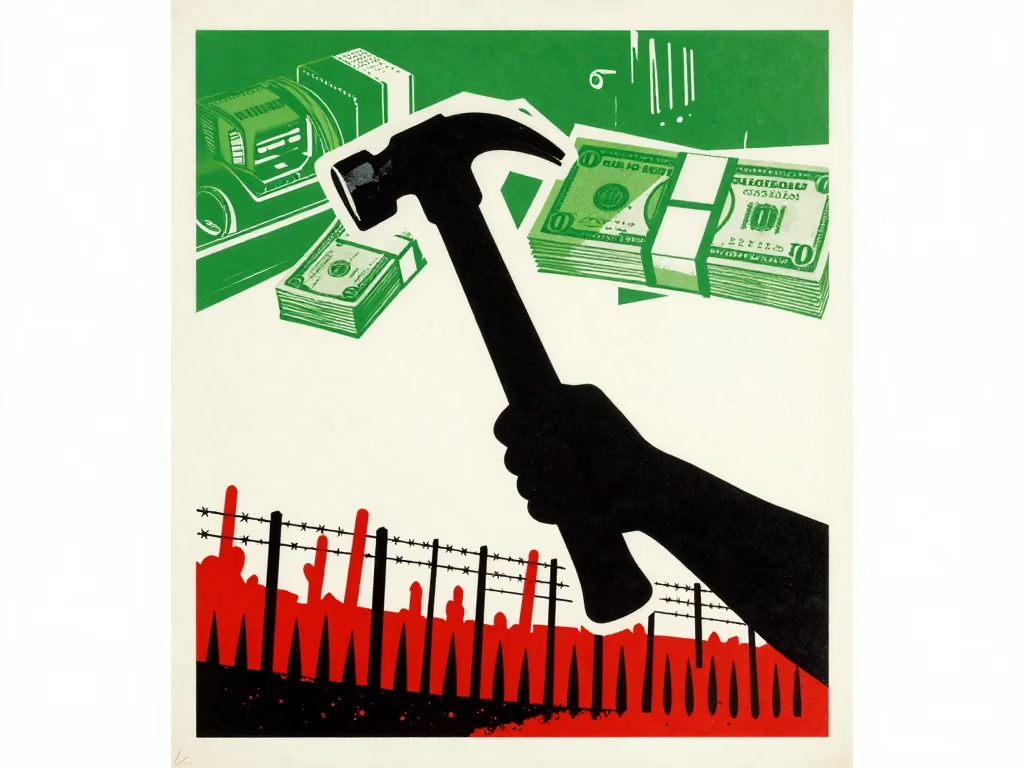
If you have a hammer, everything looks like a nail
JVL Introduction
Governments all too often implement policies that only make the problems worse.
The war on “terror” is a good example of how the “solutions” implemented exacerbate the problem. So too with other “wars”, whether on drugs, or asylum seekers, or anything else.
In Wreckonomics, reviewed by Mike Phipps on Labour Hub, Ruben Andersson and David Keen show how policies become entrenched even when it is clear they aren’t working.
They all share a common pattern:
- Complex issues are reduced to a fixation on a single ‘threat’;
- Debate is rigged to concentrate resources on this ‘threat’’;
- The costs of the ‘solution’ are often exported to other countries;
- Unintended consequences undermine any possibility of success;
- After the event the facts are distorted to claim victory in the face of failure.
Why are such counterproductive choices made? Short-term political gain in response to whipped up moral panics is a large part of the answer; so are the vast profits some people extract from the disasters created.
Ultimately, or course, none of these problems can be successfully tackled without looking to underlying causes. But that might call the whole system into question…
RK
This article was originally published by Labour Hub on Mon 15 Jan 2024. Read the original here.
If you have a hammer, everything looks like a nail
Mike Phipps reviews Wreckonomics: Why it’s time to end the war on everything, by Ruben Andersson and David Keen, published by OUP.
Loading article text…

Comments are now closed.